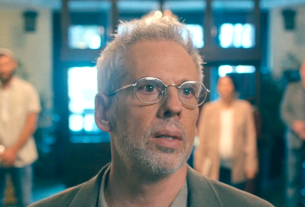


Frederick Wiseman became a globally celebrated documentary filmmaker by capturing the inner workings of a wide range of social institutions, from governments to schools, small towns, and cultural centers.
But years before they opened their doors to his cameras, institutions were shutting Wiseman out — because he was Jewish.
“I’m very aware of my Jewish heritage. I was aware of antisemitism from the time I was four years old,” Wiseman, who died Monday at the age of 96, recalled to the Jewish Telegraphic Agency in 2021.
In Boston in 1930, Wiseman’s father, a Russian-born judge, had his appointment to municipal court rejected when his superiors discovered he was Jewish. As a child, Wiseman recalled his family would hear Father Charles Coughlin, the antisemitic “radio priest,” over the airwaves. When Wiseman himself enrolled in Williams College in the postwar era, he found that all the campus fraternities excluded Jews.
Incensed, Wiseman joined the student newspaper, working to, in his words, “undermine the fraternity system.” His interest in systems would percolate throughout his filmmaking career, beginning with “Titticut Follies” in 1967, an intimate examination of a hospital for the criminally insane. The film’s harrowing footage caused a sensation when it was released, and it was banned from public screenings for decades.
Wiseman’s filmography over the following decades — he would direct 45 in all, plus some theatrical productions in France — would be noted far less for sensationalism than for quieter, more unobtrusive qualities. Working with handheld cameras and a small crew, he would embed himself within various settings and stitch together the resulting footage to create nuanced, minutely detailed portraits of specific places and times. He produced and distributed the films himself under his production company, Zipporah Films, named after Wiseman’s longtime spouse, attorney and law professor Zipporah Batshaw Wiseman, who died in 2021.
“For nearly six decades, Frederick Wiseman created an unparalleled body of work, a sweeping cinematic record of contemporary social institutions and ordinary human experience,” reads a statement from Zipporah Films announcing his death. “He will be deeply missed by his family, friends, colleagues, and the countless filmmakers and audiences around the world whose lives and perspectives were shaped by his unique vision.”
With titles like “High School,” “State Legislature,” “Central Park” and “The Store,” the films clearly announced their intentions. He returned to college campuses, too, with “At Berkeley” in 2013. Of Wiseman’s massive output, two of his works dealt directly with Jewish issues. “Sinai Field Mission,” from 1978, followed American personnel on the Israel-Egypt border as they attempted to monitor tensions following the Yom Kippur War; it was one of several military-themed films he made.
And “The Last Letter,” an outlier in his filmography, was a dramatic French-language “monologue film” from 2002 based on a passage from Vasily Grossman’s Eastern European Jewish epic “Life and Fate.” On stage, an actress playing a Ukrainian Jewish mother in a Nazi ghetto narrates a letter she is composing to her son shortly before she is shipped off to a concentration camp. The film was of a piece with what Wiseman described to (JR) as his lifelong love of Jewish authors including Grossman, Bernard Malamud and Saul Bellow.
With no talking heads or traditional narrative arcs, often stretching more than three hours in length, Wiseman’s documentaries demanded, and rewarded, patience in the viewer. And they were celebrated on the global stage. During his lifetime he received an honorary Oscar, a Macarthur Fellowship, a Guggenheim Fellowship, and numerous other awards. He almost never stopped working: his final film, the fine-dining portrait “Menus-Plaisirs — Les Troigros,” premiered in 2023.
“I like to work, and I enjoy making the films. It’s fun.” Wiseman told (JR). “I’m lucky. I’ve found the work that I like, and I found the means to do it.”
Wiseman and his wife are survived by two sons and three grandchildren.