
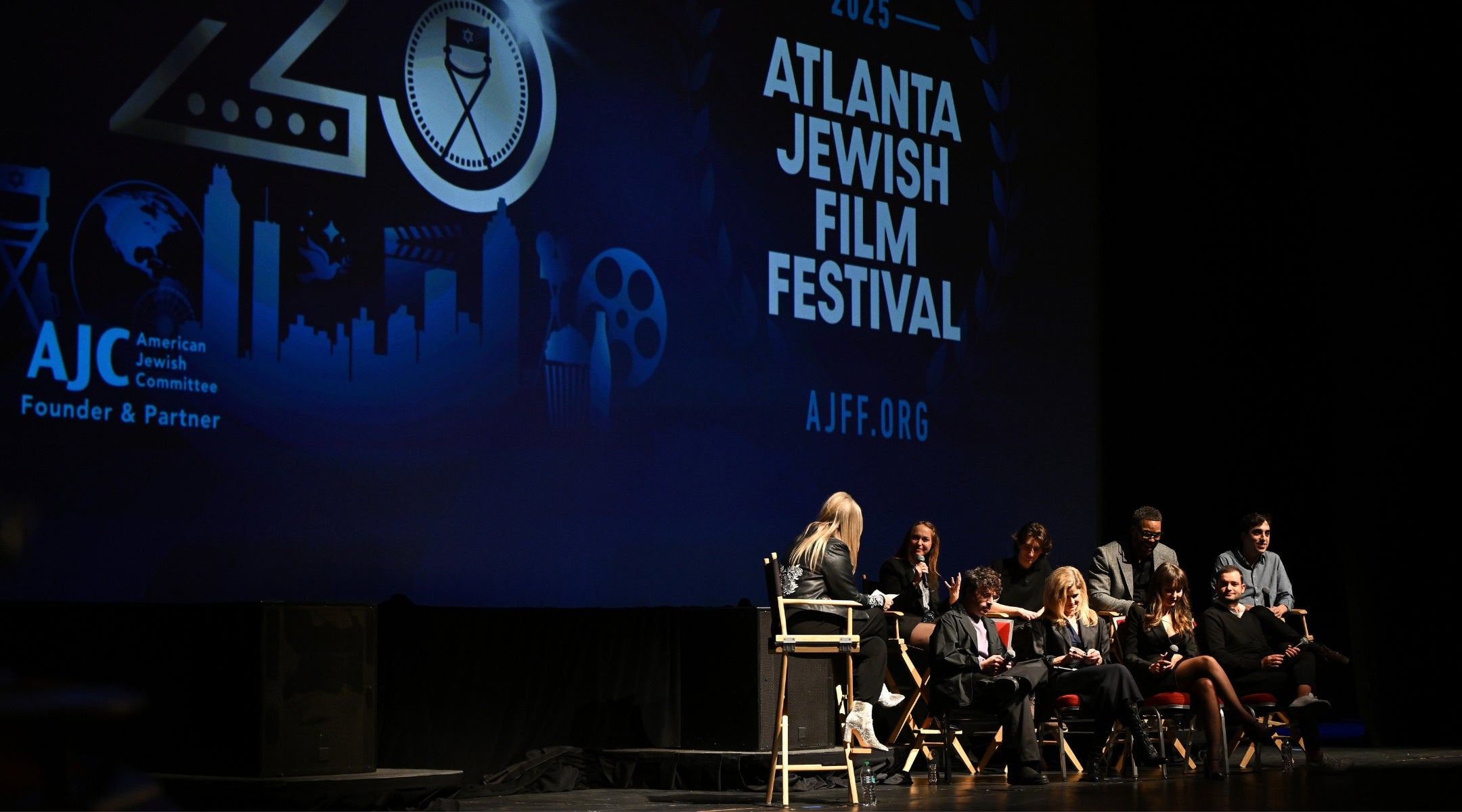
The Atlanta Jewish Film Festival apologized and announced it would review its internal processes after the Israeli consulate withdrew its support over an anti-Zionist juror.
The Israeli Consulate in the Southeastern United States withdrew its support for the annual festival Friday after learning one of the student jurors in the human rights category “shared antisemitic and anti-Israel content,” the consulate said in a statement.
The film festival Friday acknowledged the consulate’s decision on Friday and issued an apology on Sunday, saying that it “fell short” in assessing jurors.
“Recent conversations within the Jewish community have made clear that the Atlanta Jewish Film Festival fell short in our internal processes regarding the recent jury matter,” the festival said in its Sunday night statement. “This situation has surfaced clear deficiencies, gaps, and adherence issues in our existing organizational processes and policies, including those related to antisemitism, BDS (Boycott, Divestment, Sanctions), and cultural boycotts.”
But the festival said that because the juror selection process had already been finalized, the juror at issue could not be removed ahead of the festival, which runs through March 15.
Neither the festival nor the Israeli consulate named the juror, but local media reporting identified him as Anwar Karim, a film student at Morehouse College and a Spike Lee Fellow at the Gersh Agency.
Karim’s social media presence and film portfolio include discussion of the war in Gaza. In one video, a political poem titled “Devil’s Work,” Karim raps over news clips and social media videos from Gaza, sometimes preceded by parallel images from the Holocaust. In the same video, he draws in other social justice issues like cobalt mining in Congo and the war on drugs. Images in the video include a photo of the Starbucks logo with bloody Israeli flag stickers a shrinking Palestine map, and archival clips of prominent Black and anti-Zionist intellectuals like Angela Davis and Stokely Carmichael.
“As a Jewish film festival, we have a responsibility, particularly at this fraught time, to stand firmly against antisemitism and to affirm the Jewish people’s right to self-determination,” the Atlanta Jewish Film Festival said in its Sunday statement.
Karim did not respond to a request for comment.
Consul General Eitan Weiss told Southern Jewish Life that when the consulate saw Karim wearing a green keffiyeh in his festival program photo, they were surprised, did some research on the juror, and gave the festival some time to address the issue before deciding whether to withdraw its support.
Then, in a statement issued on Feb. 20, the festival said it had “concluded that the student could participate appropriately within the structure of our deliberations.” The consulate announced its withdrawal the same day.
Six documentaries are up for the human rights prize, including profiles of Raoul Wallenberg and Henrietta Szold, a chronicle of a sex abuse scandal in an Australian Orthodox community and the history of a Jew who successfully took on Henry Ford’s antisemitism. Two films deal directly with Israel: One tackles abortion there, while the other examines UNRWA, the United Nations agency supporting Palestinian refugees that Israel says has undermined efforts at peace.
The other two jurors in the human rights category are the executive director of an organization that promotes LGBTQ stories in film and a senior director at the Carter Center, the human rights institute founded by President Jimmy Carter.
Since Oct. 7, festivals have become a battleground for activism in the Israel-Gaza war, becoming a point of contention among jurors, panelists, and contestants. In 2024, an Albany book festival canceled a panel with a Jewish author after two of her co-moderators refused to share the stage with her because of her “Zionist” beliefs. In January, Australia’s Adelaide Book Festival collapsed entirely after nearly 200 writers said they would boycott the program when a Palestinian-Australian author who justified “armed struggle” was disinvited from the festival. And this month, the Berlinale film festival was embroiled in tensions after its jury president, the director Wim Wenders, responded to a question about Gaza by rebuffing calls to criticize Israel.