

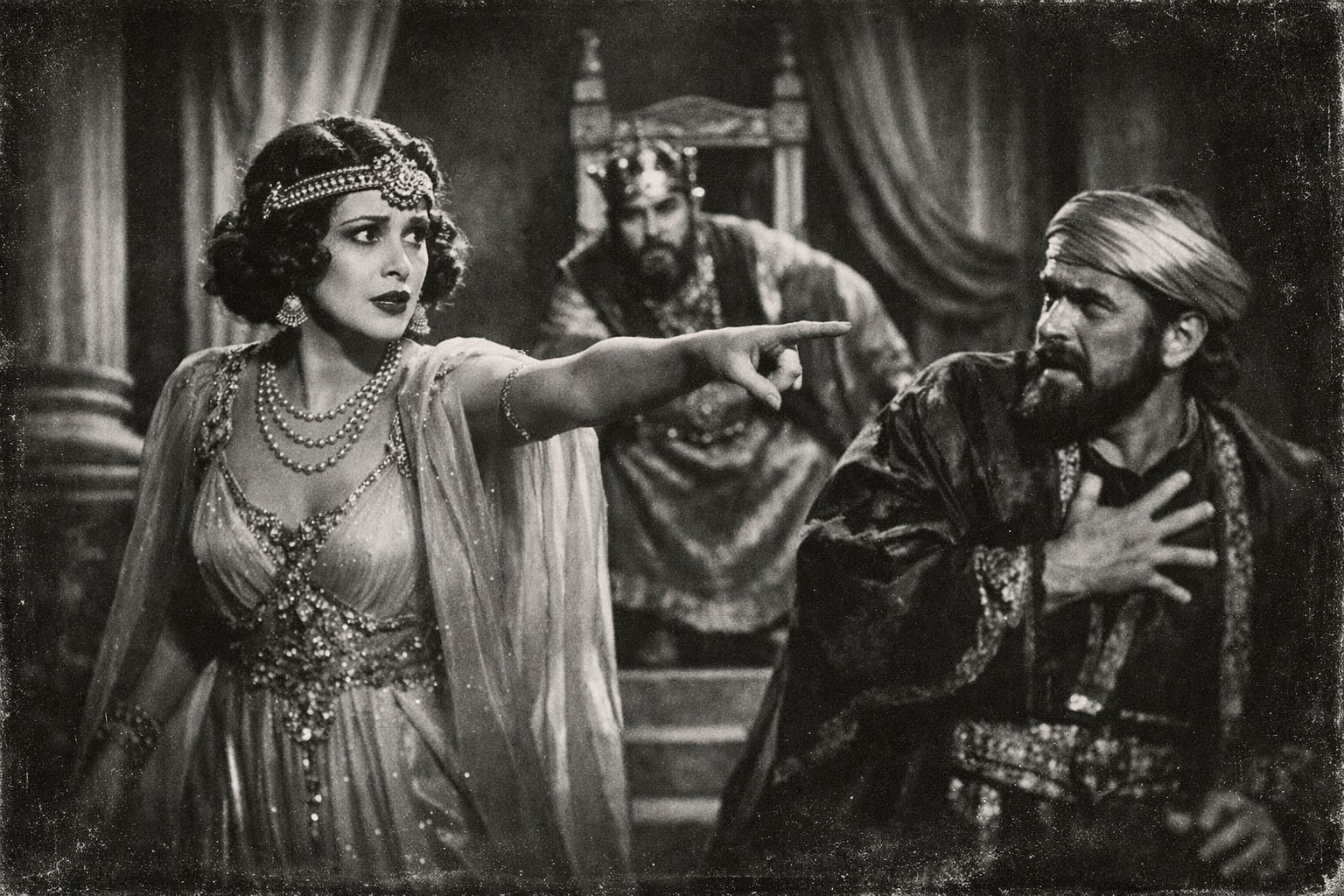
Queen Esther, who is Jacob’s rose,
and purple, Mordecai,
are heroes, for they fought our foes:
their names will never die!
Oh hateful Haman, persecutor
of all the Jews in Persia:
the Queen declares you didn’t suit her––
that’s why all Jews now curse yer.
For saving Hebrews from this killer
dear Mordecai, you’re blessed:
when Esther wrote up her megillah
she said you were the best.
Were you her niece, or is it true
he took you as a wife,
although you married a non-Jew
to save all Israel’s life?
Make sure that we curse all the others,
above all Haman’s Zeresh,
for many, if they’d had their druthers,
had planned for us to perish.
What else is new? It happened then
and after, many times;
again it happened, and again––
no end to gentiles’ crimes.
Amalekites so nearly did
us in, that’s why they’re cursed,
but sad to say, if you’re a yid
you know they weren’t the worst.
Look on the bright side if you must:
one goy was good, Harvonah,
but if in goyim you put trust
remember he’s a loner.
Still Purim, which comes once a year
can soften blows, a cushion
which makes us feel that help is near––
like seconds, as in Shushan.
***********
This contrasts with ten commandments
which Jews said they’d obey before a
realization that the laws’ enchantments
led to acceptance of the Torah
on Purim, “na’aseh,” the Hebrew word
that means “we’ll keep the law,” announced
before “nishma”, we’ll hear, the third
acceptance before in Shushan Jews pronounced
“qimu veqiblu,” “they established and accepted,”
implying Purim was the festival
in which the Ten Commandments were perfected,
of every festival the best of all.
“qimu veqiblu,” by all Jews established and accepted.
After reporting the Ten Commandments, Exod. 24:7 states:
וַיִּקַּח֙ סֵ֣פֶר הַבְּרִ֔ית וַיִּקְרָ֖א בְּאׇזְנֵ֣י הָעָ֑ם וַיֹּ֣אמְר֔וּ כֹּ֛ל אֲשֶׁר־דִּבֶּ֥ר יְהֹוָ֖ה נַעֲשֶׂ֥ה וְנִשְׁמָֽע׃
Then he took the record of the covenant and read it aloud to the people. And they said, “All that GOD has spoken na’aeh venishma, we will do and hear!”
After reporting the miraculous way a hidden God protected the Jews in Shushan, preventing their genocidal destruction in Persia, Esther 9:27 states:
קִיְּמ֣וּ (וקבל) [וְקִבְּל֣וּ] הַיְּהוּדִים֩ ׀ עֲלֵיהֶ֨ם ׀ וְעַל־זַרְעָ֜ם וְעַ֨ל כׇּל־הַנִּלְוִ֤ים עֲלֵיהֶם֙ וְלֹ֣א יַעֲב֔וֹר לִהְי֣וֹת עֹשִׂ֗ים אֵ֣ת שְׁנֵ֤י הַיָּמִים֙ הָאֵ֔לֶּה כִּכְתָבָ֖ם וְכִזְמַנָּ֑ם בְּכׇל־שָׁנָ֖ה וְשָׁנָֽה׃
the Jews qimu veqiblu, undertook and irrevocably obligated, themselves and their descendants, and all who might join them, to observe these two days in the manner prescribed and at the proper time each year.
Gershon Hepner is a poet who has written over 25,000 poems on subjects ranging from music to literature, politics to Torah. He grew up in England and moved to Los Angeles in 1976. Using his varied interests and experiences, he has authored dozens of papers in medical and academic journals, and authored “Legal Friction: Law, Narrative, and Identity Politics in Biblical Israel.” He can be reached at [email protected].