

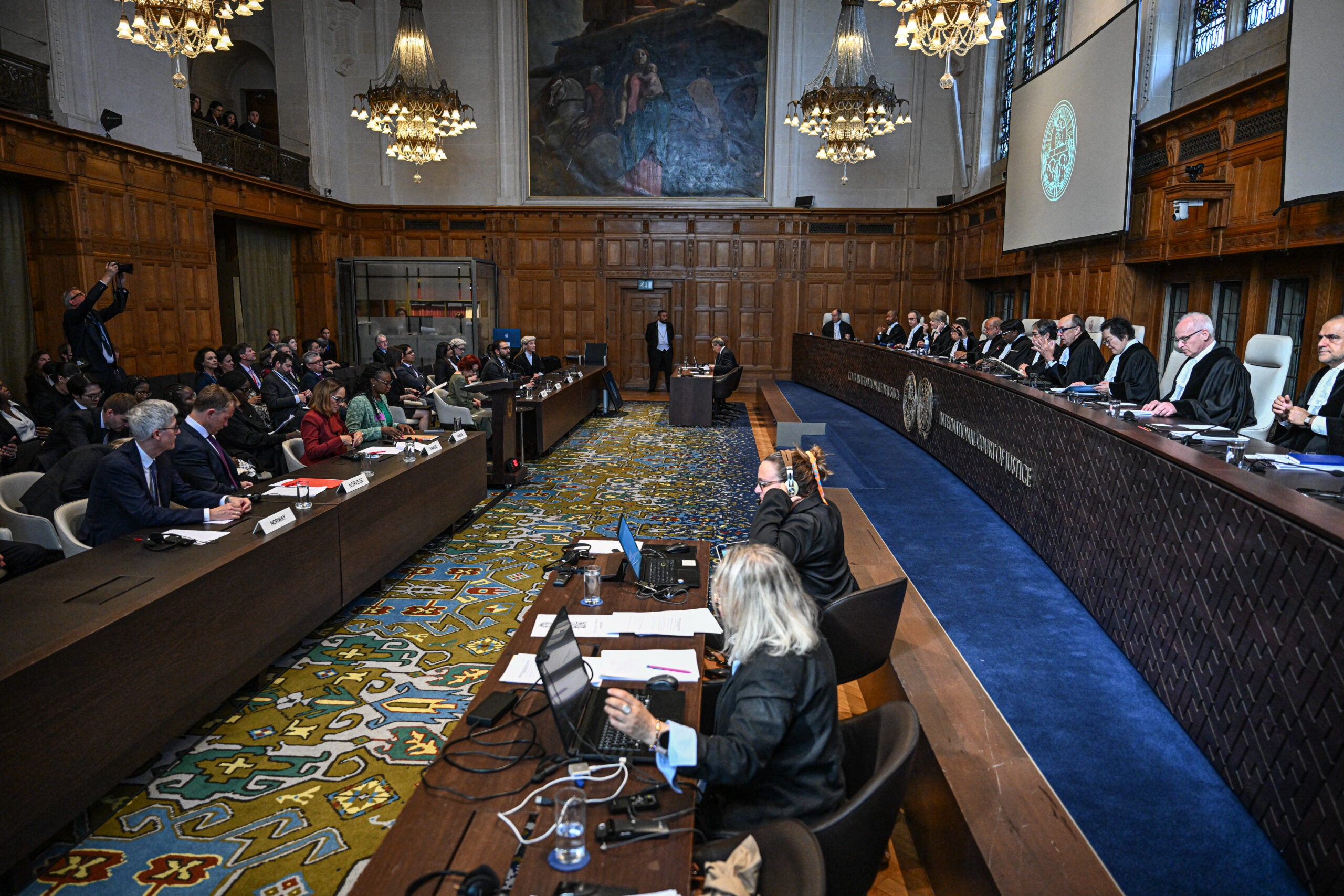
The United States has defended Israel against the charge of genocide in the United Nations’ highest court, as Iceland and the Netherlands gave different opinions.
South Africa brought a genocide case against Israel in the International Court of Justice in 2023 over Israel’s campaign in Gaza.
The United States has long criticized the case and said in a formal filing on Thursday that the claim of genocide was “false” and part of a broader campaign “to delegitimize the State of Israel and the Jewish people and to justify or encourage terrorism against them.”
The United States also argued that Israel did not show the “specific intent” to destroy a group in whole or in part, a requirement of the legal definition of genocide. “Civilian casualties, even widespread civilian casualties, are not necessarily probative of genocidal intent, particularly when they occur in the context of an armed conflict involving urban combat,” said the filing.
More than a dozen other countries, mostly critical of Israel, have submitted interventions in the case, with Iceland and the Netherlands joining on Wednesday. The interventions serve to provide interpretations of the 1948 Genocide Convention, a treaty that outlined the crime under international law in the aftermath of the Holocaust.
The Netherlands, without formally taking a position on the genocide charge, said that starvation, the forced displacement of civilians and the deliberate targeting of children can constitute elements of genocide.
Nearly all of Gaza’s 2 million residents were displaced during the two-year war. Israel denies intentionally starving Gazans or deliberately targeting children, who make up a significant number of the casualties in the enclave.
Iceland, meanwhile, condemned both Israel’s military conduct and the attack that Hamas launched from Gaza against Israel on Oct. 7, 2023, but emphasized the role of international courts in determining whether a genocide took place.
The ICJ has issued a series of orders concerning Israel’s conduct in Gaza since South Africa filed the case. In January 2024, the court ruled it was “plausible” that Palestinians were at risk of genocide and had the right to protection. Few public developments have taken place since, and the court has made no determination.
Israel has countered that the case is “wholly unfounded in fact and law, morally repugnant, and represents an abuse both of the Genocide Convention and of the Court itself.”
Thursday was the deadline for Israel to submit its counter-arguments as a formal filing to the court. The court has not indicated whether Israel — which is currently waging war against Iran alongside the United States — met that deadline.
Reporting the stories that define our era. When history unfolds in real-time, the Jewish world turns to JR. Your support ensures we can document the complexities of war and the resilience of Jewish communities with integrity.