
Israeli President Isaac Herzog on Monday reiterated his condemnation of settler violence in the West Bank after more than 1,000 Diaspora Jews signed a letter last week urging him to intervene.
In a letter published on X, Herzog thanked the letter’s signatories for their concerns regarding the “recent surge of violence by extremist elements in Judea and Samaria,” using the Hebrew name for the West Bank.
“At a time when Israel is in the throes of a bitter war against enemies that seek its destruction, and the Jewish people is contending with a fierce and rising tide of antisemitism around the world, this kind of violence against innocents further plays directly into the hands of Israel’s detractors, fueling hatred that weakens us as a nation and jeopardizes Jews everywhere,” the letter read.
Herzog’s letter comes as pressure mounts on Israel to crack down on tensions and violence in the West Bank, including from the United States and after a CNN crew filmed its tense encounter with soldiers in the region over the weekend.
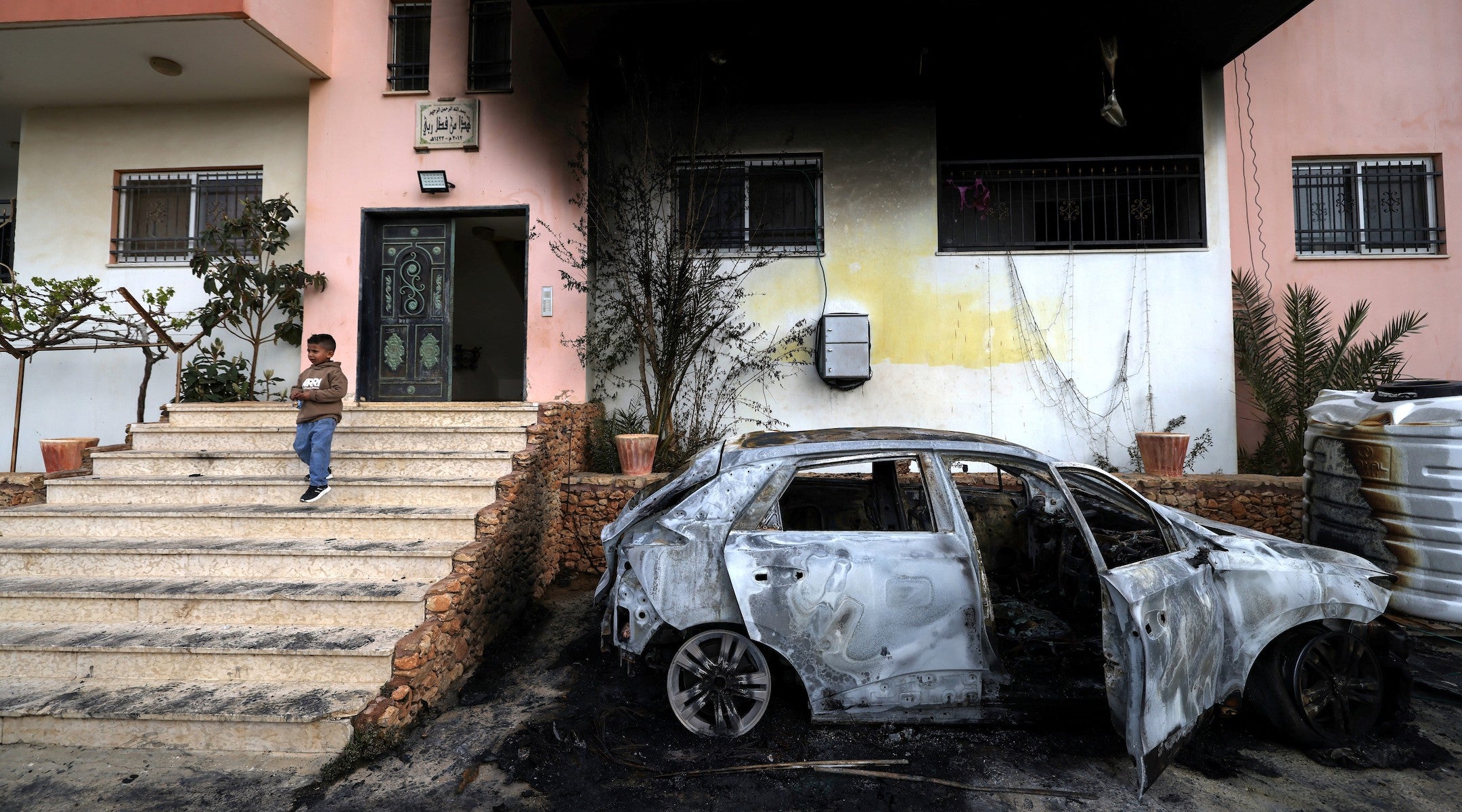
In the first 25 days of the U.S.-Israeli war with Iran, there were 257 incidents of extremist settler violence against Palestinians in the West Bank, with settlers allegedly killing seven Palestinians, according to the Israeli human rights group Yesh Din. Such attacks often go unpunished by Israeli authorities.
Herzog said he had spoken with Israeli government security and law enforcement officials to call for an “immediate end to this unacceptable phenomenon.”
But while the Israeli president has previously condemned the spate of settler violence against Palestinians in the West Bank, the rise in such attacks in recent months has intensified pressure on him to take action in addressing the issue.
On Friday, Secretary of State Marco Rubio told reporters in Paris that the U.S. was “concerned” by the rise in violence, adding that President Donald Trump has “expressed very clearly that he is against any sort of a change in the status quo in the West Bank.”
“We’ve expressed our concern about it, and obviously I think the Israelis themselves have expressed concern,” Rubio said. “And so you’ve seen that some of these groups and individuals – maybe they’re settlers, maybe they’re just street thugs, but they’ve attacked security forces – Israelis as well. So I think you’ll see the government there do something about it.”
The same day, the American Jewish Committee called on the Israeli government to “ensure that all individuals who engage in violence or incitement — regardless of identity — are held accountable under the law.”
“At this sensitive and consequential moment, rejecting extremism and reaffirming a commitment to the rule of law is critical,” the statement read. “The long-term security and well-being of both Israelis and Palestinians depend on preserving the possibility of a future grounded in safety, dignity, and coexistence.”
A video of the incident released by CNN showed the journalists held at gunpoint by reservists for two hours, while a photojournalist was seen being choked and thrown to the ground.
During the confrontation, the soldiers could be heard saying that the West Bank belongs to Jews and that they were carrying out “revenge” for the death of settler activist Yehuda Sherman a week earlier. Sherman died in a car accident whose circumstances are not clear.
“Listen, at the end of the day, if the state doesn’t address what they did — those who murdered the settler… what do you expect us to do?” one soldier asks.
On Monday, the IDF announced that Lt. Gen. Eyal Zamir, the Israeli army’s chief of staff, had ordered the removal of the reserve battalion from the West Bank.
“This is a grave ethical incident that is out of line with IDF norms and values. We all swore the soldier’s oath upon enlistment, weapons are to be used solely for the purpose of carrying out the mission, and never for revenge,” Zamir said in a statement on Monday. “We will not accept such incidents within the ranks of the IDF.”
Reporting the stories that define our era. When history unfolds in real-time, the Jewish world turns to (JEWISH REVIEW). Your support ensures we can document the complexities of war and the resilience of Jewish communities with integrity.