

I asked AI Sigmund Freud to interpret my dream this morning. All I got was some dancing dots, as if a) the great man had fallen asleep or b) my dream had broken his virtual brain.
Freud is one of nine historical Jewish figures featured in “Ask Jewish Lives,” a new AI feature based on the biographies published in the Yale University Press “Jewish Lives” series. The free website also allows you to “chat” with Albert Einstein, Emma Goldman, Baruch Spinoza, Theodor Herzl, Hadassah founder Henrietta Szold, the Talmud sage Akiva, Justice Louis D. Brandeis and the prophet Elijah.
Jewish Lives says the site is designed to “enrich reader exploration of the Jewish experience.” They’ve created lesson plans to help educators use Ask Jewish Lives in high school and university classrooms.
“We wanted to extend the life of the books, to use AI to explore Jewish history and biography in a new way,” Rebecca Keys, managing director of Jewish Lives, told me.
Keys explained that the answers are based only on the various biographies, with various “guardrails” put in place to keep the chatbot from hallucinating.
I played around with it for a bit and found it to be a useful research tool if you are looking for some fast, coherent and footnoted answers to questions about the subjects. Because it has become the topic du jour, I asked “Szold” and “Einstein” about their conceptions of Zionism. Where did they fall on the spectrum between supporting Israel as a nation-state of the Jews, and Israel as a Jewish homeland sharing territory and governance with its Palestinian neighbors?
I knew that both Szold and Einstein, products of the first half of the 20th century, held complicated views on these questions, and wanted to see how the bot handled them. “Szold” spoke about her support of a “single, shared land where Jews and Arabs might live together in harmony,” and how she and colleagues like Judah Magnes resisted “seeking a political majority purely for the sake of political dominance.”
Similarly, “Einstein” told me “that for me, being a nation has never meant the necessity of establishing a nation-state …. I have always feared that a narrow, nationalistic focus on a particular piece of land would result in the rise of a blind chauvinism, robbing Judaism of its moral core and leading to violence and the moral undermining of our cause.”
Footnotes took me to excerpts from Francine Klagsbrun’s biography of Szold and Steven Gimbel’s biography of Einstein. Both answers reflected a period, pre-statehood, when the global Jewish community hadn’t reached consensus on what kind of Jewish “homeland” would be practical and acceptable.
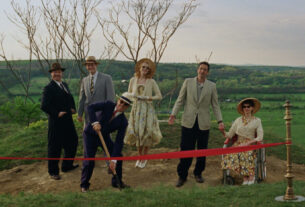
Sigmund Freud and Henrietta Szold are among the nine historical figures featured in “Ask Jewish Lives.” (Dov Abramson Studio)
When I put the question to Brandeis, who in addition to serving as the first-ever Jewish Supreme Court justice was also the president of the Zionist Organization of America, the answer I got was closer to describing the shape Israel took at its birth in 1948.
“My hope was for a whole, unified territory that would become a secular, majority-Jewish democracy,” “Brandeis” said, drawing on Jeffrey Rosen’s biography. “In this commonwealth, the equal civil, political, and religious rights of the Arab minority would be scrupulously and constitutionally respected.”
Eighty-five years after his death, that remains the aspiration for a lot of liberal and even not-so-liberal Zionists, who think Israel can remain a Jewish, democratic state if it doesn’t end up permanently controlling the lives of millions of non-citizen Arabs.
Beyond such heady debates, the site reminded me of the old parlor game asking which historical figures, living or dead, you might invite to a dinner party. I always hated that game. What would we talk about? Would Szold or Brandeis really enjoy coming to my house and getting drilled about their views on Zionism? On the other hand, how do you make small talk with Akiva or Elijah?
But a bot doesn’t blush, so I did try a personal approach with Szold. I asked her about her relationship with Louis Ginzburg, the legendary Talmud scholar at the Jewish Theological Seminary. She fell head-over-heels in love with Ginzburg, 13 years her junior, when she was the first woman to enroll at the Conservative movement flagship and he needed an amanuensis to translate his class notes and edit his writing. On Oct. 20, 1908, however, “my world fell apart,” she explained, when Ginzburg announced his engagement to another woman.
“Did he break my heart? Yes, he broke it utterly,” she told me. (The site only includes text. No speech or talking avatars, and the first-person responses are often paraphrases of each book’s content.)
But the heart’s loss was Zionism’s gain. “It was only when I stopped blaming myself and recognized how he had used my labor that the seeds of my renewal began to grow,” said “Szold.” “I emerged from that dark valley a different woman — independent, assertive, and no longer willing to be the self-effacing assistant to brilliant men.”
The dream of mine that stumped Freud wasn’t particularly troubling or lurid: I was holding up a busload of people because I couldn’t manage to pack my suitcase. And to be fair the father of psychoanalysis eventually gave me an answer when I worded the question differently. Rather than trying to interpret my dream on the spot, he explained how he might go about it were I his patient, which struck me as sound medical practice.
Keys isn’t worried that the AI tool will supplant or sully the scholarship represented by the Jewish Lives library. “It was really important to us from the beginning that this was a collaboration with our authors,” she said. “We want people to read their work.” She shared a statement from Derek Penslar, the Harvard historian and author of “Theodor Herzl: The Charismatic Leader.” “The platform is user-friendly and far more substantive and flexible than a Wikipedia entry or other,” he said.
Still, publishers are frantic that AI large language models are gorging on their output to train the machines and siphon their readers. And won’t AI efforts like “Ask Jewish Lives” tempt even serious researchers to cut corners, or to export their own thinking to a machine? (Asking for a friend.)
I put the question to Akiva, whose Jewish Lives biography was written by the mysticism scholar Daniel Matt. What followed was a moving sermon on the difference between “knowing” and “being” and the sanctity of intellectual labor.
“If you create a machine that can write, calculate, and decide, you have built a vessel,” “Akiva” warned me. “But do not confuse the vessel with the spring.”
Reporting the stories that define our era. When history unfolds in real-time, the Jewish world turns to (JR). Your support ensures we can document the complexities of war and the resilience of Jewish communities with integrity.
The views and opinions expressed in this article are those of the author and do not necessarily reflect the views of (JR) or its parent company, 70 Faces Media.