
In California, the decision of residents to leave often begins with a spreadsheet: rising rent, escalating taxes, the slow squeeze of everyday expenses. For many, the answer is a quieter life in Nevada or Texas, where space is more affordable and the pace a little more forgiving.
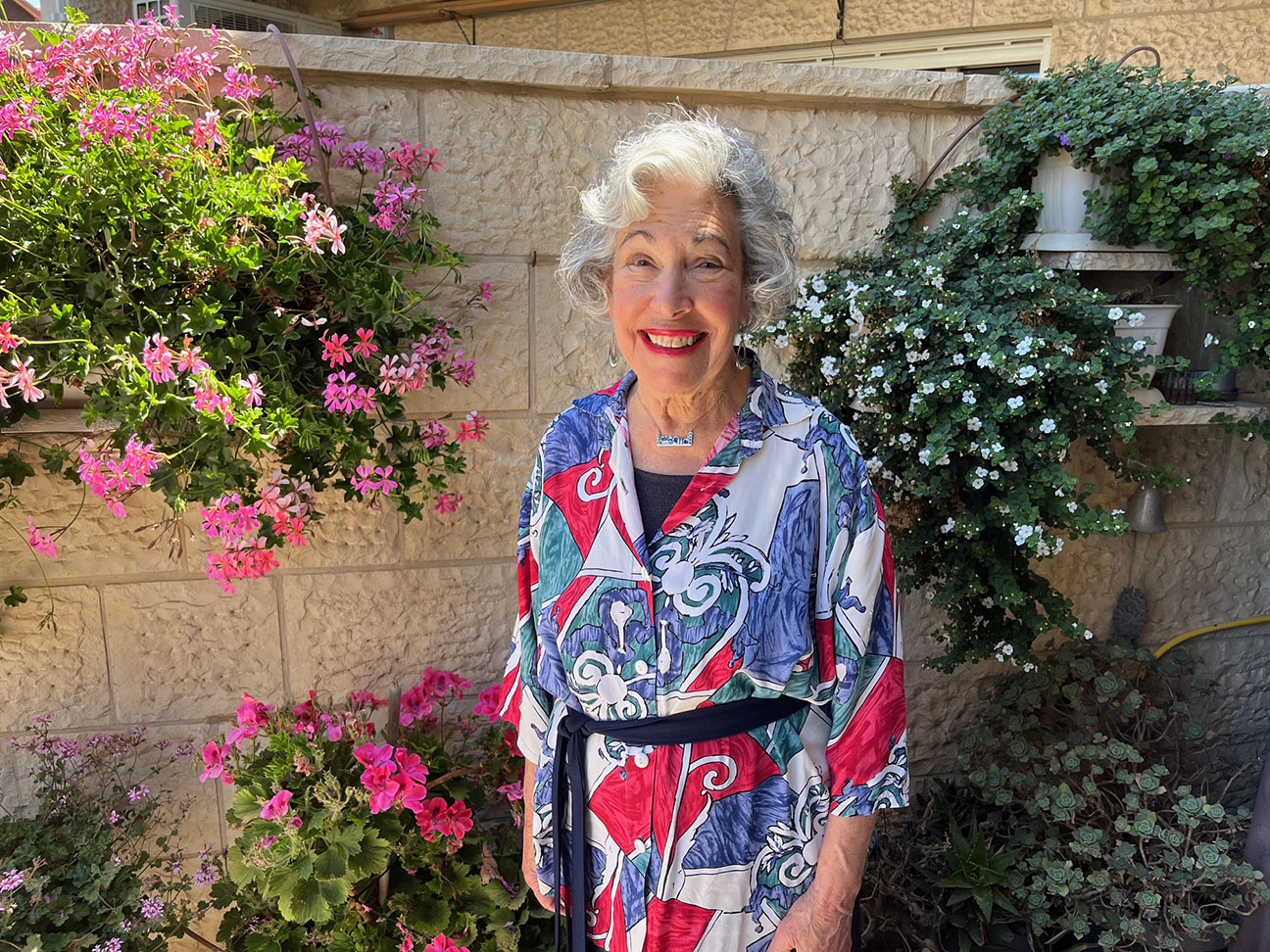
But for Dorraine Gilbert Weiss, 80, and her husband Barry, the calculation led somewhere far less predictable.
Eighteen years ago, when they were 62 and 75, respectively, Dorraine and her husband made a different kind of move entirely — one that didn’t just change their address but rewrote the geography of their lives. Eighteen years ago, they left Los Angeles, set out for Israel and made Aliyah, bringing along their elderly parents. They found a beautiful apartment in Jerusalem, not far from the Old City and the Western Wall, and began building a life far from the familiarity of home.
“My father was 88 years old then. We’ve already moved him and my mom from Arizona to LA to be close to us. Unfortunately, my mom passed away four months before we made Aliyah,” said Dorraine. “We brought Barry’s mom from New York, she was almost 96 years-old and lived to be almost 100. Her Social Security covered the rent of the apartment and the 24/7 caregiver.”
Barry, now 93, was seriously injured after a fall in 2025 in which he broke his neck. He is currently hospitalized at Herzog Medical Center in Jerusalem, Israel’s oldest hospital, which today serves as a leading geriatrics and physical rehabilitation center while also providing treatment for soldiers coping with PTSD. “It’s a wonderful place, you have to see it,” said Dorraine. “I’m doing a fundraiser for them at my home. Back in the U.S., they would have let him die because he’s in his 90s, but here they value both the soul and the body. The care is amazing, and everything is completely covered by insurance. If we had stayed in LA, we would have had to sell everything we owned to afford it.”
Born in Hawaii, Dorraine made several moves throughout her life. She first moved to New York, then Arizona and later settled in Playa del Rey. She married her first husband in 1967, and together they had two sons. One still lives in Los Angeles, while the other, Rabbi Aaron Neckameyer, moved to Jerusalem with his wife, Abigail, in 1997 following the birth of their first son. “They have five boys and two girls. The three oldest boys all served in the IDF, and the fourth has enlisted now. They all chose Haredi combat units.”
Her two granddaughters did not enlist but instead joined a national volunteer program designed for Haredi young women. One works with adults with special needs, while the other has been helping farmers whose livelihoods have been affected since the war began. “There are different ways to serve the country,” Dorraine said. “Being Haredi is no excuse not to serve. The Arabs should serve, too.”
Dorraine met her second husband Barry 35 years ago at a dance party. They have been happily married ever since.
Eighteen years after making Aliyah, Dorraine still doesn’t speak Hebrew. Yet she navigates daily life with remarkable ease, thanks to the kindness of both neighbors and complete strangers who are always willing to lend a hand.
“Everybody is so helpful at the supermarket. They’ll walk me down the aisle with a smile on their face and read the labels for me.”
Perhaps one reason she never learned Hebrew is that there is such a large English-speaking community in Israel. She also made Aliyah at a stage in life when learning a new language was far more challenging than it would have been at a younger age.
While Dorraine followed her son to Israel, many of her friends still have children living in the United States. “They go back to visit them and hope their children will make Aliyah too. They moved here, just like I did, because they love Israel. This is our home. It’s what God gave us,” Dorraine said. “If you want your children to stay Jewish, there’s a much better chance they’ll remain Jewish if you live here rather than in the U.S.”
Her beautifully decorated Jerusalem apartment also serves as a source of income, welcoming guests as a bed-and-breakfast. The home was even featured in The Jerusalem Post, showcasing Dorraine’s talent for interior design.
Life in Israel is not without its challenges. During periods of war, residents have had to contend with rocket sirens, forcing them to seek shelter at a moment’s notice. But even in those stressful moments, Dorraine found an unexpected blessing.
It was in the building’s shared bomb shelter that she truly got to know her neighbors for the first time. After the fourth or fifth time they found themselves huddled together during a rocket alert, casual conversations turned into friendships. Before long, invitations for Shabbat meals began arriving, not only from neighbors in her building but also from members of her synagogue.
“The community is great,” Dorraine said. “I go to shul, and three different families ask me, ‘Do you have somewhere to be for Shabbat?’ They always make sure I have a place. I know who to call if I need help. Maybe it’s because we’re all Jewish and live close together, but it’s not just the olim. It’s everyone. The car mechanic, everybody treats you like family.”
She recalled one repairman who drove all the way from Ma’ale Adumim because he felt responsible for helping her. Another technician who had come to fix her washing machine also repaired her refrigerator during the same visit. “The second time he came, he told me, ‘Just go buy a new one,’” she laughed, appreciating not only his honesty but the genuine care people show for one another.
Dorraine’s connection to Israel did not begin with her Aliyah. She has been an active member of Hadassah since 1968, and while living in the U.S. she served as Zionist Affairs Chair for Hadassah Southern California, spending decades advocating for the Jewish state long before she ever called it home herself.
Today, with several of her grandsons serving in the IDF, she believes there is no other place she would rather be. “It’s much easier being here while they’re serving than being thousands of miles away,” she said. “We know what we’re fighting for. This is our home. We understand what’s at stake, and we’re all in it together.”
After 18 years in Jerusalem, Dorraine has no plans to return to the United States. Despite the language barrier, despite the wars and the uncertainty, she says Israel has given her something she never expected at this stage of life — a deep sense of belonging, purpose and community. Looking back, she has never once questioned the decision she and Barry made to start anew in Israel.