
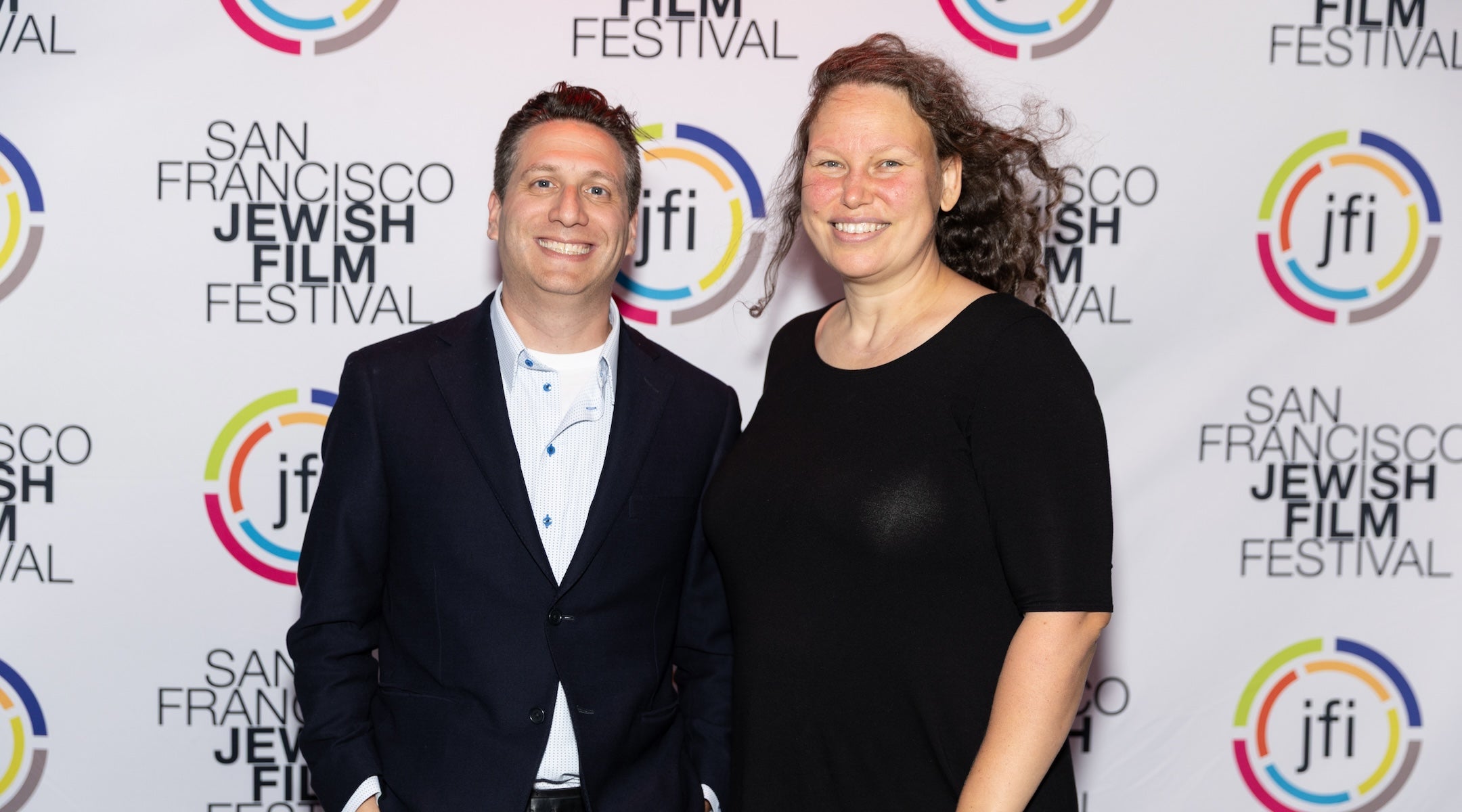
For nearly three years, much of Jewish culture has been shaped by war, rising antisemitism and questions of identity under pressure. Rachel Israel’s latest movies head in a different direction.
In the space of a year, the New York filmmaker directed two unabashedly Jewish comedies — “The Floaters,” set at a Jewish summer camp, and “Influenced,” a satire of Manhattan influencer culture that culminates in a b’nai mitzvah celebration.
Both immerse themselves in Jewish identity, but instead of treating Jewishness as a problem to be solved or an identity under pressure, Jewishness serves as the backdrop for stories about friendship, family, ambition and belonging.
Reviewer Nell Minow wrote that “The Floaters” has “an appealing Jewish neshama (soul) that peeks out from under the surface,” and that the film offers “an exceptionally authentic movie portrayal of the way Jewish traditions and culture reflect and shape the Jewish worldview.”
In an interview with the Jewish Telegraphic Agency, Israel discussed making two Jewish films back-to-back, why Jewish characters come naturally to her as a writer and director, and why, even after Oct. 7, she believes audiences are ready for stories that celebrate Jewish community as much as they confront Jewish vulnerability.
“I didn’t set out and decide I’m only going to make Jewish content, and I don’t think I’m only going to make Jewish content,” she said. And yet, her two latest movies, plus the 2017 love story “Keep the Change,” all have what she calls a “strong Jewish element.”
“It’s just kind of rolled into being,” she said.
The films also rolled into being at a time when antisemitism is on the rise and anti-Israel fervor over the Gaza war has put Jews on the defensive. In interviews for “The Floaters,” the director agreed that she hoped to provide an alternative image of “Jewish joy.”
“The Floaters” is a comedy about a Jewish summer camp, starring Jackie Tohn, from the very Jewish Netflix hit “Nobody Wants This,” as a would-be rock star hired to supervise a group of misfit campers, the “floaters” of the title. “Influenced” is the story of a newly divorced Manhattan Jewish mother (Jill Kargman) who tries to climb the ranks of the Upper East Side influencer scene, while also helping her twin children prepare for their bar and bat mitzvah.
“The Floaters” was shot first, and “Influenced” second. “The Floaters” is currently in theaters, with a video-on-demand release expected later this year. “Influenced” is currently available for rental from Apple, Amazon and other providers.
In the indie comedy “The Floaters,” Sarah Podemski stars as Mara, the director of the fictitious Camp Daveed. (Courtesy of Bright Iris Film Co.)
In addition to their lead actresses, the films also have very Jewish casts. “The Floaters” features Seth Green, Steve Guttenberg and pro wrestler Maxwell Jacob Friedman. “Influenced” features David Krumholtz — as an unhoused onetime rock star who collects bar mitzvah shirts — Justin Bartha and Dan Hedaya. Judd Goodstein and Ellie Biron play the two b’nai mitzvah kids and Gwyneth Paltrow also makes a cameo.
“The way I approach it is, I’m grateful for the bounty when there’s bounty,” she said of having the chance to make two movies back-to-back.
The same goes for family. “I was pregnant while filming ‘The Floaters,’ and we reached some sort of milestone in the edit, and then I delivered,” Israel said. “Then my daughter was 4 months old when we went into production on ‘Influenced.’”
Israel’s five children are between the ages of 2 and 9, and on several occasions she enjoyed the chance to bring a child with her for “a weekend date with mama” to one of the festivals where her films have screened. In an industry famously inhospitable to women directors and working moms, she and her husband, producer and filmmaker Kurt Enger, have made it work.
“When you have filmmaking parents, I think it’s really a family effort to support that career, because I was away from them for a while in making both films, and so it was great to bring them to see the work,” she said.
“The Floaters” was shot at Camp Tel Yehudah in Barryville, New York, in the Catskills, the same camp where the producers’ parents met. The film features a wide variety of Jewish types, from kosher-enforcing kitchen staff to a group of outsider-ish kids to a female rabbi (played by Aya Cash).
Israel didn’t attend Jewish summer camp, but relished the opportunity to immerse herself in the culture.
“It was wonderful to have that, to be shooting in this real location and kind of have all of the texture of the place to feel fully authentic on screen and permeate the experience. I felt through making it that I absorbed some of what camp is like,” she said of “The Floaters.”
Israel has much more experience with New York City, where “Influenced” was filmed on location. A New Jersey native who spent many formative years in Florida and attended the Rhode Island School of Design, she has been based in New York since beginning graduate school at Columbia University, where she earned an MFA in 2013.
Nevertheless, shooting “Influenced” also involved a learning curve.
“I’m not even on social media,” she said. She enjoyed the opportunity to approach that world with “fresh eyes.”
“Keep the Change,” her first feature, was based on her own short of the same name, which she developed in grad school at Columbia. That film is set in part at a Manhattan Jewish community center.
The film, she said, was “based on people I knew.”
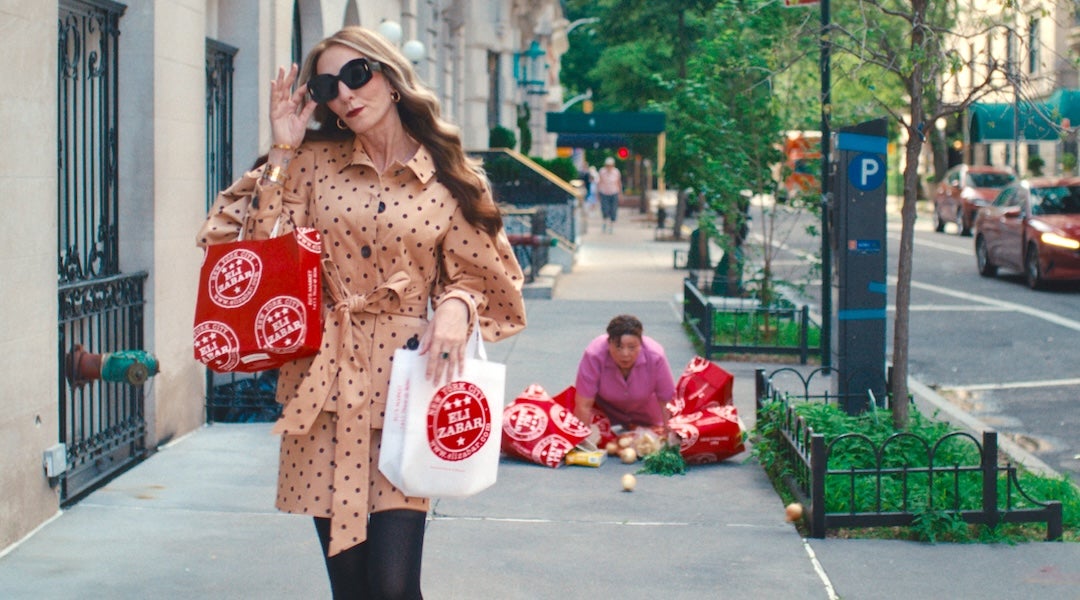
Jill Kargman plays an Upper East Side mom-influencer in the 2026 film “Influenced.” (Brainstorm Media/Menemsha Films)
And while “Influenced” is not “centrally” a Jewish film, its characters are clearly Jewish, and it has a “strong Jewish thread.” At their climactic bar/bat mitzvah party, the kids reference the idea in Genesis that all humans are created “b’tzelem Elohim — in the image of God” and are inspired by that lesson to create a charity to help the downtrodden.
“Influenced” had its world premiere at the Miami Jewish Film Festival in January, while “The Floaters” had its Southeast U.S. premiere at the same festival, after having its world premiere at the Bentonville (Arkansas) Film Festival in June 2025. Both films have spent some time on the Jewish film festival circuit, a process that Israel enjoyed.
“Being Jewish,” she said, “you can find rooms full of family who you might not have met before, but that feeling of Jewish familiarity in all different places is wonderful.”
The Bentonville festival wasn’t Jewish, but “we brought out the Jewish community in Arkansas.”
“It’s fun feeling that expansive, Jewish film family,” she said.
She considers herself, these days, “more like Reform, Conservative-level of observance.”
“Having Shabbat and being a parent and wanting to continue that legacy and that connection — that positive emotional connection to being a Jew and pride in that identity — is very important to me and my husband in raising our family,” Israel said.
While she did not write the screenplay for either of the new films, Israel said of “The Floaters” that she “loved the opportunity to make a film that would say what I felt this film says about Jewish community.”
“Being Jewish from my earliest memory of myself, [and] understanding fully what it means to be a Jew intellectually, it was very central to who I was,” Israel said. “I had a very, very strong relationship with my grandparents on my mother’s side, and they were both Holocaust survivors.
“How much they cared about family, and their sense of humor — they were very pivotal figures in my life. Those relationships with my grandparents at a young age were to me what it meant to be Jewish. It was talking about stuff, it was talking about feelings, it was talking about messy things.”
Reporting the stories that define our era. When history unfolds in real-time, the Jewish world turns to (JR). Your support ensures we can document the complexities of war and the resilience of Jewish communities with integrity.