
This article was produced as part of (JR)’s Teen Journalism Fellowship, a program that works with Jewish teens around the world to report on issues that affect their lives.
For generations of Jewish Americans, the clacking of mah jongg tiles was the soundtrack of a social and sometimes raucous table game associated with their mothers and grandmothers. Now, a new generation is taking a seat at the table.
The game, which originated in China in the 19th century and became a staple among American Jewish women in the mid-20th century, is finding new life among Jewish teenagers and young adults. Once associated largely with retirees, mah jongg is increasingly being played in synagogues, community centers and family homes by younger players drawn to its strategy and, perhaps most of all, its coveted demand for face-to-face connection without screens.
For some young players, that interaction is the point.
“I always thought of it as a game for grandmothers,” said Louisa Gordon, 19, of New Jersey. “But once I started playing with friends we couldn’t stop! It has really given me an opportunity to connect with others off of my phone.”
The growing interest has not gone unnoticed by the people helping bring mah jongg to new audiences.
Dara Collins and Donna Kassman, founders of Modern Mahjong — an online mah jongg store, resource guide and Facebook group with more than 100,000 members — have watched the game’s audience get younger.
“We started teaching people in their 60s,” Kassman said. “And now college clubs, high school, middle schools.”
They increasingly see posts about high school mah jongg clubs, with players and supporters sending cards and tiles to help new groups get started.
“People just want to put the phone down and socialize,” Kassman said. “We always say ‘no phones and no politics.’”
For Sarah Shlefstein, 18, of Searingtown, New York, learning mah jongg was about spending more time with her family.
“I wanted to learn so I could play with my grandmother, mother and sister,” Shlefstein said.
Although she found the game difficult at first, Shlefstein soon became hooked and now regularly joins her mother’s mah jongg group.
“The biggest misconception is that mah jongg is boring or only for older people,” she said. “Once you learn how to play, it’s actually very engaging and competitive.”
She said the constantly changing strategy keeps the game fresh, but the conversations around the table are just as meaningful.
“I enjoy spending time with the people I play with,” she said. “It’s a fun way to connect with family and friends.”
That same shift is playing out at Jewish summer camps, where mah jongg is reaching children who might never have encountered the game at home.
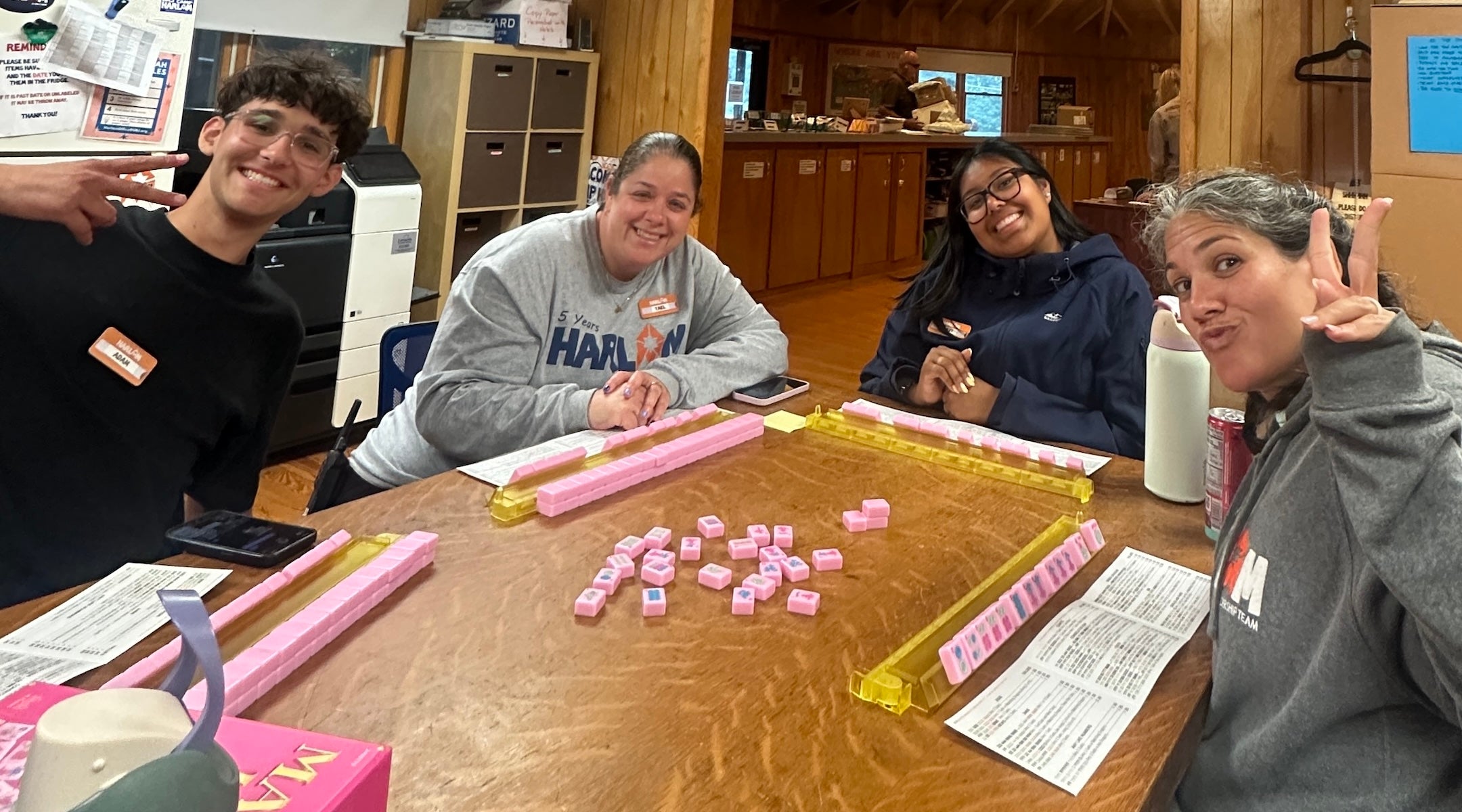
At URJ Camp Harlam in Pennsylvania, the game was offered this summer during “Camper Free Choice,” a Saturday afternoon program where campers choose their own activities. Ellie Tepper Schulman, the camp’s associate director, said the idea came after a camper suggested bringing mah jongg to camp.
“My friends were all playing,” she said. “I learned and became pretty addicted myself, and so I was like, now that I want to play it all the time, I need to play it at camp.”
She brought several sets to camp and began teaching campers.
“So I just started setting it up, and so many kids were opting into just coming to learn how to play mah jongg or playing because they already knew,” she said. “At one point this session, we had like six or seven tables in this one area of camp, and every table was filled with kids playing mahjong.”
The game quickly spread beyond the original Saturday program.
“We are seeing kids [who] want to play during rest hour,” Schulman said. “A couple counselors have added mah jongg as their staff specialty.”
Some campers have even started keeping sets in their bunks.
“They can’t get enough of it now,” she said.
The game has also created unexpected connections between campers and staff.
“Last Saturday, I played mah jongg for three and a half hours straight, and it was like the best afternoon,” she said, “It feels really funny to get excited to win a game against 12-year-olds.”
For Schulman, the game gives campers something different from traditional camp activities.
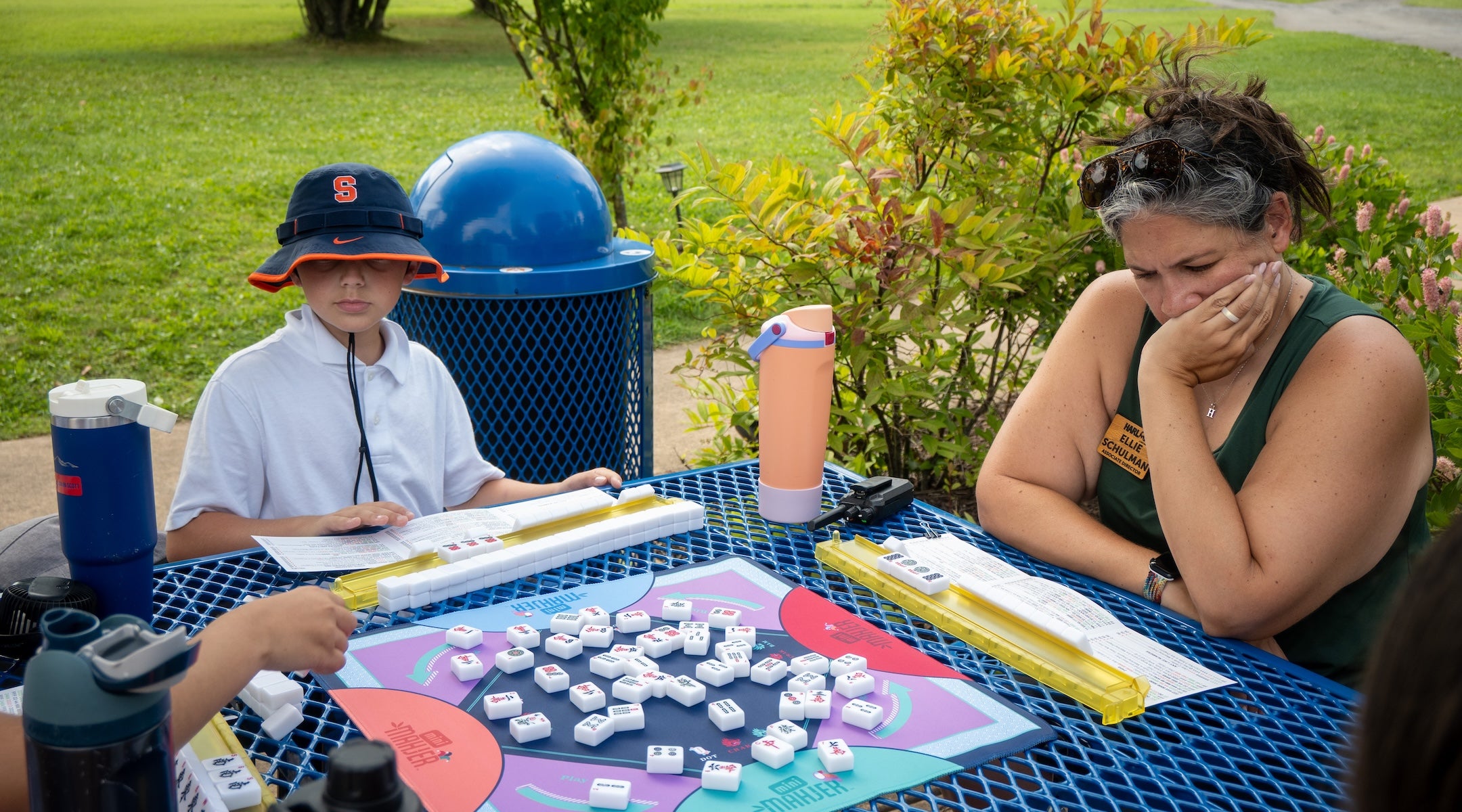
“It’s a hard game, which I think is also not something that we typically do at camp,” she said. “We don’t use our brains so much at camp in the way that mah jongg kind of forces you to.”
Camp Harlam has also tried to get boys involved in what has historically been described as a women’s past time, passed down in America by Jewish mothers to daughters at bungalow colonies and suburban get-togethers.
“We’ve been really intentional about making sure that campers know that anybody can play the game,” she said. “I didn’t want it to just be something that campers were like, ‘This is a girls’ game.’ I want it to be for everyone.”
And for Schulman, the most meaningful part may be what happens when campers leave camp.
“I think that mah jongg is one of the things that I’m really excited that our campers are going to go home and tell their grandparents about.”
For other young players, mah jongg has become a way to connect across generations.
Michelle Soussan, 24, of Long Island, first learned mah jongg in March after her mother encouraged her to watch instructional videos before playing a practice game with family friends.
“My mom was going every Wednesday to play mah jongg with friends, and it seemed like a fun idea to learn,” Soussan said.
What started as curiosity quickly became a favorite pastime. Typically four players draw and discard tiles, each with a symbol like a deck of cards, trying to assemble a winning 14-tile combination. Winning hands have to match one of the combinations printed on cards published annually by the National Mah Jongg League.
“Mah jongg is different from other games because the card changes every year, so it makes it more challenging,” Soousan said. “I’ve met a lot of young people recently who also learned to play mah jongg, so I think the idea that mah jongg is associated with older generations is changing. It’s a fun game for anyone to learn.”
Talia Rosen, a rising senior at Tufts University, learned mah jongg from her best friend while staying at her house.
“I definitely had preconceived notions that it was going to be very hard and boring,” she said. “Because of those, I thought I would not like it, but I was quickly proven wrong.”
She said learning the game has also strengthened relationships across generations.
“This summer I work with older adults at my local JCC, and I have actually been able to connect with some of them and form bonds over a shared interest of mah jongg,” Rosen said.
Long Island instructor Jill Zoccoli has watched this generational shift unfold.
After her mother died before could teach her the game, Zoccoli took a mah jongg class at her local library. When she struggled to find people to play with, she “started creating drop-in games at my local library so everyone always had a place to play,” Zoccoli said.
Zoccoli said she is currently teaching a mother and her 13-year-old daughter. After teaching one group of women on Long Island, their daughters also enrolled in lessons.
“Now they all play together weekly,” Zoccoli said. “They play with their grandparents as well.”
The trend extends beyond mothers and daughters. Some of Zoccoli’s younger students now play regularly with parents, grandparents, spouses and in-laws, even gathering for games during Shabbat weekends.
“I feel like I’m a little part of that, bringing families together,” Zoccoli said.
For Zoccoli, the relationships built through the game have become its greatest reward. She recalled one former student telling her, “You gave me a whole new life. I’m getting out of my house now. I play three times a week. I met new friends.”
Whether she’s teaching a teenager or a retiree, Zoccoli believes anyone can learn the game.
“It definitely takes time. You have to be patient,” she said. “Once you get the hang of it, you’re going to be addicted.”
As the Year Turns, Support the Journalism You Trust. (JR) covers the stories shaping Jewish life around the world — with the depth this moment calls for. As you reflect on the year ahead, consider a gift that keeps independent Jewish journalism strong.