
TEL AVIV – Israel’s Central Election Committee on Thursday allowed far-right Jewish parties to be on the ballot in the Oct. 27 election after it had disqualified two Arab parties from running the day before. The decision could boost Prime Minister Benjamin Netanyahu’s electoral prospects unless the Supreme Court overturns the decision.
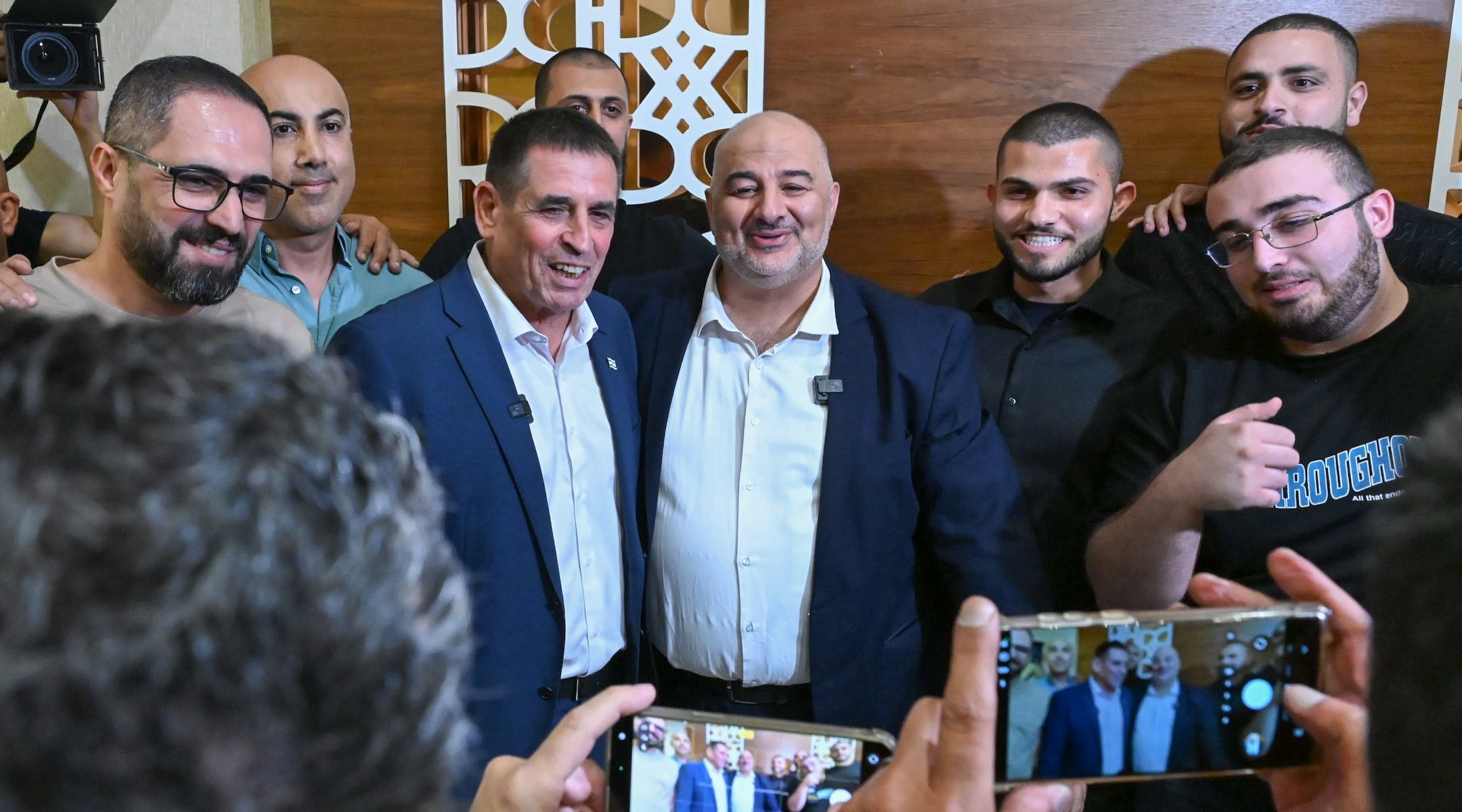
On Wednesday, a large majority of the election committee voted to disqualify the Joint List, an alliance of three Arab parties that represents the largest Arab political bloc in the polls, and Ra’am, the other predominantly Arab party. Ra’am has advocated cooperation with Israel’s center-left camp and helped form the 2022 Israeli government, the only coalition since 2009 that did not include Netanyahu.
The committee also voted to disqualify two individual candidates: Sami Abu Shehadeh, the chairman of the Balad party, which is part of the Joint List, and Jewish lawmaker Ofer Cassif, who is also running on the Joint List.
Israeli law sets out grounds for disqualifying candidates and parties from races, including for undermining Israel’s character as a Jewish state, supporting armed struggle against it and inciting racism. The Central Elections Committee, made up of representatives of parties currently serving in parliament, rules on petitions arguing that specific parties and candidates are unfit under the law. Critics say its decisions are inherently political.
Based on precedent, the Supreme Court is unlikely to uphold the banning of the parties, which would leave more than 2 million Arab citizens of Israel without their traditional political representation.
On Thursday, the committee voted against barring far-right National Security Minister Itamar Ben-Gvir’s Otzma Yehudit (Jewish Power), as well as the Religious Zionism–Zehut party, one of whose leaders, Moshe Feiglin, has expressed support for the forced expulsion of the entire population of the Gaza Strip.
The committee also rejected a petition to disqualify the Democrats, the party led by former IDF general and left-wing politician Yair Golan. The petition argued that the party undermines Israel’s democratic character and cited Golan’s statements criticizing a media outlet aligned with Netanyahu, as well as his critical remarks about the ultra-Orthodox community.
“The disqualification is an attempt by Netanyahu and Ben-Gvir to steal the election and deny the voices of more than a million citizens,” the Joint List said in a statement, calling the decision “racist.”
Ra’am chairman Mansour Abbas called the move “political, illegitimate and anti-democratic,” saying it was intended to prevent the formation of a government that would replace Netanyahu.
A representative of Israel’s attorney general, an independent legal official who provides the committee with a legal opinion, told the committee that the evidence against Ben-Gvir’s party was “very troubling and very close to the prohibited zone.” The official nevertheless concluded that the party should not be barred from running, without providing a reason why.
The petitions seeking the party’s disqualification argued that Ben-Gvir had incited racism and undermined Israel’s democratic principles. Ben-Gvir called the effort to disqualify his party an attempt at “political assassination.”
The Supreme Court has the final say on the disqualifications. The last time the Supreme Court itself disqualified candidates was in 2019, when it barred three Jewish candidates from the far right. But in nearly every Israeli election over the past two decades, parties or candidates have been disqualified by the committee only to ultimately be allowed to run by the Supreme Court.
In the last election, in 2022, the court overturned the disqualification of Balad. This time, however, Balad’s chairman’s disqualification is expected to survive Supreme Court review.
The committee nixed Abu Shehadeh on Wednesday over an article he published on Oct. 8, 2023, one day after Hamas’ Oct. 7 attacks in which 1,200 Israelis were killed and 251 people were taken hostage.
In the article, Abu Shehadeh described the Oct. 7 events as an “important historic event” and indicated that lessons could be learned from how Hamas managed to surprise Israel and carry out its invasion. His comments were cited as evidence that he supports armed struggle against Israel.
The request to disqualify Abu Shehadeh even received support from parts of Israel’s political left, including the Democrats, the country’s most left-wing Zionist party.
Golan, the chairman of the Democrats, said Abu Shehadeh’s comments crossed “a red line,” adding that “anyone who wants Jewish-Arab partnership does not speak this way.” Ben-Gvir, a leading advocate of Abu Shehadeh’s disqualification, called him a “terrorist” and said that “his place is in the Syrian parliament, not the Israeli one.”
Attorney General Gali Baharav-Miara also issued a legal opinion saying there was “a basis for disqualification.” And in an unusual move, Supreme Court Justice Noam Sohlberg, who as the chair of the Central Elections Committee is its only nonpartisan member, also voted in favor of disqualifying Abu Shehadeh. He explained that he had departed from the usual practice of the committee chairman remaining neutral in such votes because he “did not find an answer that could reasonably address” what he described as Abu Shehadeh’s “serious” statements.
Earlier this month, Abu Shehadeh walked back his article in a post on X, writing that “had I been aware of the scale of the atrocities at the time I wrote the article, I would not have published it.”
Following Thursday’s decision, Abu Shehadeh again said he “condemns the Oct. 7 attack and all the killings that were carried out,” and reiterated his opposition to armed struggle against Israel.
He said he would challenge the disqualification in court.
“We will not be deterred by attempts to exclude us,” he said in a statement.
As the Year Turns, Support the Journalism You Trust. (JEWISH REVIEW) covers the stories shaping Jewish life around the world — with the depth this moment calls for. As you reflect on the year ahead, consider a gift that keeps independent Jewish journalism strong.