

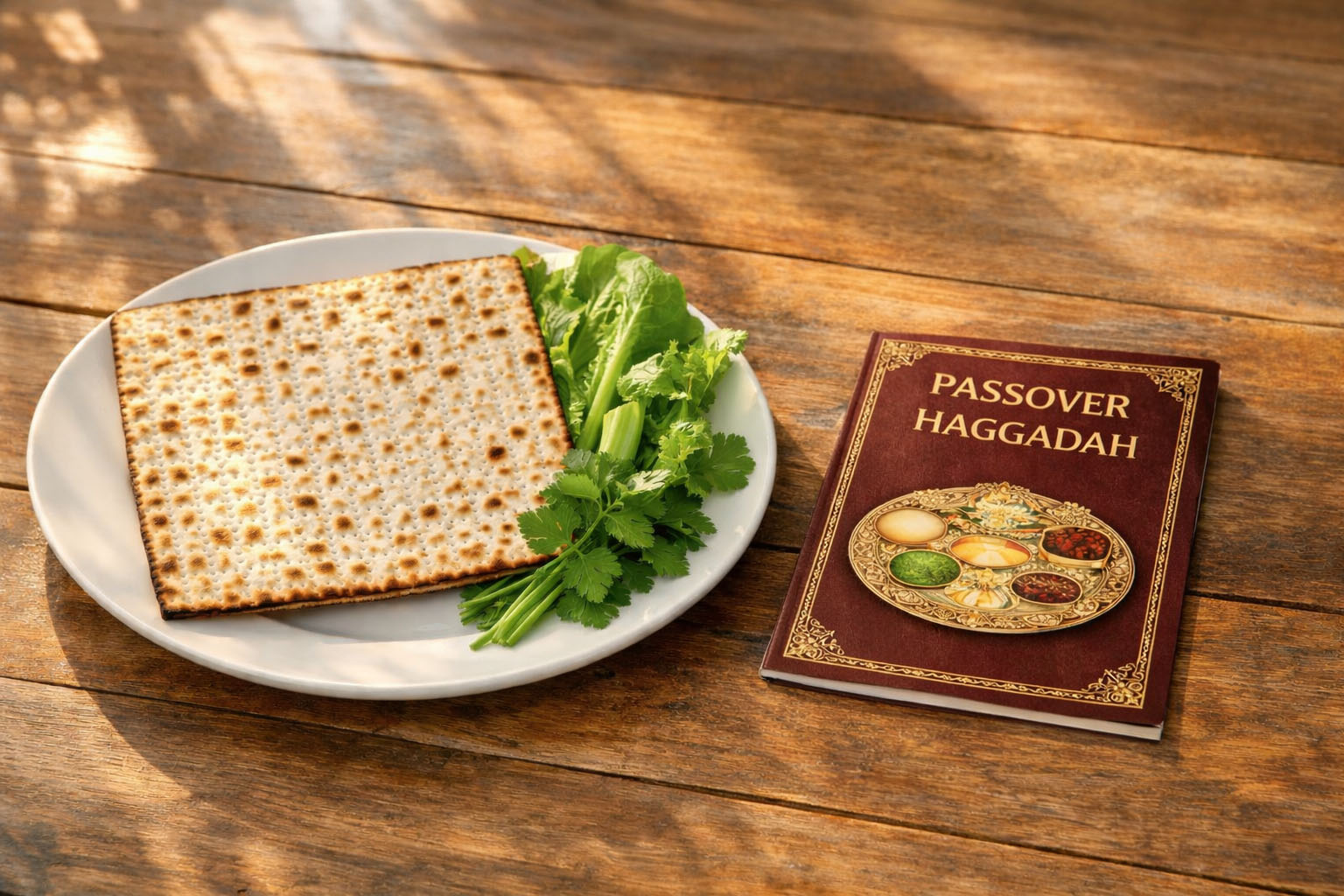
What’s the mitzvah of Passover? One commandment is to not eat leavened products. Another is to not see leavened products. But the steps of the Seder allow us to fulfill another mitzvah: to tell the story of the Jewish people.
The Haggadah, the book that we use during the Seder, informs of us what to share. Rabban Gamliel used to explain that if we don’t mention the Passover sacrifice, matza or maror (bitter herbs), we have not fulfilled our obligation. In other words, these three items help us understand the essence of the Jewish narrative.
The Passover sacrifice connects us to the ongoing worries, fears, and uncertainty our people face daily. Imagine the Jews during the first Passover Seder, Jews huddled at home, wondering what might befall them.
The matza symbolizes our current state, one in which we are committed to our thriving even when are faced with meager ingredients for survival. Just look at the Israelis celebrating weddings and b’nai mitzvah during ongoing bombardment. Matza reminds us how to eat, celebrate, and hold joy even when as a Jewish people, our spiritual sustenance may feel low.
And maror, the bitter herbs, teaches us that bitterness always exists. In our personal or collective narrative, tragedies and brokenness abound. Bitterness cannot and should not be ignored. It is seen and named on the Seder plate. And maror is not the only symbol we recognize. This means that bitterness is present, but it does not solely define who we are.
What is the story you will share about the Jewish people on Seder night? May the story you share be a reminder that through our fears and uncertainty, alongside the bitterness we experience, redemption awaits. Freedom is felt through a foundation of faith—and in knowing that every house around the world, on Passover, tells our ongoing, ever-evolving story. A story of survival. A story of joy. A story of hope.
A story that is both yours and mine to tell.
Shabbat Shalom