
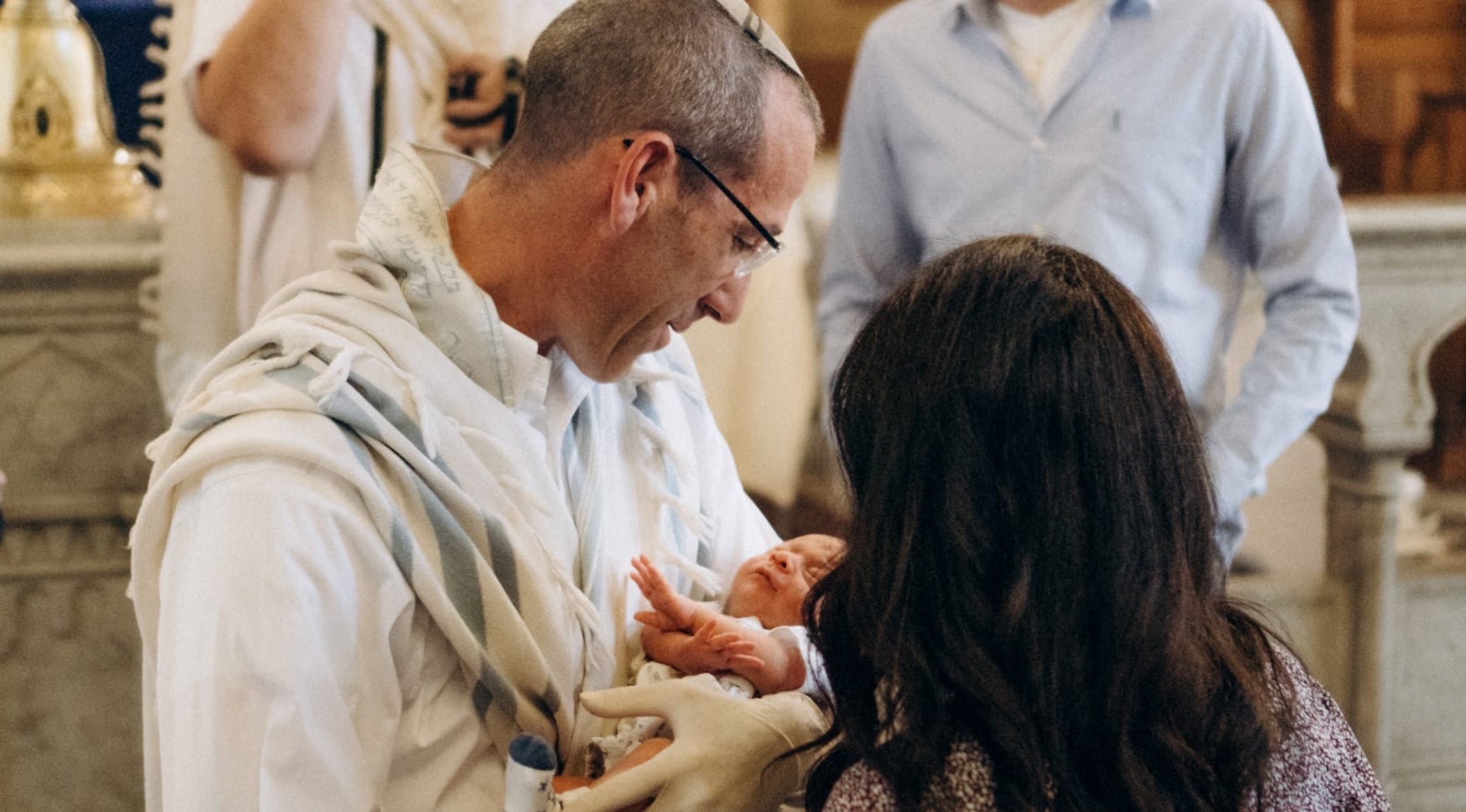
“I’m not doing this!” the mother screamed. “Tell everyone they can go home — I won’t hold my baby’s Bris while rockets are on the way.” It’s not every day a mohel has to balance such tensions, but when war breaks out, the eighth day waits for no one.
The event was scheduled for Shabbat morning, south of Jerusalem, an hour’s walk from my hometown. My plan was simple: attend an early morning minyan near home, grab a bite to eat, and head to the bris. At the time, I had no idea what was on the horizon.
As we finished Parashat Zachor — the command to both remember and eradicate our biblical arch nemesis Amalek — the cantor ascended the bimah. When he uttered the final line of the Prayer for the State of Israel, the first siren rang out. Everyone scattered, running for their homes and bomb shelters.
It turned out to be a different warning, one intended to alert the country that Israel’s strike on Iran had begun and retaliations were imminent. It wasn’t a question of if, only when.
This was not the first time I had to perform a brit milah under rocket fire. During the previous instance, I succeeded in “dancing between the raindrops,” arriving home just before the worst hit. But that was a weekday event; now I would be on foot. I hesitated to go, but chose a route that hugged the red-roofed houses of our area, ensuring a doorway was always within reach should I need to dive for cover. I prayed my timing would work out again, but it was not to be.
The walk there was eerily quiet. Each step felt as if a siren was afoot. I arrived at the synagogue before any warnings were sounded and began to arrange my tools. In a community without cell phone access, Home Front Command instructions trickle out by word of mouth.
As the prayer service concluded and the time came for the circumcision, the first alarm sounded. Now a new dilemma arose — try to carry out the Bris before the barrage arrived or wait until things quieted down? The mother was adamant — her son’s circumcision would not be conducted in a rushed, unsafe fashion. I agreed it was wiser to wait until this wave had passed.
But word quickly spread that the barrage wasn’t coming directly toward us. Someone with a cell phone for emergencies such as these read that the rockets were headed north. I encouraged the mother that things were safe, but only for now. We should take advantage of the space between the raindrops and hold the brit milah before the next storm develops. She reluctantly agreed, and it turned out to be providential.
The brit milah carried a different kind of weight. Celebrating life during liminal moments always intensifies emotions. Just as the happy occasion came to a close, a new series of sirens began — and this one was for our location. Most of the community quickly grabbed food from the celebratory kiddush (also part of the mitzvah of brit milah) and filed into the adjacent bomb shelter.
After sheltering the requisite time, we made our way back to the synagogue to clean up. The father of the baby mentioned that his own bris had been during the Gulf War. My friend replied, “Maaseh Avot, Siman L’Banim (the actions of our forefathers are a sign for their children).” It’s the Jewish way of saying, like father, like son.
As I readied for the return home, the father mentioned that he may not be around the following day when I planned to check the baby. He had already been called up for reserve duty. As challenging as I’m sure this is for the mother of the baby, it has always been our reality in Israel. Our commitment to the state is unwavering.
But the current clash feels different. Even as tragedy strikes with each passing barrage, there is hope in the air — a feeling that maybe this time it really will be true that we’re fighting so that the baby doesn’t have to. There is a sense that toppling the Iranian regime could fundamentally reshape the region and alter the trajectory of the conflict.
For now, as Purim approached, as we once again are embroiled in an existential battle with the descendants of Haman, the brit milah felt like the ultimate defiance of those who wish to eradicate the Jewish people.
The views and opinions expressed in this article are those of the author and do not necessarily reflect the views of (JEWISH REVIEW) or its parent company, 70 Faces Media.