
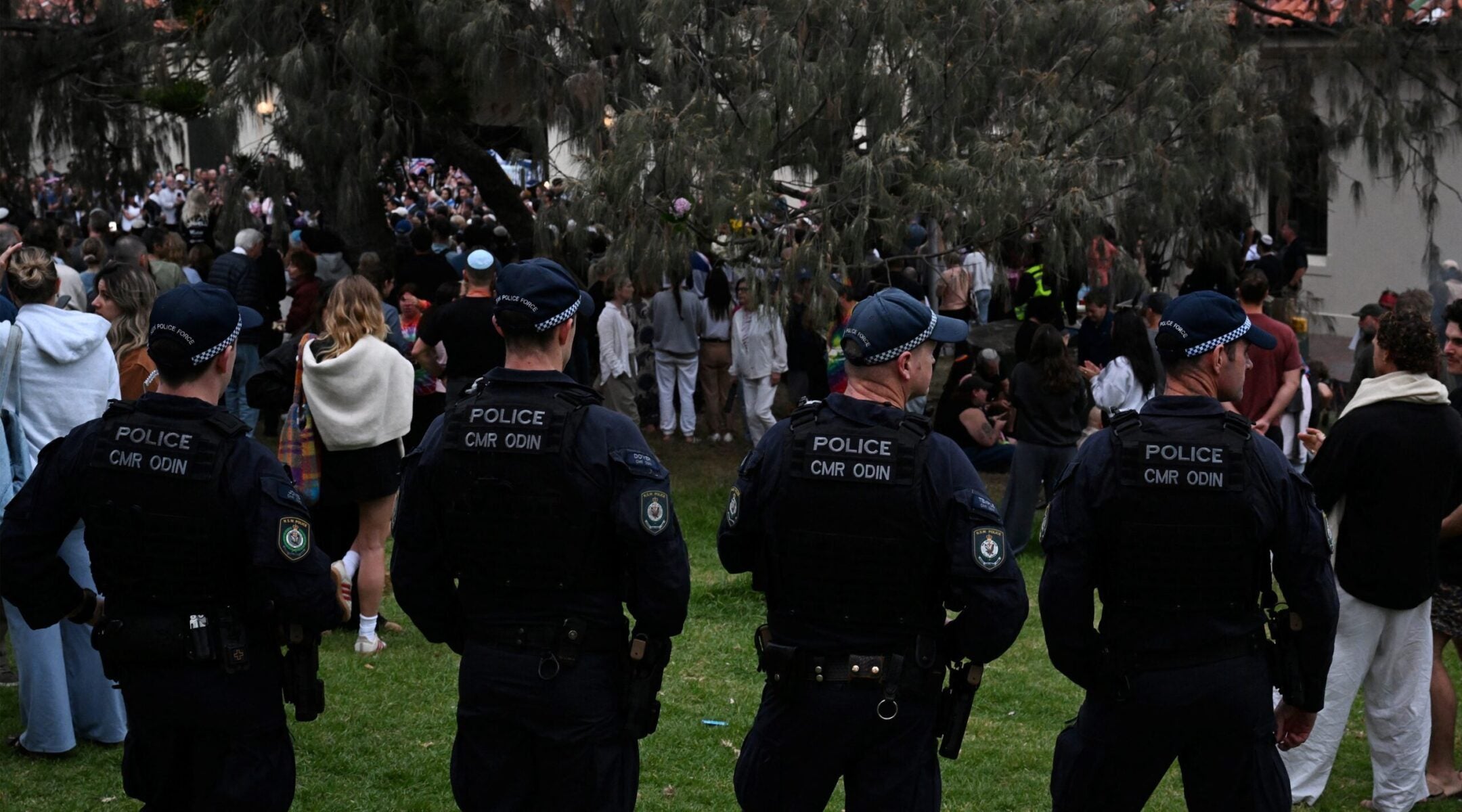
The father-and-son duo who killed 15 people during an attack on a Hanukkah celebration in Sydney on Sunday were motivated by “Islamic State ideology,” Australian authorities have confirmed.
Australian media had reported on Monday that the country’s intelligence service had previously investigated Naveed Akram, the son, over his ties to members of an Islamic State cell in Sydney.
On Tuesday, officials confirmed the account and revealed that both Naveed Akram and his father Sajid spent most of November in a region of the Philippines where the Islamic State maintains a stronghold. Officials believe the pair received military training there, though they would not say whether the trip had alarmed security officials at the time.
“It would appear that there is evidence that this was inspired by a terrorist organization, by ISIS,” Australian Prime Minister Anthony Albanese said at a press conference on Tuesday. He confirmed that Islamic State flags had been found in Naveed Akram’s car, abandoned at the scene of the shooting.
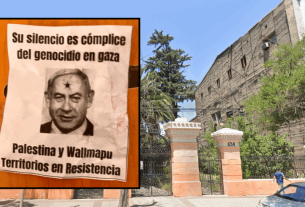
The revelations complicate the narrative that emerged immediately after the attack connecting it to Australia’s recent pro-Palestinian protest movement, which has at times featured antisemitic displays and attacks on Jewish sites.
But the Islamic State and Hamas, the leading Palestinian liberation organization whose attack on Israel on Oct. 7, 2023, triggered the war in Gaza, have historically been at odds, with the Sunni Islamic State openly viewing Hamas as insufficiently Islamic and an avatar of Iran and Shia Islam.
The Islamic State is a decades-old terrorist group that for a time acted as al-Qaeda’s affiliate and promotes Islamic fundamentalism; its enemy, broadly speaking, is the West and its targets have ranged from Christian churches to concerts to public festivities. Last year, an Islamic State-inspired operative killed 14 people at a New Year’s street party in New Orleans, and the group claimed credit for an attack on a Moscow concert hall that killed more than 140.
Hamas, on the other hand, sought to impose some strictures of Islamic law in Gaza, which it has controlled, but allows a far more permissive religious and cultural environment. Its express goal is the elimination of Israel, and attacks staged by its affiliates abroad, typically supported by Iranian cells, have tended to target Jewish and Israeli sites — as has been the case in Australia, which recently expelled the Iranian ambassador over his country’s alleged ties to a string of attacks on synagogues.
In the immediate aftermath of the Oct. 7 attack, the Israeli government promoted an equivalency between the two groups, citing their similarly brutal tactics. But some experts in terror movements balked at the comparison.
“The Islamic State literally views Hamas as apostates and IS supporters have been pillaging Hamas online since Saturday bc they are tools of Shia Iran and also don’t actually implement sharia [Islamic law] according to IS’s interpretations,” Aaron Zelin, a senior fellow Washington Institute for Near East Policy, tweeted at the time.
But two years of war in Gaza that activated pro-Palestinian sentiment in many places around the world may have shifted the distinctions between the movements, according to terrorism experts, who also say the Islamic State has become more decentralized over time.
Rommel Banlaoi, a political scientist focused on terrorism in the Philippines, told the New York Times this week that a December 2023 attack on a Catholic mass there had marked a turning point for the group.
“Before, the focus was on creating an Islamic state,” Banlaoi said. “Now it has transformed to helping Muslims, Palestinians displaced by the Middle East violence.”
In part, the shift may reflect an opportunistic approach to the masses of people activated online in support of the Palestinian cause. A “Worldwide Threat Assessment” prepared by the U.S. Defense Intelligence Agency in May said the Islamic State and al-Qaeda were showing signs of trying to capitalize on a new audience.
“Both groups continue to reference Israeli operations in Gaza to galvanize their global networks, recruit new members, generate revenue, and enable or inspire attacks against U.S., Israeli, Jewish, and European interests worldwide,” the report said.
An unnamed “senior Arab security official” told the Washington Post in the wake of the Bondi Beach attack that online activism tied to the Islamic State had surged during the war in Gaza. “They are exploiting the emotional outrage of Muslims and use reports of [Muslim] women and children being killed or allegedly starved as tools of recruitment,” the security official said.
Counterterrorism experts also believe that an increased focus on threats related directly to the war in Gaza could have undercut those trying to monitor and stop the Islamic State. Brett Holmgren, then a top counterterrorism official in the Biden administration, for example, said at an event hosted by the Center for Strategic and International Studies last year that the Islamic State was regrouping “as governments shifted attention and resources to the conflict in Gaza.”
The Islamic State has not claimed responsibility for the Bondi Beach attack, which was immediately condemned by the governments of Arab states that are supportive of the Palestinian cause. Authorities have not said whether the attackers left any record of their intentions or motivation beyond the Islamic State flags found in their car.