
The public broadcaster of Iceland announced on Wednesday that it will not participate in this year’s Eurovision Song Contest after Israel’s participation was confirmed by the European Broadcasting Union last week.
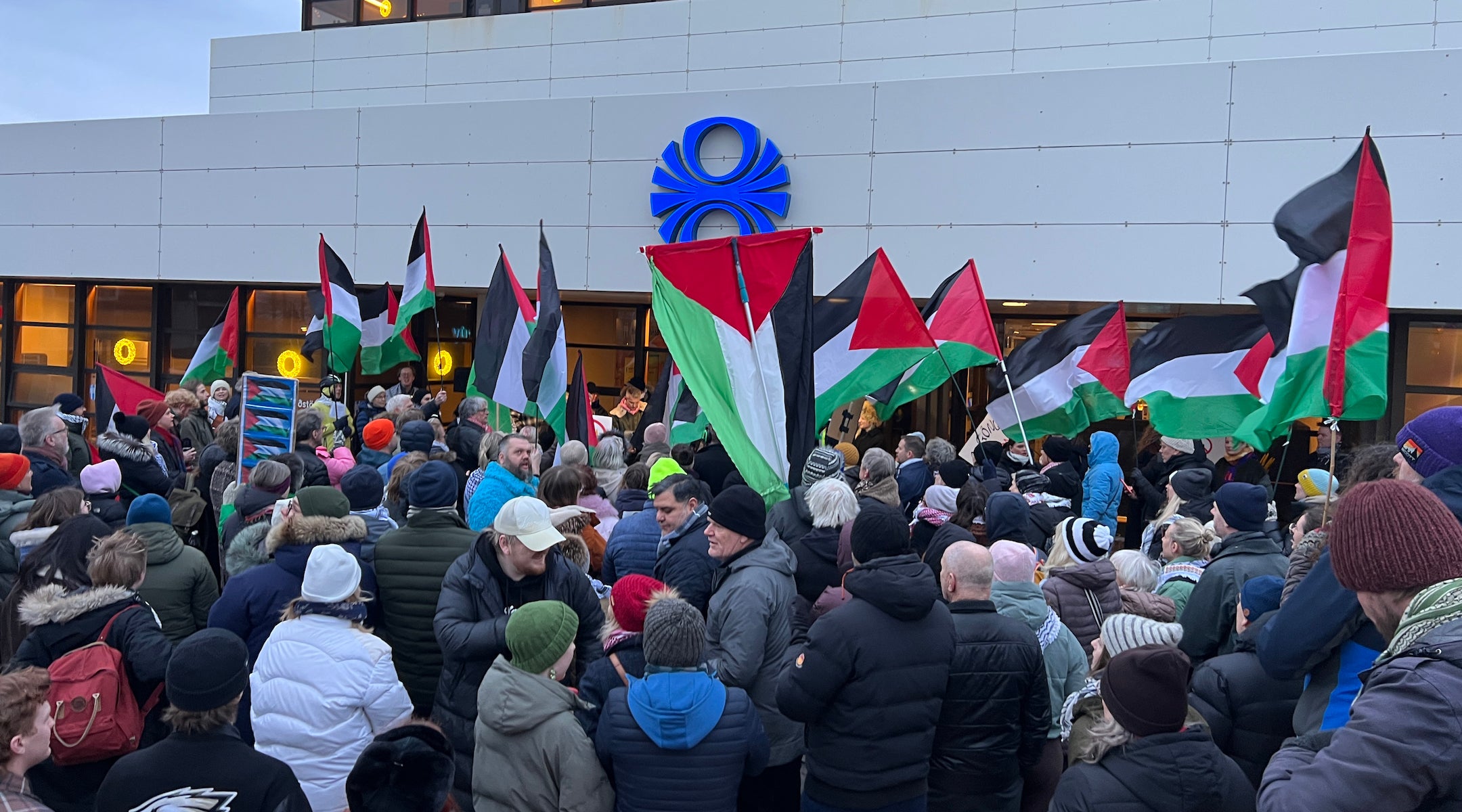
The decision drew support from prominent Icelandic artists, including the singer Björk and the former Eurovision representative Paul Oscar, as well as a supportive rally outside of the broadcaster’s Reykjavik headquarters.
The decision by the Icelandic public broadcaster Ríkisútvarpið, or RÚV, makes it the fifth country to bow out of the competition, following similar calls made by the public broadcasters of Ireland, Spain, the Netherlands and Slovenia. RÚV first signaled it would boycott competition with Israel in September.
The boycott decisions came after the EBU, which organizes the competition, dismissed calls for a vote on Israel’s participation last week. Instead, the EBU approved a new set of rules prohibiting voter interference from governments and third parties following allegations that Israel interfered in last year’s competition.
In a press release Wednesday, RÚV said its board had requested that the EBU remove Israel from the song competition, saying that such a move had the support of the Icelandic public.
“Given the public debate in this country and the reactions to the decision of the EBU that was taken last week it is clear that neither joy nor peace will prevail regarding the participation of RÚV in Eurovision,” it said in a press release. “It is therefore the conclusion of RÚV to notify the EBU today that RÚV will not take part in Eurovision next year.”
Iceland came in 25th out of 37 countries in the 2025 competition, where Israeli listeners noted that its song sounded remarkably similar to an Israeli pop hit. The Icelandic contestants denied knowing about the Israeli song before writing their own.
RÚV’s boycott decision came hours before the final deadline to withdraw from this year’s Eurovision, which is slated to take place in May in Vienna.
“We respect the decision of all broadcasters who have chosen not to participate in next year’s Eurovision Song Contest and hope to welcome them back soon,” said Eurovision director Martin Green in a statement, according to the BBC.