
Ireland, Spain, the Netherlands and Slovenia’s public broadcasters said they will boycott this year’s Eurovision Song Contest after a Thursday meeting of the European Broadcasting Union confirmed Israel’s participation.
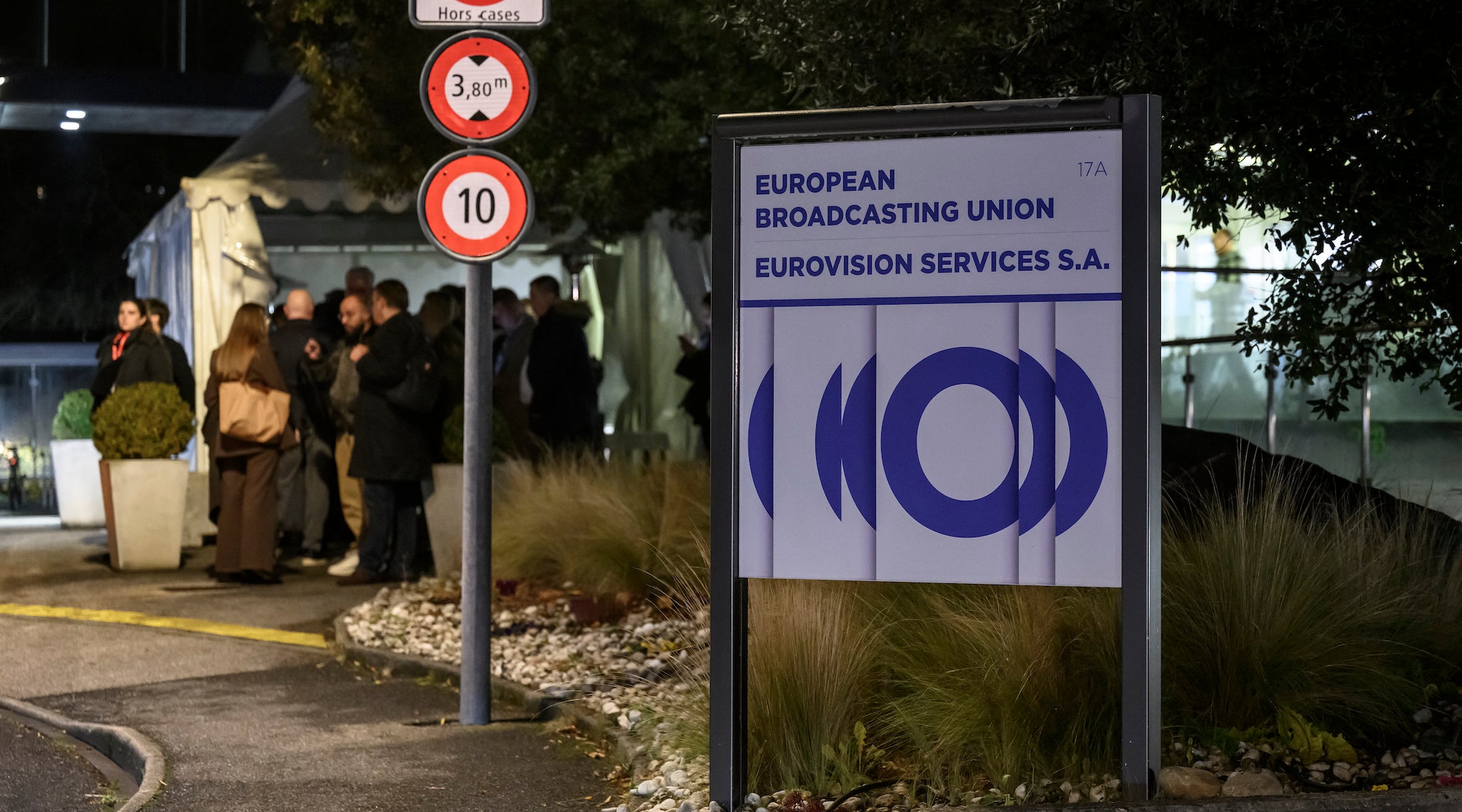
The Thursday General Assembly meeting in Switzerland of the European Broadcasting Union, which organizes the annual song competition, was convened to discuss some members’ calls to have Israel ousted from the contest over the war in Gaza and allegations of voting interference.
But despite calls for a vote on Israel’s participation, the EBU instead said that its members approved new rules prohibiting voter interference from governments and third parties. (Several countries called for an audit of Eurovision’s public voting system after Israel’s Yuval Raphael took second place last year after being bolstered by the audience vote.)
While the EBU did not reference Israel in its press release following the meeting, it said that there would be “no need for a further vote on participation.”
“A large majority of Members agreed that there was no need for a further vote on participation and that the Eurovision Song Contest 2026 should proceed as planned, with the additional safeguards in place,” the EBU said in a statement Thursday.
Delphine Ernotte Cunci, the EBU’s president, praised the decision in a statement, saying that the result “demonstrates our members’ shared commitment to protecting transparency and trust in the Eurovision Song Contest.”
Israeli President Isaac Herzog wrote in a post on X that he was “pleased” that Israel will be included in this year’s competition, adding, “Israel deserves to be represented on every stage around the world, a cause to which I am fully and actively committed.”
And Golan Yochpaz, the CEO of Israeli broadcaster KAN, told EBU members during the meeting that “the attempt to remove KAN from the contest can only be understood as a cultural boycott.”
“A boycott may begin today with Israel, but no one knows where it will end or who else it may harm,” continued Yochpaz. “Are EBU members willing to be part of a step that harms freedom of creation and freedom of expression?”
But after the meeting, several public broadcasters that had previously stated their intention to boycott the competition if Israel was allowed to compete followed through on their promises.
The Netherlands’ public broadcaster AVROTROS said in a statement that it had finalized its decision to boycott the competition, citing the “severe humanitarian suffering in Gaza, the suppression of press freedom, and the political interference during the last Eurovision Song Contest.”
RTÉ, the public broadcaster of Ireland, also announced that it was pulling out of the song contest:
“RTÉ feels that Ireland’s participation remains unconscionable given the appalling loss of lives in Gaza and the humanitarian crisis there, which continues to put the lives of so many civilians at risk,” the broadcaster said in a statement. “RTÉ remains deeply concerned by the targeted killing of journalists in Gaza during the conflict and the continued denial of access to international journalists to the territory.”
The secretary general of RTVE, the public broadcaster in Spain, also criticized the EBU for declining some members’ requests to hold a vote on Israel’s participation in a press release announcing its withdrawal.
“We would like to express our serious doubts about the participation of Israeli broadcaster KAN in Eurovision 2026,” RTVE Secretary General Alfonso Morales said in an address at the meeting. “The situation in Gaza, despite the ceasefire and the approval of the peace process, and Israel’s use of the contest for political purposes, make it increasingly difficult to maintain Eurovision as a neutral cultural event.”
In her address to EBU members before the decision, the president of the board of Slovenia’s public broadcaster, Natalija Gorščak, said, “We are hostages of the political interests of the Israeli government.”
“For the third year in a row, the public has demanded that we say no to the participation of any country that attacks another country. We must follow European standards for peace and understanding,” said Gorščak. “Our message is: we will not participate in the ESC if Israel is there. On behalf of the 20,000 children who died in Gaza.”