

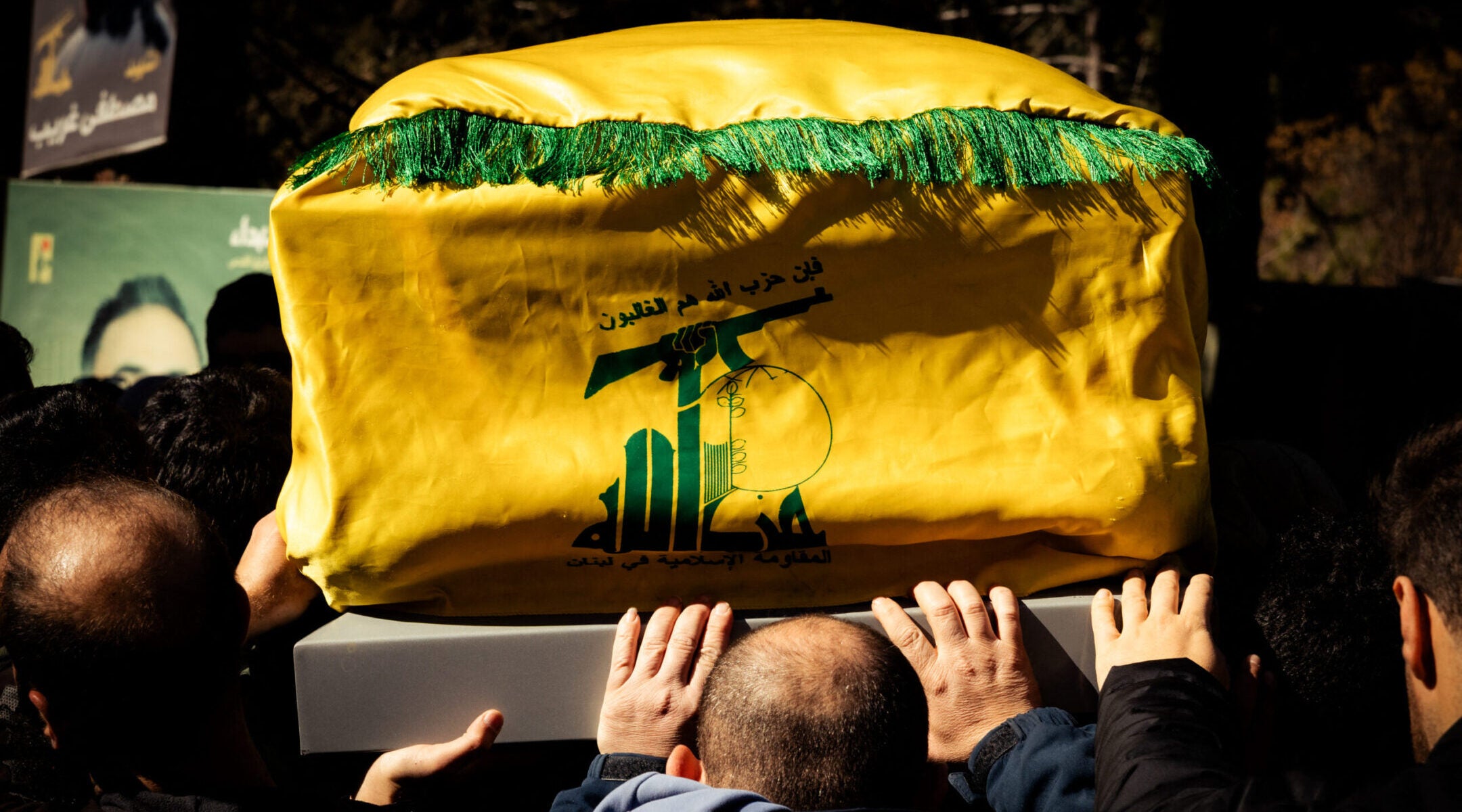
The man who attacked a Michigan synagogue on Thursday was the brother of a Hezbollah commander who oversaw efforts to shoot rockets into Israel before being killed earlier this month, the Israel Defense Forces announced on Sunday.
The mayor of Ayman Ghazali’s city, Dearborn Heights, said in a statement following his attack on Temple Israel in West Bloomfield, Michigan, that members of Ghazali’s family had recently been killed “in an Israeli attack on their home in Lebanon.”
Israel is targeting Hezbollah, an Iranian proxy in Lebanon that attacked Israel in retaliation against the U.S.-Israel war on Iran, in a conflict that escalated on Monday into a ground operation. Ghazali’s family members were killed in a Hezbollah stronghold where Israel had recently warned civilians to evacuate.
But while images purporting to show Ghazali’s brother in Hezbollah garb circulated on social media almost instantly after attack, the IDF’s announcement marked the first official allegation tying him to the terror group.
“Hezbollah commander Ibrahim Muhammad Ghazali was responsible for managing weapons operations within a specialized branch of the Badr Unit. The unit is responsible for launching hundreds of rockets toward Israeli civilians throughout the war,” the IDF said in a statement on Sunday, adding, “Ibrahim was eliminated in an IAF strike on a Hezbollah military structure last week.”
An unnamed Hezbollah official denied the allegation to The New York Times.
The IDF’s statement did not suggest that Ayman Ghazali was affiliated with Hezbollah. The New York Times reported that he attended a memorial service for those killed in the strike, who included Ibrahim’s young children, at a Dearborn Heights mosque on March 8 that was attended by hundreds of people, many from the Ghazalis’ town.
Ghazali’s ties to Lebanon have prompted a sharp discourse about news coverage of the Michigan attack, with some alleging that focusing on his brother’s death, especially without any confirmation of his brother’s Hezbollah affiliation, runs the risk of suggesting that attacking a Jewish institution in the United States is an appropriate response to grief during wartime.
Dearborn Heights Mayor Mo Baydoun rejected that notion during a press conference alongside the local police chief on Friday.
“We do know that the individual had recently suffered a devastating and personal loss overseas due to an Israeli airstrike on his family’s home in Lebanon, leaving two children dead. The grief is real and it’s heartbreaking, but let me be clear: That is not an excuse,” Baydoun said. “There is never an excuse for violence, especially violence directed at a sacred space.”
Meanwhile over the weekend, authorities in Michigan said Ghazali had died from a self-inflicted gunshot wound after driving his fireworks-laden truck into Temple Israel. They had previously indicated that the synagogue’s security staff, which worked immediately to neutralize the threat, might have fired the fatal shot.
Temple Israel held Shabbat services in multiple locations over the weekend, including at the Chaldean country club, Shenandoah, that welcomed children evacuated from its preschool and at a nearby Jewish country club, Tam-O-Shanter, where a bat mitzvah took place as planned. The synagogue announced on Sunday afternoon that extensive damage to the building meant it would be “closed to us for the immediate future.”
Reporting the stories that define our era. When history unfolds in real-time, the Jewish world turns to (JEWISH REVIEW). Your support ensures we can document the complexities of war and the resilience of Jewish communities with integrity.