

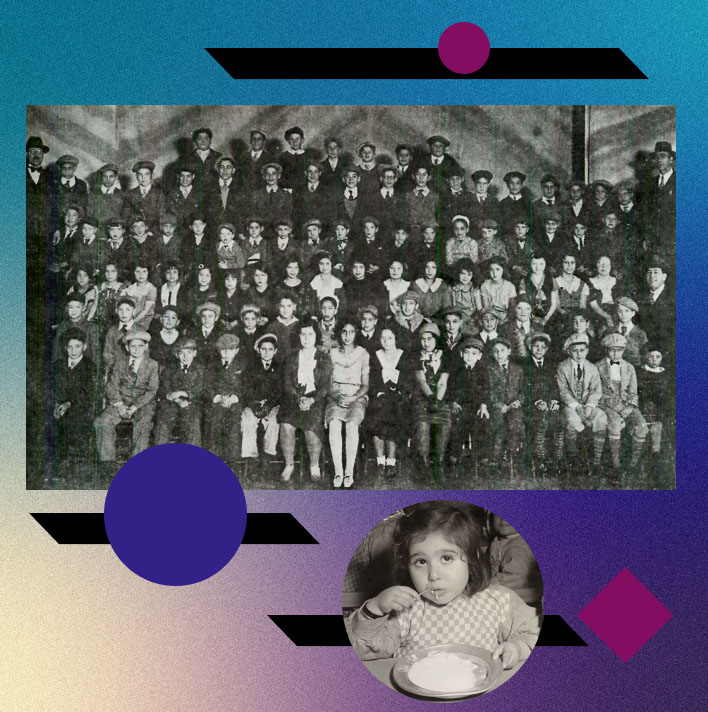
Increasingly, Sephardi and Mizrahi children are enrolling in Jewish day schools and camps in Los Angeles and New York. As a new study commissioned by the nonprofit JIMENA, Jews Indigenous to the Middle East and North Africa, shows, these institutions are responding with inclusive programs – but there are still improvements to be made.
According to the study, 79% of educators report feeling comfortable teaching about other cultures, but only 31% feel confident in their knowledge of both Sephardi and Mizrahi culture and history. Even though 71% say they want to learn more, only 17% report that their schools provide training or the opportunities to make it happen.
Executive Director of JIMENA Sarah Levin said that they decided to commission the study because, “We wanted a deeper, more nuanced understanding of what’s working in Los Angeles and what still needs improvement when it comes to including Sephardic and Mizrahi families in Jewish day schools, camps, and religious schools. Our goal was to identify real needs, challenges, and opportunities so JIMENA can design interventions that are data-driven and as impactful as possible.”
The New York assessment was funded by UJA Federation of New York and received IRB approval through Yeshiva University. It was authored by Elana Riback Rand, PhD, and Rosov Consulting. The LA assessment was funded by the Los Angeles Jewish Federation and authored by Sarah Bunin Benor, PhD.
“With this new data, along with findings from the larger demographic study, we’re now able to partner directly with schools, synagogues, camps, and other institutions on integrating the recommendations found in the reports,” said Levin. “We want to help them better understand and serve Sephardic and Mizrahi community members. Our hope is that these recommendations translate into meaningful change on the ground.”
In LA specifically, the study revealed that most of the Sephardi/Mizrahi families that choose day schools are Persian and Israeli, with smaller representation of Jews who have ancestry in Morocco, Iraq, and elsewhere in North Africa and the Middle East. Often at the initiation of Sephardi students, prayer and Torah reading are major areas where Sephardi content is infused into the education. Some schools host Persian and Moroccan clubs and offer travel experiences to Jewish communities around the globe.
However, the study also showed that Sephardi and Mizrahi parents feel less understood by school administrators – and they are less comfortable giving feedback and sharing their concerns. Many also reported that their children learn little about Sephardi or Mizrahi customs, history, and laws compared to higher scores for general “diverse cultures” content.
“There is a large gap between the percentage of students and the percentage of teachers who are Sephardi or Mizrahi,” said Benor. “I hope schools will hire more Sephardi/Mizrahi teachers and administrators. I hope tefillah and bnai mitzvah training will combine Ashkenazi and Sephardi nusach. And I hope the curricula at schools and camps will incorporate more content about the past and present of Jewish communities around the world.”
This study is very personal for Levin, who grew up in the early ‘90s in a very Ashkenazi community in Chicago.
“It wasn’t until I went to overnight camp and participated in Israel programs that I met other Sephardic friends, which, honestly, was probably an anomaly at the time,” she said. “Even though we were a minority, even in camp settings, it felt great to finally be in a more diverse Jewish environment. The best counselors at my camp were Persian brothers who everyone adored.”
According to the executive director, having leaders from Middle Eastern backgrounds enriched the camp experience for her, and likely, for everyone. Additionally, there was a small group of French Jews with North African roots, along with Sephardi Israelis, who came to her camp.
“My hope is that every school, camp, and youth program creates similar opportunities for Sephardic and Mizrahi kids.”
“It was the first time I wasn’t the only one with this identity, and it filled me with pride, especially when the Sephardi kids were reading from the Torah and naturally stepping into leadership roles,” she said. “Looking back, I can see how those experiences helped me understand how special my identity is and, probably subconsciously, motivated me to pursue this work. My hope is that every school, camp, and youth program creates similar opportunities for Sephardic and Mizrahi kids, spaces where they feel a deep sense of belonging while remaining fully integrated into the broader Ashkenazi community.”