

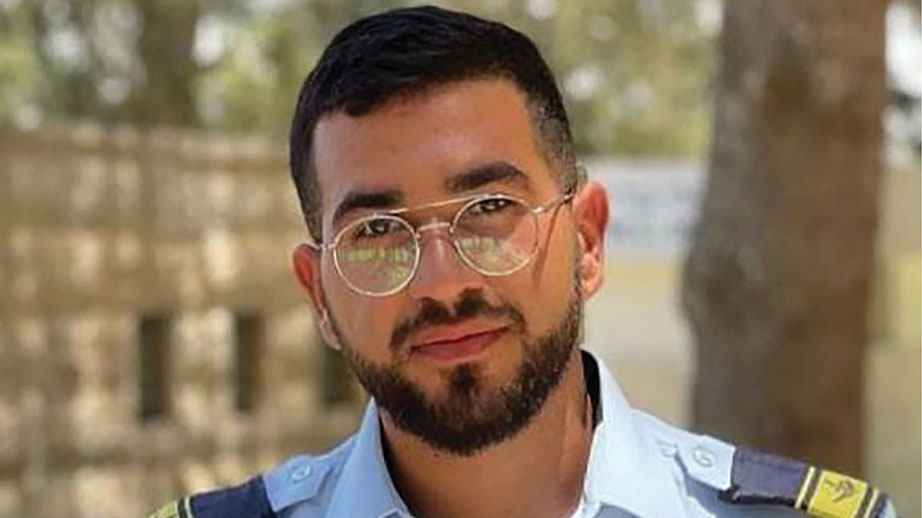
The return of Ran Gvili, the last Israeli hostage, has raised questions for many people: What’s the big deal? Why write about this now, when there are so many other urgent things happening in the world? Why keep returning to October 7, to one man, to one body? I’ve been asked these very questions by readers and acquaintances.
I understand their questions. I do. And I understand the spirit behind it. If you’re someone who claims to care for all people “equally,” this can appear to be a narrowing of vision, a kind of tribal fixation. You see suffering everywhere and wonder why this particular suffering draws such attention.
Let me explain it this way.
If your sister had been taken, if her body were being held somewhere unknown, would you be able to think of anything else until she was returned? If your brother were missing, would you say there were more important things going on? Of course not. You would ache. You wouldn’t sleep a full night until he came home. You would do everything in your power to bring him back. And yet, you might answer that this is different—that this man was not your brother, that he was a stranger, someone you never knew, a mere abstraction.
This is where the gap lies.
The Jewish people are a small people, just fifteen million in the entire world. We are not a nation in any modern sense, but a family: argumentative, fractious, beautiful, and inseparable. When one of us is taken, it is not one of countless others. It is a single face, a single life.
When Ran came home, it was a brother who arrived. And if anyone has ever wondered how Jews have endured so many catastrophes and accomplished things so disproportionate to our numbers, here is the answer: not power, not influence, but interrelatedness—a bond nurtured, insisted upon, and renewed for four thousand years.
Ran was twenty-four years old on October 7, 2023. He was on medical leave from his unit, his shoulder broken, surgery scheduled. When the attack began, he didn’t stay home. He ignored the pain, put on his uniform, and drove toward the fighting.
Near Kibbutz Alumim, as Hamas pogromists slaughtered civilians fleeing the Nova music festival, Ran evacuated survivors, pulling people to safety under fire, saving dozens of lives. He continued fighting even after being wounded, until his ammunition ran out. A hero in every sense of the word, he was murdered and his body taken into Gaza.
For nearly two and a half years, his remains were held there, His parents, Itzik and Talik, his sister and his brother, waited. The entire Jewish nation waited with them. He was spoken of in the language of family. “We see the relief in the eyes of families who have been able to bury their children,” his sister said during the long months of waiting. “We want to be able to move on with our lives and remember Rani.”
In January 2026, after a painstaking military operation, Ran Gvili’s body was recovered in Gaza City and returned to Israel. His mother said simply, “It’s a relief, even though we hoped for a different ending.” His father recalled the words Ran had said before leaving home: I’m not going to leave my friends to fight alone. Even in death, his final act remained an act of loyalty.
Our people believe in miracles. But we do not believe in coincidence. And here is where something ancient enters the present moment.
This Shabbat, in synagogues across the world, Jews will read these words from the Torah: “Moses took the bones of Joseph with him, for Joseph had bound the children of Israel by an oath, saying: God will surely remember you, and you must take up my bones from here with you.” Joseph makes his descendants swear not to leave him behind. Generations pass. Slavery hardens. And still, when redemption comes, Moses carries the bones out from the midst of the enslavers.
In Judaism, redemption is incomplete if even one life is missing. Freedom is unfinished if even one body is abandoned. Memory then, is not only an idea. It is an action, necessitating a concerted and collective effort.
When Ran Gvili came home, it was an ancient promise kept again. Joseph’s bones lifted once more from the ground of exile.
That is why we could not rest. That is why we still speak of it. Not because one life matters more than others, but because to value life is to refuse the disappearance of even one soul.
Peter Himmelman is a Grammy and Emmy nominated performer, songwriter, film composer, visual artist and award-winning author.