

When I was job-hunting some years ago, I interviewed with a national Jewish organization for a position related to Israel education. A senior professional asked me how the emotional connection to Israel he had grown up with could be transmitted to younger generations.
I told him that it couldn’t be done, and that I was not sure it should be. After all, the Israel he remembered no longer existed. It is a country utterly transformed since his youth.
But more importantly, the world that shaped his attachment to Israel no longer existed either. The ethos of his youth was formed in a different historical moment under very different conditions of Jewish life. What felt organic then did not and could not feel organic now.
This exchange stayed with me because it reflects a larger problem in the Jewish community. The controversy surrounding a recent Super Bowl advertisement addressing antisemitism has made clear that many American Jews have not fully internalized how much both we and the world have changed. The criticism of the ad is largely warranted, but focusing on the commercial itself misses the point. The ad is not the story; it is a symptom. The issue is not intent or sincerity, but the framework through which Jewish vulnerability and power are still being narrated.
Since Oct. 7, 2023, the Jewish community has produced a wave of films and media campaigns, formulating various public narratives regarding the antisemitism crisis in America. Much of it is powerful and sincere.
Taken together, however, it represents a reflexive and perhaps doomed response to antisemitism: Faced with hostility, we return to telling our story of suffering. We assume that if the world is reminded of our pain, moral clarity will follow.
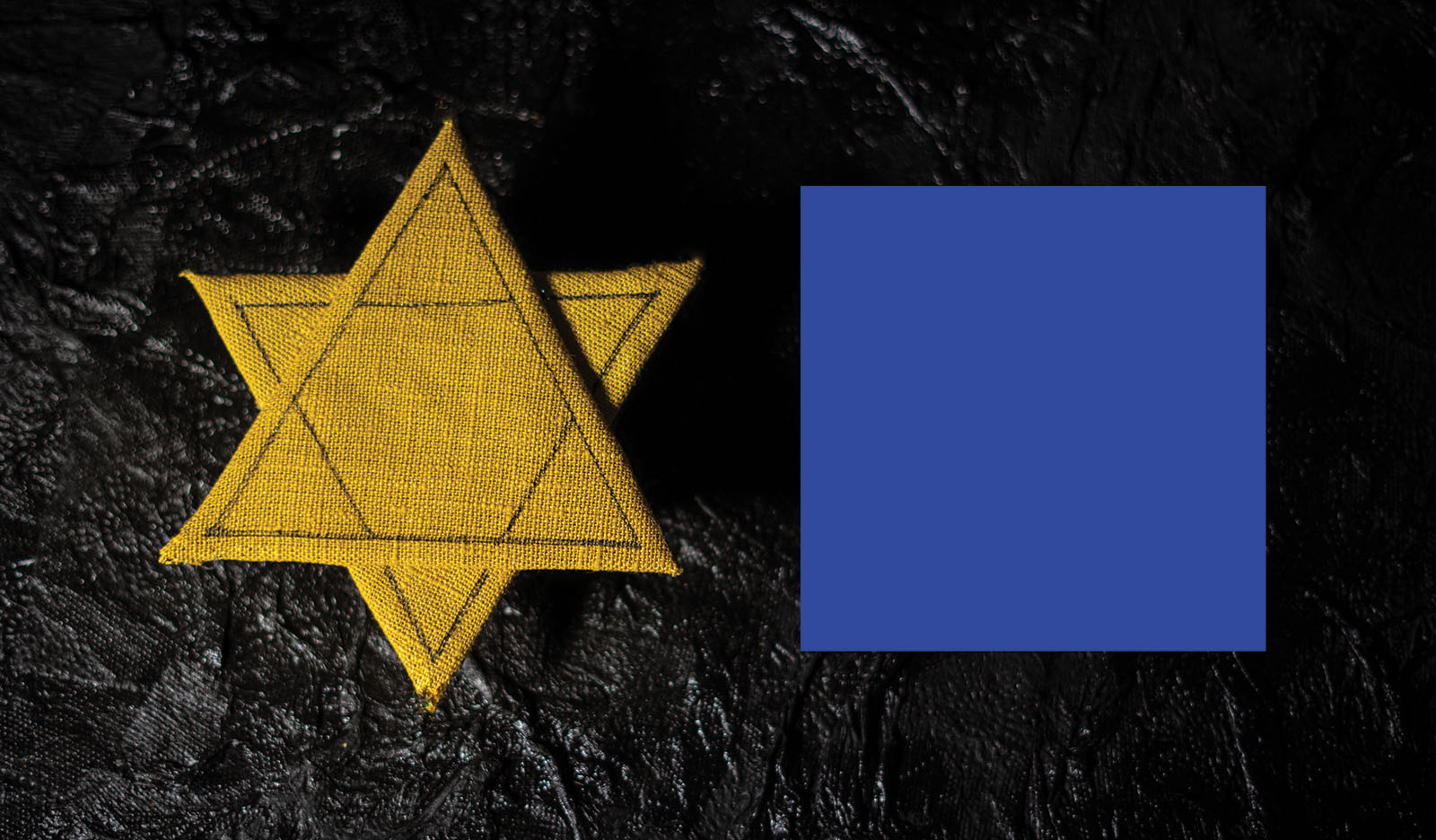
This instinct is rooted in what might be called the “’Schindler’s List’ effect.” It is the belief that the defining Jewish story is victimhood, and that recognition and protection will come from others once they know the truth about it. It is the implicit plea: “Watch us die and then love us.”
There is no doubt that Jewish historical suffering has been immense and deserves sympathy. But concentrating on this alone in hopes of interdicting antisemitism rests on a false set of assumptions about today’s public discourse.
It assumes, for example, that sympathy for our victimhood, rather than respect for our achievements, is our most powerful weapon against antisemitism.
But this is a failure to internalize who we really are. It forgets that we are no longer only victims. We have a state. We live as a people with sovereignty, power and responsibility. Jewish life now includes agency, not only passive victimhood. We have forgotten what we have the potential to be.
In many ways, American Jewish institutions are still trapped in a pre-1967 mentality. Before the 1967 Six-Day War, American Jewish institutions understood their situation very well. They knew they were a numerical minority in a liberal democracy whose protections were real but not guaranteed. Their disposition was sober, vigilant and unsentimental. Security was pursued quietly through gaining political and social legitimacy, alliance building and the careful navigation of power — not through moral performance or emotional appeal.
That approach made sense in a world in which Jews were still widely perceived as vulnerable and marginal. The Six-Day War decisively altered that perception. Almost overnight, Jews came to be associated with sovereignty, force and permanence. The world internalized that shift quickly. Many Jews did not. We absorbed the benefits of post-1967 life but not its responsibilities. The result is that we continue to speak the language of minority vulnerability while others — rightly — perceive us as actors in history.
Across the Jewish world, we speak and act as though we are still a powerless people. We appeal; we explain; we perform our pain, hoping to be “understood” as an object of sympathy. Yet simultaneously, often without realizing it, the world reacts to us as an actor in, not an object of, history. To the world, Israel is not a symbol but a force. Eventually, these realities collide, and the result is confusion, paralysis and inaction.
The belief that we will be loved because of our weakness or protected because of our victimhood is not only ineffective; it is inaccurate. Moreover, it is not Jewish. For too long, Jews were the sacrificial conscience of the Western world, a vessel for its moral penance. We grew attached to that role. But the West has since moved on to other sacrificial figures, without us knowing or acknowledging it. Thus, we cling to a victim identity that no longer fits us. The question now is not how to remind the world who we were. It is whether we are prepared to live honestly as who we are.
One sign of how unprepared we remain is the renewed debate over Zionism itself. The reemergence of this controversy is a kind of regression. It presumes that Zionism’s goal was simply to found a state. It was, but only as a first step. Even Theodor Herzl understood that sovereignty was the beginning, not the end. Indeed, if anything, the Zionist revolution has barely begun.
The fact that Oct. 7 is still described as a “pogrom” should give us pause. It was an invasion that slaughtered innocent people, but it was also met with a ferocious response from a Jewish army. It did not test us when we were weak. It tested us when we were strong. Portraying it as a story of pure victimhood reveals how close we came not only to physical failure but also to conceptual failure. We may plead for sympathy due to our weakness, but we are not weak, and we should be grateful rather than uncomfortable with that.
What is needed now is not distance from but engagement with Zionism. We need to reclaim it, study it and reinterpret it. Texts that were once hypothetical must now be read as if they were written about today’s headlines. Ideas that could only be imagined can now be lived. In this sense, the likes of Herzl, Ahad Ha’am, Ber Borochov, Leon Pinsker and numerous others are not historical artifacts but artists of unfinished projects. Properly understood, Zionism is not a geopolitical argument about the necessity of a Jewish state. It is a fierce internal debate among those who share a destiny, those who have skin in the game now and 100 years from now, and those who are willing to do the work required to fulfill that destiny.
Israel itself, of course, has its own challenges. It is a society pulled apart from within, but also remarkably resilient. Forced proximity and a shared life impose conditions on Israelis that demand sacrifice, compromise and grit. Over time, those conditions shape a people.
Outside Israel, however, the work differs. Most American Jews no longer naturally cluster together. Fewer Jews live near one another. Fewer participate in organized Jewish life. When they do, they often treat Judaism as a faith to be consumed rather than a peoplehood to be lived. Jewish life and identity are segmented by demographic and offered as a product, not inhabited as a sacred responsibility.
Perhaps what the Diaspora requires above all is the internalization of sovereignty. Islands of sovereignty should be built where Jews live together in dense concentration across generations, not as a refuge from the world but in order to live together as more than victims. These will be places where we do not need to explain ourselves. Places where we are not under constant physical, psychological or emotional threat. Places where no part of our identity need be mitigated, hidden, or erased.
When we fund ads like the one recently aired during the Super Bowl, we are not only misreading the world; we are misreading ourselves. We are appealing to a moral paradigm that no longer applies to the world’s perception of Jews and our power. We are speaking the language of vulnerability to an audience that already sees us as perfectly capable of defending ourselves and securing our own destiny. In doing so, we harm ourselves, reinforcing a self-image that is alien to current reality. The problem is not that the world has failed to be moved by our protestations of victimhood. The problem is that we are still asking for the world’s permission.
Rabbi Amitai Fraiman is the Founding Director of the Z3 Project at the Oshman Family JCC in Palo Alto.