
METULA, Israel — Daniel Dorfman had only recently reopened his pizza restaurant in this kibbutz just hundreds of meters from Israel’s border with Lebanon when war broke out again. His Ayuni Pizza Bar had been closed since October 2023, when Hezbollah began waging war on Israel, turning the border region into a dangerous ghost zone.
Now, Hezbollah is again sending hundreds of missiles from Lebanon into Israel as part of “Operation Chewed Wheat” — an operation named after a Quranic passage about diminishing one’s enemies that the group launched after the United States and Israel attacked Iran.
Dorfman, who insists that Ayuni has “the best pizza within a kilometer of the Lebanon border,” isn’t sure how much more he can take.
“It was one hit after another,” Dorfman told the Jewish Telegraphic Agency. “First COVID, and then Oct. 7, war with Hezbollah, and now this — how can I be expected to survive it?”
And yet Dorfman isn’t closing Ayuni’s doors. Even as the echo of explosions from both outgoing artillery fire and incoming drones could be heard late into the evening last week, and with little of the advance warning about incoming rockets that Israelis in other cities get, many residents of Metula were out and about in the streets, shopping at the supermarket, walking their dogs and, yes, grabbing pizza — although at a fraction of the pace as during peacetime.
Indeed, residents of Israel’s north are hardly packing up and leaving, unwilling to repeat the dislocations that followed Oct. 7, 2023, when the Israeli government mandated their evacuation.
“They’re going to stay at home, even during this terrible situation,” said Asaf Artal, a partnerships manager at IsraAID who works with border communities. “It’s very uncomfortable, very scary on the one hand, but on the other hand, you have to act as a community, to bring strength to your community. If you do it in the darkest time or the hardest time during the war, you’re going to be stronger when it’s over.”
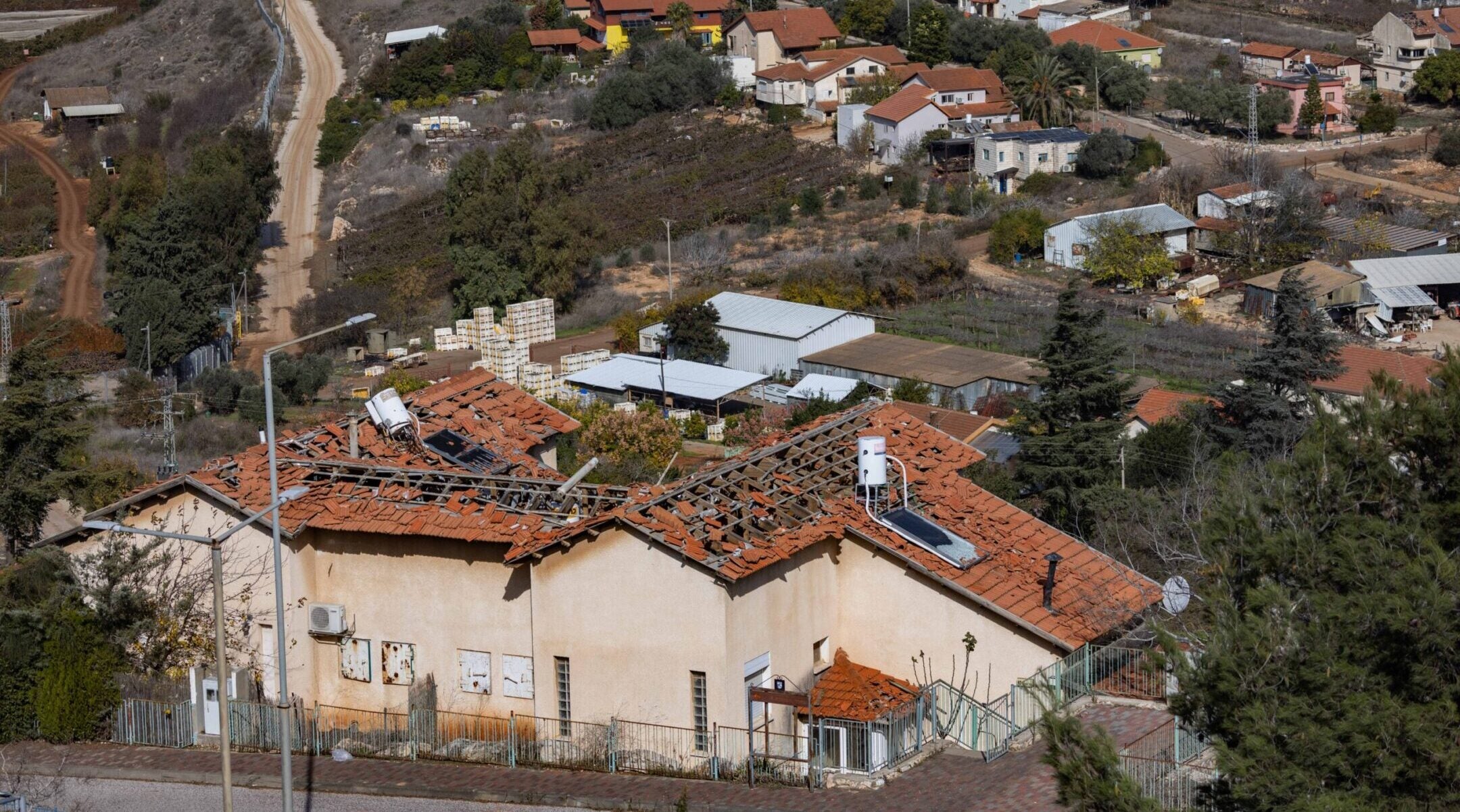
About 40% of structures in Metula, Israel, were damaged during the war that began in October 2023. The city on the Israeli border with Lebanon is seen here Dec. 9, 2024. (Chaim Goldberg/Flash90)
Metula, like other kibbutzes in Israel’s periphery (how small communities far from Israel’s urban centers are known) was hit hard by the last round of fighting with Hezbollah. Many of the buildings in the kibbutz were damaged, and according to Metula’s spokesperson, only 40% of residents have returned after the ceasefire in November 2024.
In his 22 years at IsraAID, Artal has witnessed firsthand the impact of evacuation. “When you are forced to relocate and spread all over, you lose the magic and power of community. You’re not a community anymore,” he said.
And the Northern Rehabilitation Directorate set aside 3.4 billion shekels (about $1.1 billion) to help northern communities recover after the war — though that number was reduced by about $50 million last week amid budget cuts meant to divert funds toward the war effort.
The government ministry in charge of rebuilding the north said the population in the periphery is at 87% of what it was on the eve of Oct. 7, a significant comeback after waves of displacement.
Residents of Metula and other small communities are hunkering down. Entrances to underground bomb shelters dot the road and are complete with bunk beds for residents who choose to sleep below ground.
The consensus is the same at other kibbutzes scattered on Israel’s border with Lebanon.
“This time, there is no question, we will be staying,” said Ofir Spiegel, spokesperson for Shlomi, another kibbutz on Israel’s border with Lebanon.
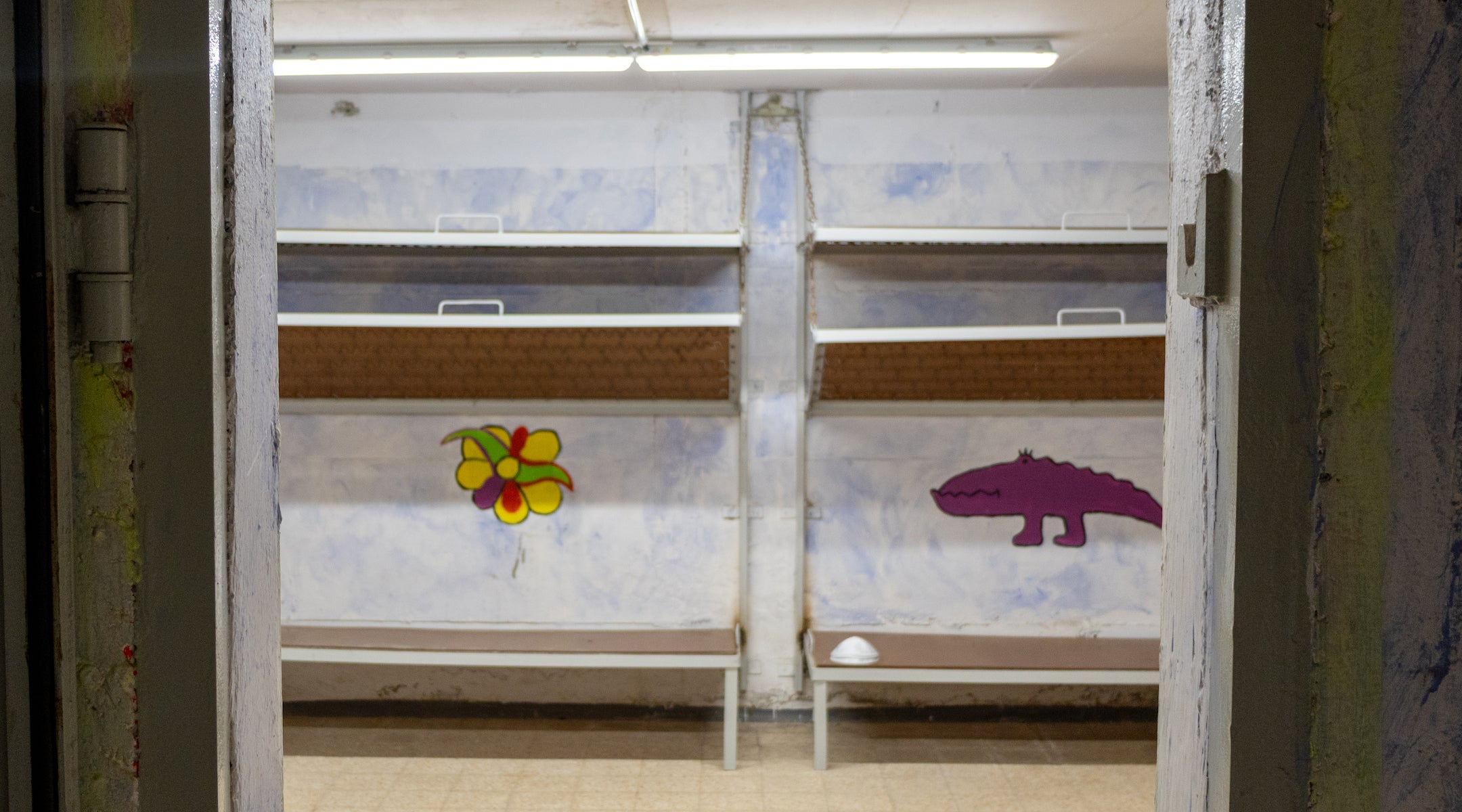
Metula is fortified with numerous public underground bomb shelters, complete with bunk beds and children’s murals. (Theia Chatelle)
According to Spiegel, the Israeli government has offered to evacuate the most vulnerable residents, the sick and elderly, but even they, he said, have insisted they will not leave, with some sleeping in public shelters or private safe rooms, if they have them.
Shlomi Buli is the CEO of the community center in Merom HaGalil, which serves a collective of 24 kibbutzes in the Galilee up to Avivim and Dovev on the border with Lebanon. He said residents “don’t have it in them to leave again.”
Buli was a commander in a combat brigade for more than 25 years before pivoting to manufacturing and then community service. He believes in the resilience of the Galilee, built in part on weathering the hardship of the last round of evacuations, which scattered tight-knit kibbutz communities across Israel.
For him, “This is the secret of this place, the people. We have one big heart.”
And yet the residents of the region face outsized peril. While Israelis in other parts of the country get 10-minute warnings of incoming Iranian missiles, then 90-second warnings about a possible nearby strike, in the north, the advanced warning system has not yet sounded in many cases by the time an impact occurs. On Thursday, four people were injured by a Hezbollah rocket in Kiryat Shmona, just a few minutes’ drive from Metula.
Yoav Cohen, the head of Netu’a, a moshav in the hills of the Galilee just a few kilometers from the border with Lebanon, is aware of the risks but insists he and his family will stay no matter how intense the fighting gets. He is convinced they are safer in Netu’a.
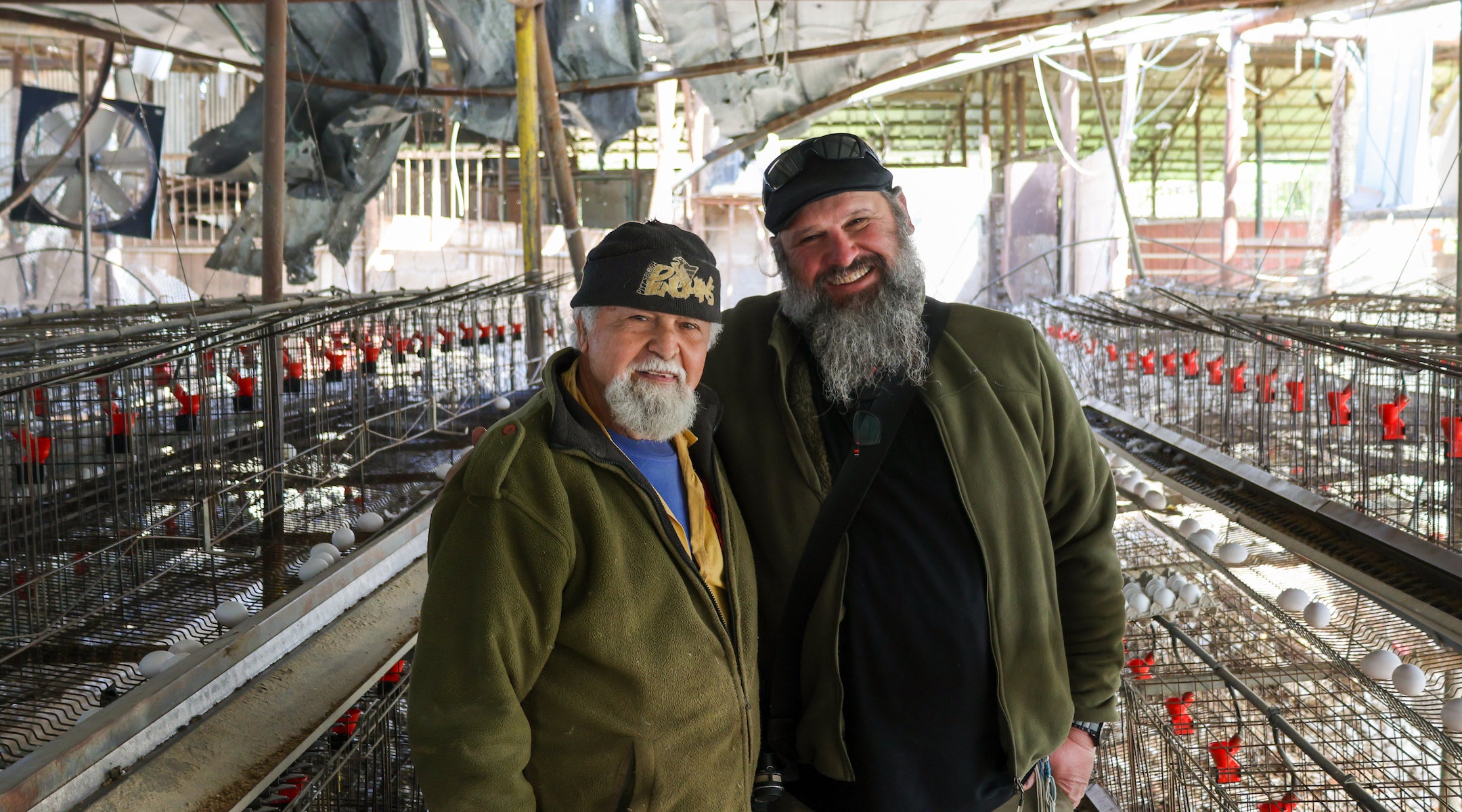
Mayor of Netu’a Yoav Cohen poses with a worker at the moshav’s central chicken farm. (Theia Chatelle)
“We don’t have enough time, but they’re not looking for us because they’re looking for bigger places, more population,” he said. He also noted that previous fears that Hezbollah could try to invade in the north had proven unfounded.
Cohen was born and raised in a secular family in Netu’a before moving briefly to the United States and becoming Orthodox. He and his wife have 11 children, four dogs and a parrot.
The family lived in hotel rooms in Eilat, in the far south, for a year and a half after Oct. 7. While still working in Netu’a, Yoav Cohen would drive hours once a week to visit them.
He and his wife have noticed the impact of years of fighting on their children. “First of all, most of them want to sleep with us in the bed,” he said. “But we don’t have enough room.”
During the last war with Hezbollah, the Israeli government partially lifted import restrictions on foreign eggs, a measure meant to protect farms like those in Netu’a, due to the impact the fighting had on egg production.
This time, the impact has already been felt. A Hezbollah rocket recently landed in a chicken farm in Netu’a. “Thankfully it was at midnight so no one was injured, but it killed hundreds of chickens,” Cohen said during a tour of the farm.
Feathers were scattered on the ground and eggs were left uncollected as the village’s few workers tried to relocate the surviving chickens to other facilities to avoid losing more revenue.
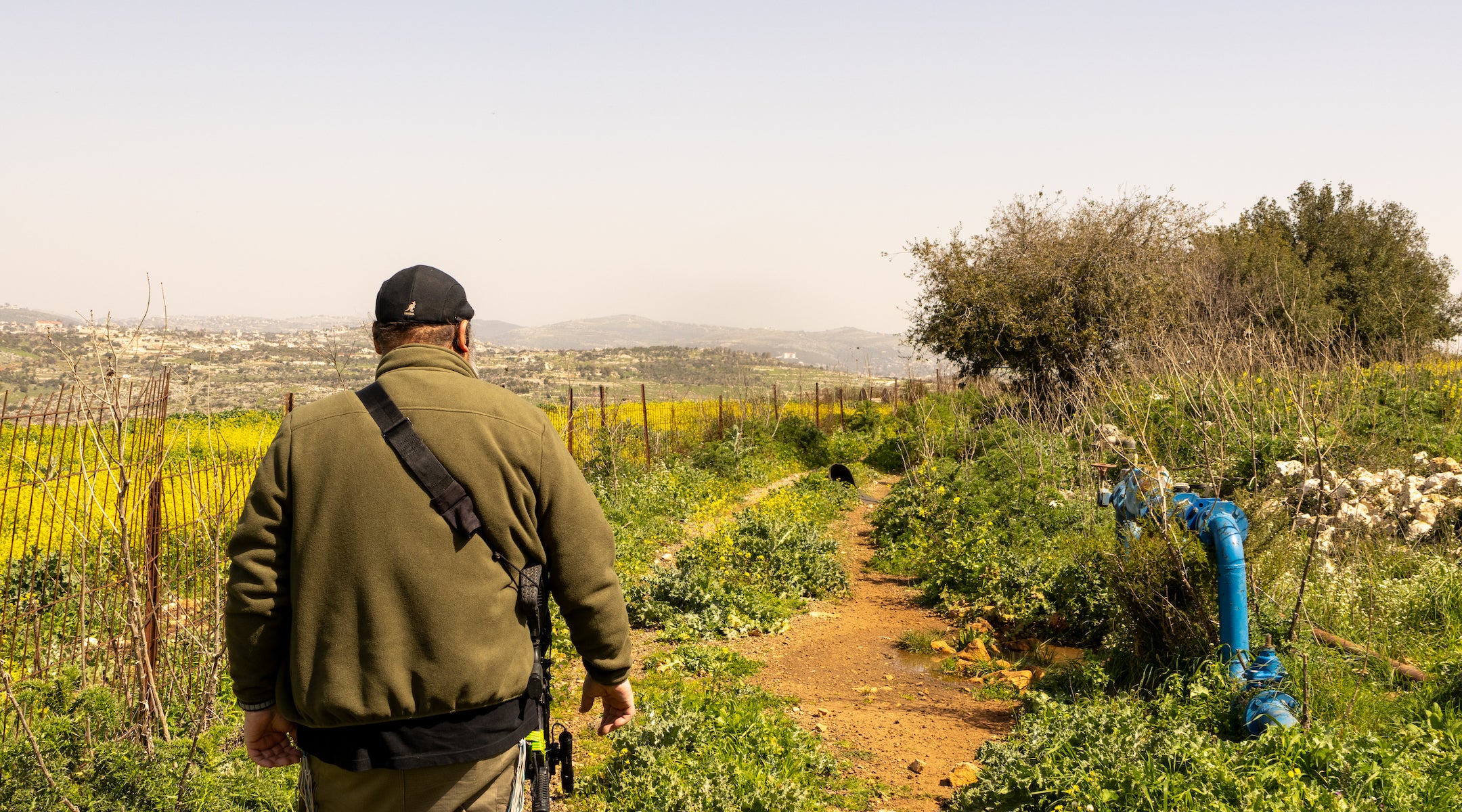
Yoav Cohen walks the perimeter of Netu’a during a security patrol. (Theia Chatelle)
Netu’a is still dependent on tourism for part of its revenue, but has shifted more to agriculture since Oct. 7, an economic reprioritization Cohen has helped lead. He effectively runs the moshav’s affairs and also serves as its head of security.
There has also been another change since Oct. 7: Netua now has a bunker and control center where residents take shifts keeping watch on the community.
Understanding that residents of the north are staying put, Keren Kayemeth Leisrael, the Israeli branch of the Jewish National Fund, has set aside nearly $2 million to support Passover respite programs — temporary evacuations from the danger zone — as well as relocations for people who cannot easily get to their safe rooms.
Spiegel said the disruption would all be worth it — if this war leaves Israelis safer than they were before.
“We all hope it is the truth that this will be the last of the fighting. We want to live here, in our communities, and to live a normal life. I said to my daughter, ‘I promise you, my little child, that this will be the last war.’ And that is what my father told me in ’67,” Spiegel said.
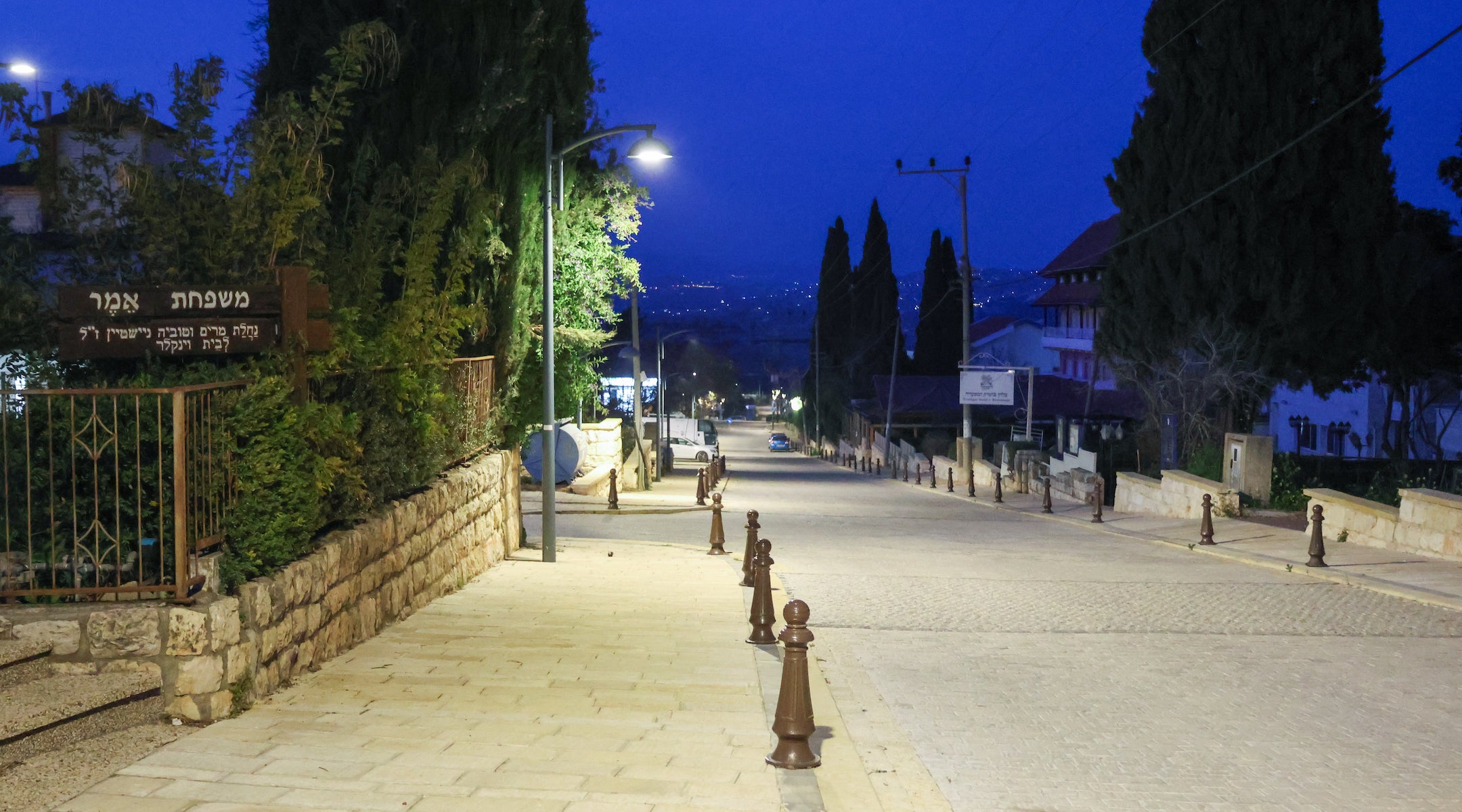
Metula’s streets lie mostly empty at night as residents head to shelters, Lebanon looming in the distance. (Theia Chatelle)
For now, there are more immediate questions to address. At 7 p.m. on a recent evening, Ayuni would normally be bustling. But the day after Hezbollah and Iran launched a coordinated attack, including more than 200 missiles, it was only Dorfman and one other worker in the restaurant.
Much of Dorfman’s business is now pizza delivery for soldiers at nearby bases, and he expects more business after the IDF announced a call-up of more than 100,000 reservists. He has his eyes on another potential audience base.
“The people are not Hezbollah, we know that, and when they are finally gone, I would be happy to do delivery to Lebanon,” Dorfman said, only half-jokingly. “I could use the business.”
Reporting the stories that define our era. When history unfolds in real-time, the Jewish world turns to (JEWISH REVIEW). Your support ensures we can document the complexities of war and the resilience of Jewish communities with integrity.