
Mordechai Deluca never considered delaying his move to Israel from the United States because of the war with Iran. If anything, the opposite is true.
“My worry was, how could I get there as fast as possible?” said Deluca, 39, who arrived in Israel on March 9, just eight days after the war with Iran began.
Deluca, who grew up in North Carolina, said that being physically present in Israel during such a crucial time was important to him. He spent last year’s war between Israel and Iran in Washington, D.C., and “being so far away made me feel so much more powerless,” he said.
Deluca had first thought about making aliyah, or immigrating to Israel, after he went on a Birthright Israel trip 20 years ago. His desire intensified after Oct. 7, which he spent in Israel, and where he attended a funeral for a lone soldier who didn’t have immediate family in the country.
Hearing about the soldier’s sacrifice and watching Israelis rally around each other, Deluca was deeply moved. “I couldn’t imagine just going back to D.C. and passively thinking about aliyah,” he said.
Coping with a war might not be how Deluca imagined his first few weeks living permanently in Israel, but it’s led to some unexpectedly meaningful moments. He just started a new job, and he’s found some unique opportunities to connect with his colleagues — like during a recent day in the office, when he found himself taking shelter with his co-workers.
“It was an easy way to meet people,” Deluca said.
Deluca’s attitude mirrors those of other olim (immigrants) who have recently moved to Israel or are planning to do so later this year: Their desire to live in Israel, and experience the unique spirit and resilience of Israeli society, is strong. For some, their hunger to be with their fellow Jews during the war with Iran gives them an additional push.
Former Washington, D.C. resident Mordechai Deluca moved to Israel in March, in the midst of the war with Iran. (Courtesy)
According to data from Nefesh B’Nefesh, an organization that facilitates aliyah from North America, more than 130 new immigrants have arrived in Israel from North America since the beginning of the war with Iran. They are among the approximately 500 North Americans who have moved to Israel since the start of 2026, and some 110 new arrivals are expected in April. Additionally, since the start of the Iran war, more than 830 aliyah applications have been opened by Jewish North Americans.
“Aliyah from North America has remained remarkably steady over the last decade, with annual numbers ranging between 3,500 and 4,000,” said Yael Katsman, vice president of communications at Nefesh B’Nefesh. “While this baseline has been steady, we’ve seen periods of acceleration, first during COVID in 2021 and more recently in 2025, following the onset of the war.”
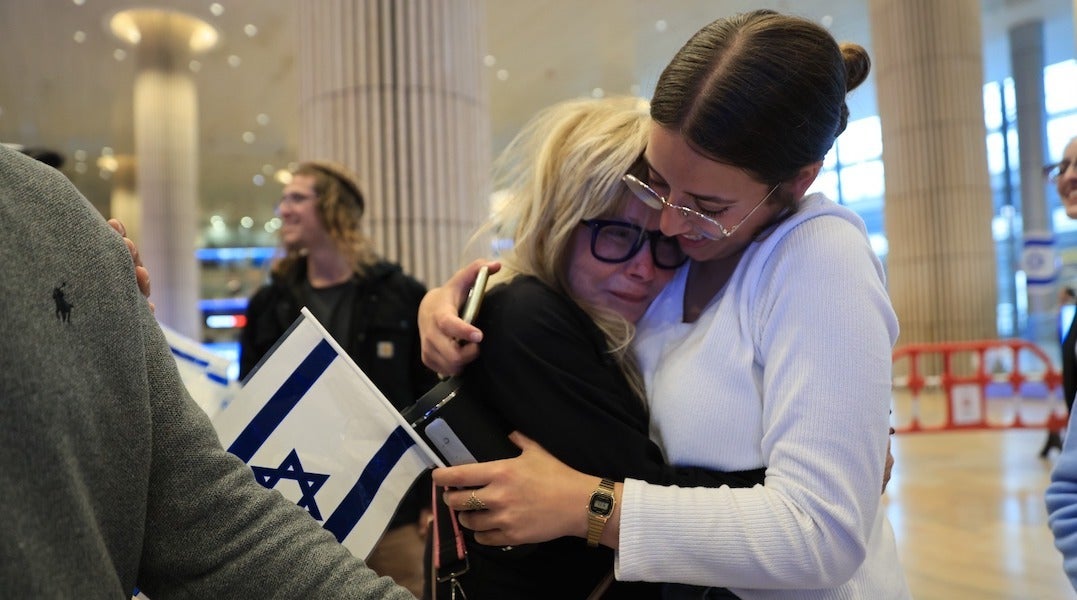
While logistical challenges and flight restrictions due to the conflict with Iran have added complexity, they haven’t stopped people from making the move. Just last week, on March 25, a group aliyah flight of 25 new immigrants from North America landed at Ben-Gurion Airport — the youngest was 21 years old while the oldest was 96. These new immigrants made aliyah with the assistance of Nefesh B’Nefesh, in cooperation with Israel’s Ministry of Aliyah and Integration, the Jewish Agency for Israel, Keren Kayemeth LeIsrael and Jewish National Fund-USA.
“It reminds me of Israel’s pioneers,” said Katsman, regarding Israel’s newest immigrants, who are undeterred by the current conflict. “They want to be part of something bigger.”
More than half of the North Americans who have made aliyah to Israel this year are in the 19-35 age range, Katsman added.
Elizabeth W., a 23-year-old New York City native, who asked that her last name not be used in the story for privacy reasons, is one of these young new immigrants. Like Deluca, she also made aliyah this month.
Just a day before she got on a plane to arrive in Israel in March, she stated, “I knew that there would be some sort of war. But it wasn’t a deterrent.”
Of course, young people are not the only North American Jews making aliyah at this challenging time. Families are making the move as well.
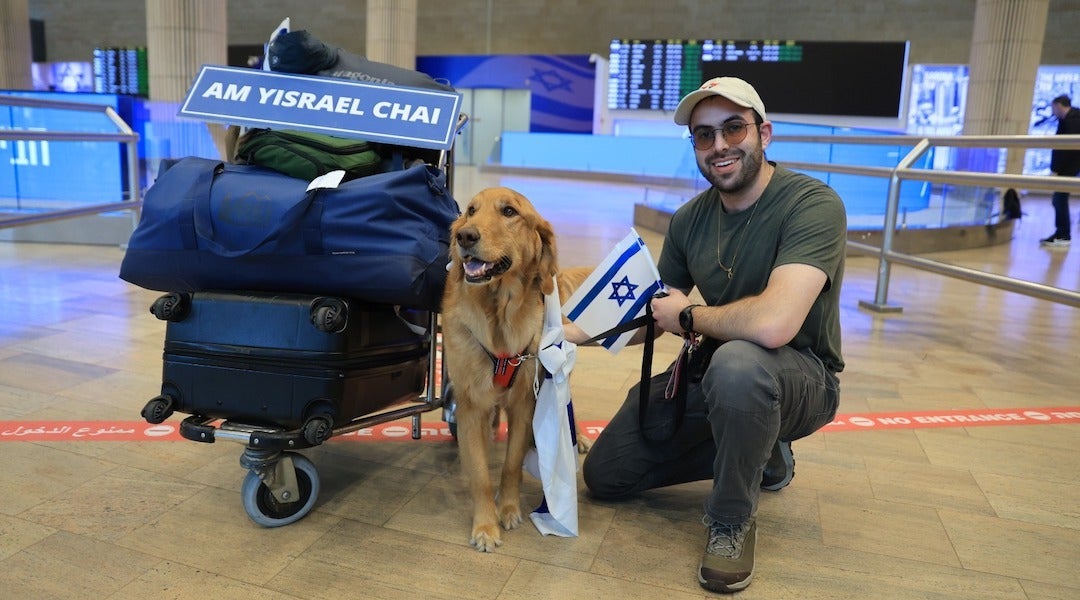
New immigrants from North America arrive at Israel’s Ben-Gurion Airport on March 25, 2026. (Yonit Schiller)
Elana L., who also asked that her last name not be used for privacy reasons, is planning to move to Israel from Los Angeles this summer with her family — war notwithstanding. “We belong there,” she said. “Those are my people who are fighting and united and supporting each other.”
Elana’s decision to make aliyah began to take shape after Oct. 7, a moment that prompted her to reflect more deeply on where she wanted to build her family’s future. As a mother of redheaded children, the plight of the Bibas family resonated deeply with her. She felt a strong pull toward Israel and a desire to be a part of the country’s story. In November 2023, Elana opened an aliyah application with Nefesh B’Nefesh.
Unsurprisingly, many of the recent and potential olim have strong ties to Israel. Both Elizabeth W. and Elana L. have family in the country — in Elana’s case, much of her family is planning to live in Israel by the end of the year. Deluca, meanwhile, has returned to Israel 11 times since his first trip two decades ago.
Nonetheless, like all immigrants, the new olim will be leaving family and friends in the United States. They admit their loved ones have voiced concern — but not shock.
“My family and friends have heard me talk about making aliyah for 20 years, so they were not surprised,” Deluca said. “They didn’t think I would cancel.”
As Deluca put it, the reality on the ground can feel more ordinary than people in North America might expect — even amid ongoing conflict, Israeli society maintains a sense of everyday routine. “I tell people I’m at Ikea,” he said. “When there’s a siren, you go into a bomb shelter and then you come out and continue.”
Reporting the stories that define our era. When history unfolds in real-time, the Jewish world turns to (JEWISH REVIEW). Your support ensures we can document the complexities of war and the resilience of Jewish communities with integrity.