

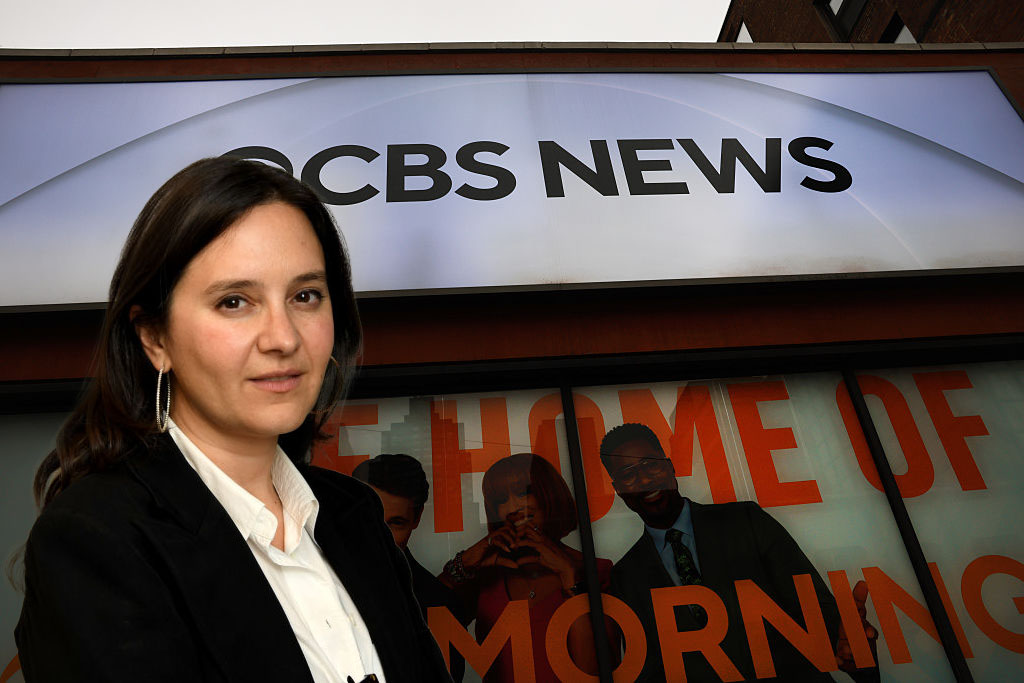
“If we’re going to run another story about a topic that has by now been much-covered we need to advance it,” CBS editor in chief Bari Weiss wrote in a letter to her producers explaining her decision to shelve a “Sixty Minutes” segment. The segment, titled “Inside CECOT,” reported on the Trump administration’s controversial deportation of Venezuelans to a notorious maximum-security prison in El Salvador.
The letter was the classic input of a responsible editor.
“I’m writing with specific guidance on what I’d like for us to do to advance the CECOT story,” she began. “I know you’d all like to see this run as soon as possible; I feel the same way. But if we run the piece as is, we’d be doing our viewers a disservice.”
I quote her letter generously because much of the media coverage, which quoted only bits and pieces, failed to provide a fair and accurate picture of Weiss’s decision.
Instead, the media ran immediately with an internal memo from the CBS reporter on the piece, Sharyn Alfonsi, who charged without evidence that “the public will correctly identify this as corporate censorship,” making Weiss look like a pawn of her new bosses at Paramount.
Certainly, the last-minute nature of the decision and an ever-present corporate desire to “please Trump” made for bad optics, but isn’t that the purpose of responsible journalism—to go beyond the obvious optics?
Had the media delved more deeply into Weiss’s editorial input, readers today would be feasting on journalism rather than sketchy optics.
I saw the segment. It’s got obvious holes. It takes a well-known story about the terrible conditions at the prison and piles on in one direction. Little is added.
In her letter, Weiss made suggestions that might advance the story:
“Does anyone in the administration or anyone prominent who defended the use of the Alien Enemies Act now regret it in light of what these Venezuelans endured at CECOT? At present, we do not present the administration’s argument for why it sent 252 Venezuelans to CECOT. What we have is Karoline Leavitt’s soundbite claiming they are evildoers in America (rapists, murderers, etc.). But isn’t there much more to ask in light of the torture that we are revealing?”
Getting the administration on the record was a key part of Weiss’s input. The producers did make efforts but evidently couldn’t get major players on the record. But as Axios reported, the White House, State Department, and the Department of Homeland Security all provided on-the-record comments in response to CBS News’s inquiries, none of which made the final cut.
Weiss felt the piece would be strengthened by including important players like Tom Homan and Stephen Miller, writing: “We need to push much harder to get these principals on the record.”
Weiss also probed the use of data.
“The data we present paints an incongruent picture. Of the 252 Venezuelans sent to CECOT, we say nearly half have no criminal histories. In other words, more than half do have criminal histories. We should spend a beat explaining this. We then say that only 8 of the 252 have been sentenced in America for violent offenses. But what about charged? My point is that we should include as much as we can possibly know and understand about these individuals.”
Weiss also provided input on Homeland Security Secretary Kristi Noem’s trip to CECOT, a major feature of the segment.
‘We report that she took pictures and video there with MS-13 gang members, not TdA [Tren de Aragua] members, with no comment from her or her staff about what her goal on that trip was, or what she saw there, or if she had or has concerns about the treatment of detainees like the ones in our piece. I also think that the ensuing analysis from the Berkeley students is strange. The pictures are alarming; we should include them. But what does the analysis add?”
Indeed, the drawn-out analysis from the Berkeley students, which focused on the location inside the jail of the different gangs, felt superfluous and strange, as if the producers wanted to add some research eye candy to the reporting.
Weiss also asked to strengthen the legal reporting, which was, to say the least, very thin.
“We need to do a better job of explaining the legal rationale by which the administration detained and deported these 252 Venezuelans to CECOT. It’s not as simple as Trump invoking the Alien Enemies Act and being able to deport them immediately. And that isn’t the administration’s argument. The admin has argued in court that detainees are due ‘judicial review’—and we should explain this, with a voice arguing that Trump is exceeding his authority under the relevant statute, and another arguing that he’s operating within the bounds of his authority. There’s a genuine debate here.”
Lest the producers felt there wouldn’t be enough time in a 13-minute segment to fit that in, Weiss added a practical note: “If we cut down Kristi Noem analysis we’d have the time.”
If you read the media coverage of Weiss’s decision, you’d be hard-pressed to read many of these editorial suggestions. That’s because they’re not sexy. They’re sober and serious.
What is sexy is to report on “newsroom turmoil” as a new boss with little television experience “taints” a venerable show. No wonder the media was loathe to delve too deeply into Weiss’s letter: It contradicted the more explosive narrative.
We may learn more about this story in the days and weeks ahead, but no one needed to wait to report on Weiss’s detailed editorial input. It was all there, as transparent and valuable as ever. As Weiss herself said in a statement: “My job is to make sure that all stories we publish are the best they can be. Holding stories that aren’t ready for whatever reason — that they lack sufficient context, say, or that they are missing critical voices — happens every day in every newsroom. I look forward to airing this important piece when it’s ready.”
Of course, all this might be moot now that the segment has leaked, but that doesn’t change the value of Weiss’s editorial input.
All this might be moot now that the segment has leaked, but that doesn’t change the value of Weiss’s editorial input.
“My general view here is that we do our viewers the best service by presenting them with the full context they need to assess the story,” Weiss writes at the end of her letter. “In other words, I believe we need to do more reporting here.”
In reporting on Weiss’s decision, a gleeful and excitable media might have heeded that sobering advice.