

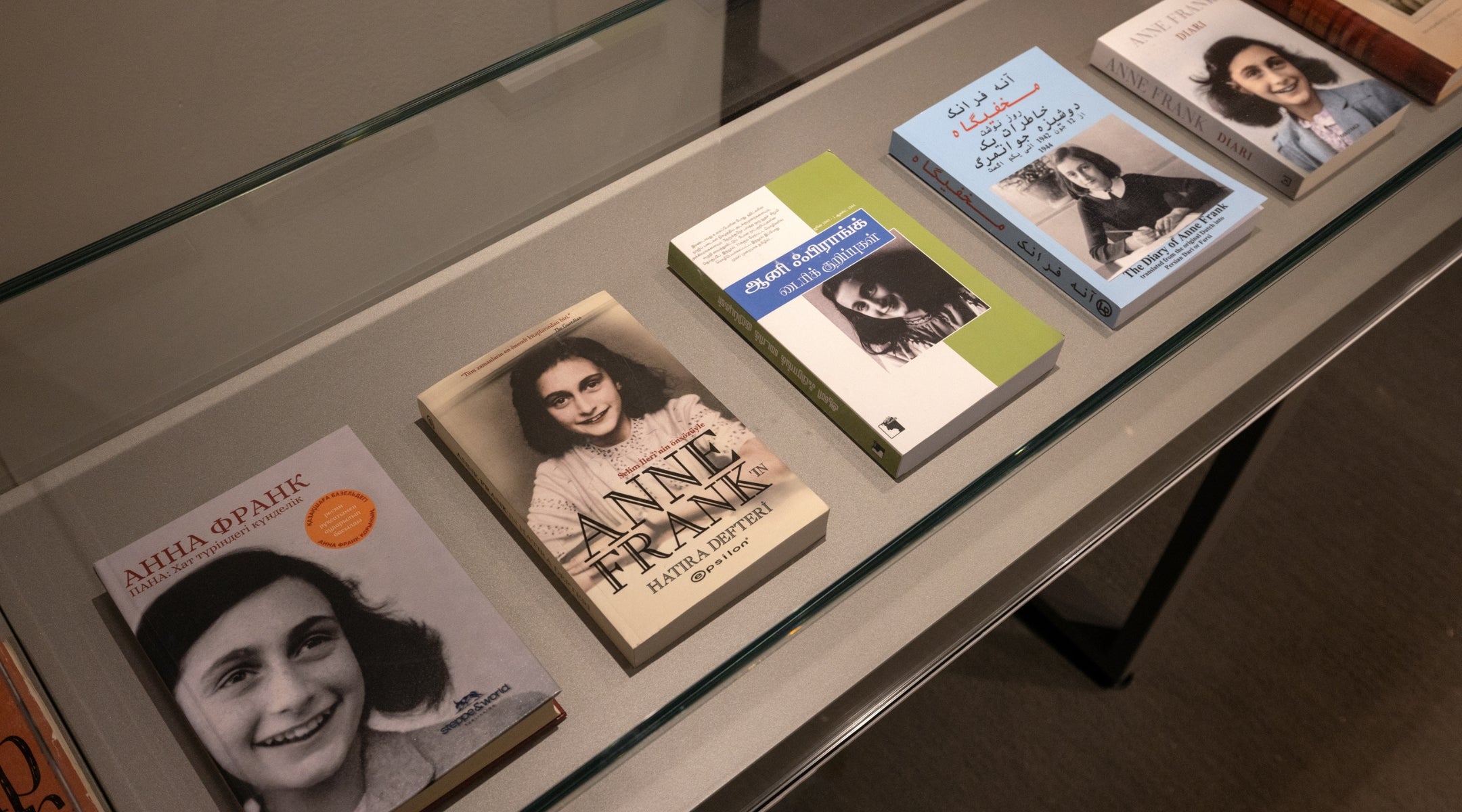
In the years since school libraries became a culture-war flashpoint, Texas has been one of the most active states to pull books from shelves in response to parental complaints — sometimes including versions of Anne Frank’s diary and other Jewish books.
Now, Texas is pursuing a new approach: requiring that Frank’s diary, and several other Jewish texts, be taught throughout the state.
The Texas state education board recently discussed draft legislation that would create the nation’s first-ever statewide K-12 required reading list for public schools. Among the roughly 300 texts on the list: Elie Wiesel’s Holocaust memoir “Night”; Lois Lowry’s young-reader Holocaust novel “Number the Stars”; George Washington’s letter to a Rhode Island synagogue in 1790, and Frank’s diary — the “original edition.”
Each of the works could become mandatory reading for Texas’s 5.5 million schoolchildren as soon as the 2030-31 school year, as the state’s conservative education leaders seek to reverse a nationwide decline in the number of books read or assigned in class while also constraining the texts that activist parents tend to object to. Instead of letting individual teachers put together reading lists that might include “divisive” or progressive content, Republicans in Texas are trying to nudge the curriculum toward a “classical education” said to draw on the Western canon.
Supporters said the list would help ensure every student is on the same page.
“We want to create an opportunity for a shared body of knowledge for all the students across the state of Texas,” Shannon Trejo, deputy commissioner of programs for the Texas Education Agency, told the Jewish Telegraphic Agency about why the group undertook the list project.
While state lawmakers passed a law mandating at least one required book per grade, the board has decided to implement a full reading list. Trejo said the options had been whittled down from thousands of titles suggested in a statewide teachers survey. They were also cross-referenced with a variety of other sources, including books from “high-performing educational systems” in other states and reading lists from the high-IQ society Mensa.
“We’re trying to help students love reading again,” LJ Francis, a Republican member of the state school board who supports the list, said during the Jan. 28 meeting. “I personally think schools should be teaching more than what we have on this list.”
The proposal underscores a complicated moment for Jewish literature in Texas schools, where books about the Holocaust and Jewish history have recently been pulled from shelves amid parental complaints but are now poised to become required reading statewide. Jewish educators and free-speech advocates say the shift reflects both recognition of Holocaust education’s importance — and continuing tensions over who controls what students read and how those stories are taught.
The overall list largely centers the Western canon and deemphasizes modern works as well as most books about race and identity, although selections from Booker T. Washington, Frederick Douglass and other Black American authors made the cut. The Bible is also heavily represented, with selections from both the Old and New Testaments on the reading list.
The state’s Holocaust Remembrance Week education mandate means that Jews are one of the few ethnic groups whose stories are fairly well represented on the state’s required reading list. That doesn’t mean that Holocaust educators are unreservedly enthusiastic about the new approach.
A parent reads aloud from “Anne Frank’s Diary: The Graphic Adaptation” at a board meeting for the Keller Independent School District in Keller, Texas, Aug. 22, 2022. The district had ordered the removal of the book from its schools the week prior. (Screenshot)
“Obviously I’m pleased that they’re including quality Holocaust materials,” Deborah Lauter, executive director of TOLI, the Olga Lenkyel Institute for Holocaust Studies, told (JEWISH REVIEW). Lauter noted that many teachers trained by TOLI on how to teach the Holocaust in their classrooms — including in Texas — already rely on books that made the list.
But, Lauter said, teachers generally like to develop their own curricula to tailor to their classrooms. “Mandating certain books, I don’t know how teachers would feel about that,” she said.
Lauter also expressed concern about whether the state would be providing materials to help teachers decode the Holocaust texts for their students. Trejo told (JEWISH REVIEW) that fell beyond the scope of the list and the statute.
“It is just the title that is going into the standards for the state of Texas,” Trejo said. “Beyond that, it would be up to publishers to look to, how can I support districts and teachers in teaching this title?”
To literacy activists in the state, the approach was concerning.
“This is censorship as well,” Laney Hawes, co-director of the Texas Freedom to Read Project, told (JEWISH REVIEW). The overall list, she said, reflects “a very narrow worldview,” and the large number of books on the list would make it difficult for educators to find time for additional texts of their own choosing in class.
At the same time, Hawes said, “there are some really worthwhile books on this list. ‘The Diary of Anne Frank’ is an incredible book.”
The Jewish titles, Trejo said, were selected with additional input from Holocaust museum experts, local rabbis and Jewish day schools in the state. They also sought input from the Texas Holocaust, Genocide, and Antisemitism Advisory Commission.
“We were invited to provide input regarding a few specific parts of these proposals,” Joy Nathan, the commission’s director, told (JEWISH REVIEW) in an email.

A poem by Hannah Senesh, shown here in Israel in 1943, has been recommended for a statewide approved reading list in Texas. (Wikimedia via Creative Commons)
She named “Blessed Is the Match,” a poem by the Hungarian-born poet and resistance fighter Hannah Senesh, as a reading that her commission recommended for the draft list. “We will continue these direct conversations throughout the process.”
At the state education board meeting, a last-minute amendment proposed by the board’s GOP treasurer sought to remove dozens of works from the list, including Senesh’s poem and Washington’s letter.
The amendment would replace those texts with a new crop of selections, including “Refugee,” a young-adult novel by Alan Gratz that partially follows a German Jewish World War II refugee; Biblical passages on Moses; Maurice Sendak’s “Where the Wild Things Are”; George Orwell’s “1984”; and a book about former Polish president Lech Walesa. The amendment also listed “Night” as required in two different grades.
The story of Moses, the board member said, made the amendment’s cut because “there are a lot of parallels between Moses leading the people out of Egypt and the American Revolution.” Debate on the topic dragged into the night, with board members arguing whether requiring Bible passages would violate the Establishment clause and which Biblical translation had superior literary merit.
Following the amendment, the board agreed to postpone a vote on the required books until April to give members time to review both lists. Another board member, pushing for greater racial diversity in the list, submitted his own titles for review as well.
Once voted on, the legislation would enter a public comment period prior to being formally adopted at a later meeting.
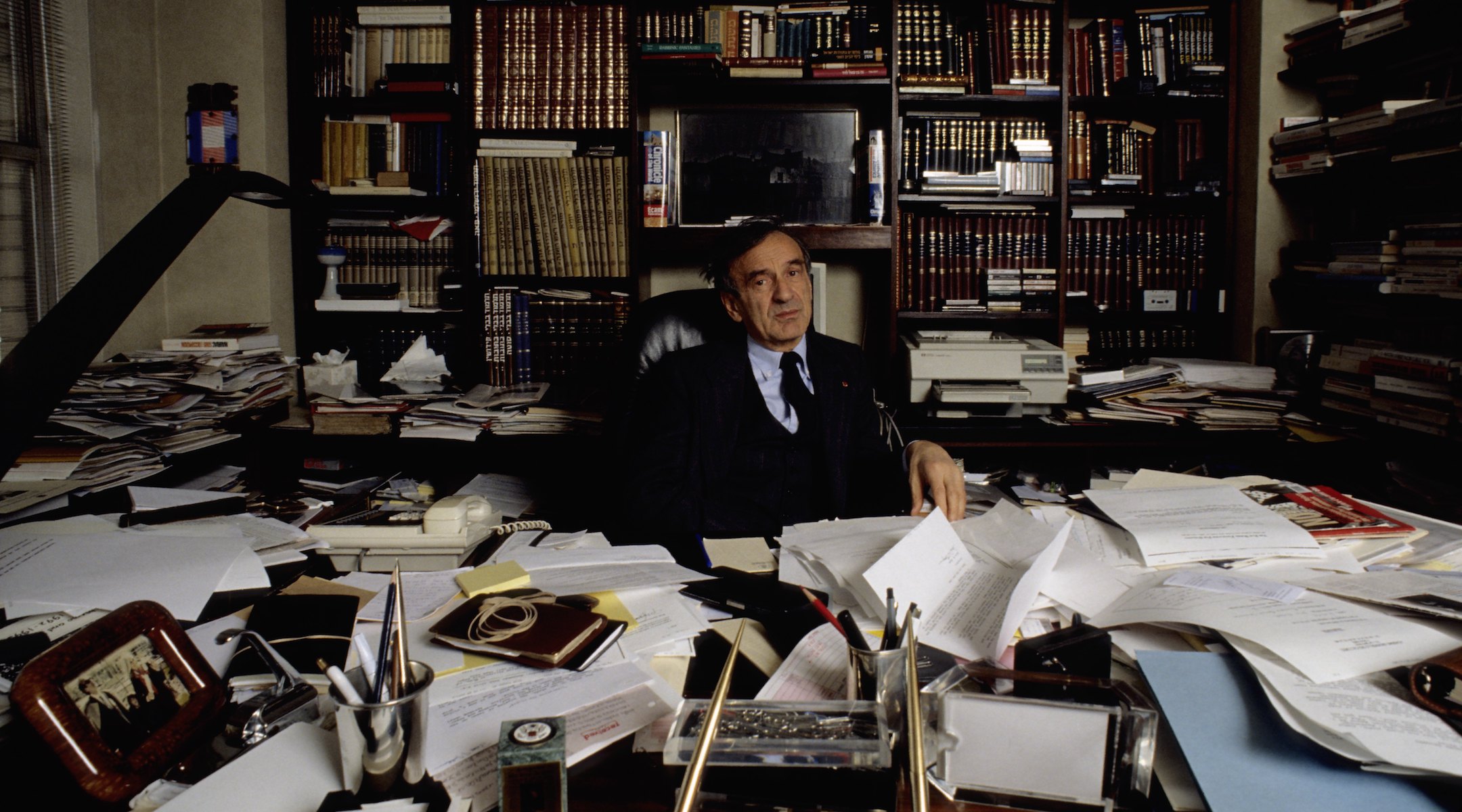
“Night” by Elie Wiesel, shown here in 1980 in New York, holds a prominent presence on high school reading lists. (Santi Visalli/Getty Images)
A long list of public commenters at the meeting opposed the law on various grounds, including that it was overly prescriptive, lacked proper balance between classical and modern literature, included more books than could realistically be taught, overly emphasized Christian texts over other religious works, and lacked racial and gender diversity. One teacher said that “Night” is traditionally taught at a different grade level than the law mandates.
Among those who testified against the policy was Rebecca Bendheim, a middle-school teacher at an Austin private school and author of young-adult novels about Jewish and LGBTQ identity. “I believe the list underestimates what Texas students can do,” Bendheim said.
A handful of commenters voiced support for the measure. Matthew McCormick, education director at the conservative Texas Public Policy Foundation, which backed the law, said that it covers “important historical eras such as the Great Depression and the Holocaust.”
He added, “By approving this reading list, the board has the opportunity to enact a generational change by ensuring that every public school student has a strong foundation in literacy and literature.”
At Wednesday’s meeting, the board also voted on new required civics training for teachers and new required vocabulary lists, which would be extracted from the required books.
The state’s embrace of Jewish curricula comes after one Texas school district recently pulled “The Devil’s Arithmetic,” another young-reader Holocaust novel, following a “DEI content” weeding process aided by artificial intelligence. A state law currently on the books in Texas places classroom restrictions on “instruction, diversity, equity and inclusion duties, and social transitioning.”
While Jewish texts are generously represented on Texas’s list, works by and about authors of other identities are not; the high school list, for example, features no Hispanic authors. An estimated 245,000 Jews live in Texas, or less than 1% of the population, according to Brandeis University demographics; Hispanics, by contrast, form 40% of the state population, more than the white share.
The state offered lists of approved Holocaust materials teachers may select from when marking Holocaust Remembrance Week last month. Those approved materials, provided by the Texas Holocaust, Genocide, and Antisemitism Advisory Commission, include many of the texts now required in the legislation.
The proposed legislation concerns activists in the state who oppose book bans and restrictions on students’ “right to read.” Hawes, a Fort Worth mother of four children in the state education system, first became an activist after her district removed the “Graphic Adaptation” of Frank’s diary from its shelves in 2022.
That district returned the book after public outcry. But other districts both in and outside of Texas followed suit by pulling the same edition, along with other Jewish books including “Maus” and “The Fixer,” over the last few years.
Seeing Frank’s diary on the state’s required reading list now, Hawes said, “feels weird to me.”
She noted that the draft legislation specifies that the “original edition” must be taught. The 2018 illustrated adaptation, which includes a passage of Frank discussing a same-sex attraction that had been excised from the original published edition, has been opposed by conservative parents across the country.
In a slideshow by the Texas Educational Agency that outlines the proposed requirements, Frank’s diary is portrayed as an “anchor” text for the 7th grade. “Blessed Is the Match,” an ode to self-sacrifice for a higher cause, and Washington’s letter, a landmark statement of religious tolerance, are listed as supplemental texts for the diary.
The goals of the unit, the agency states, are “factual accounts of Jewish resistance during the Holocaust” and “foundational American ideals of religious liberty and tolerance.”
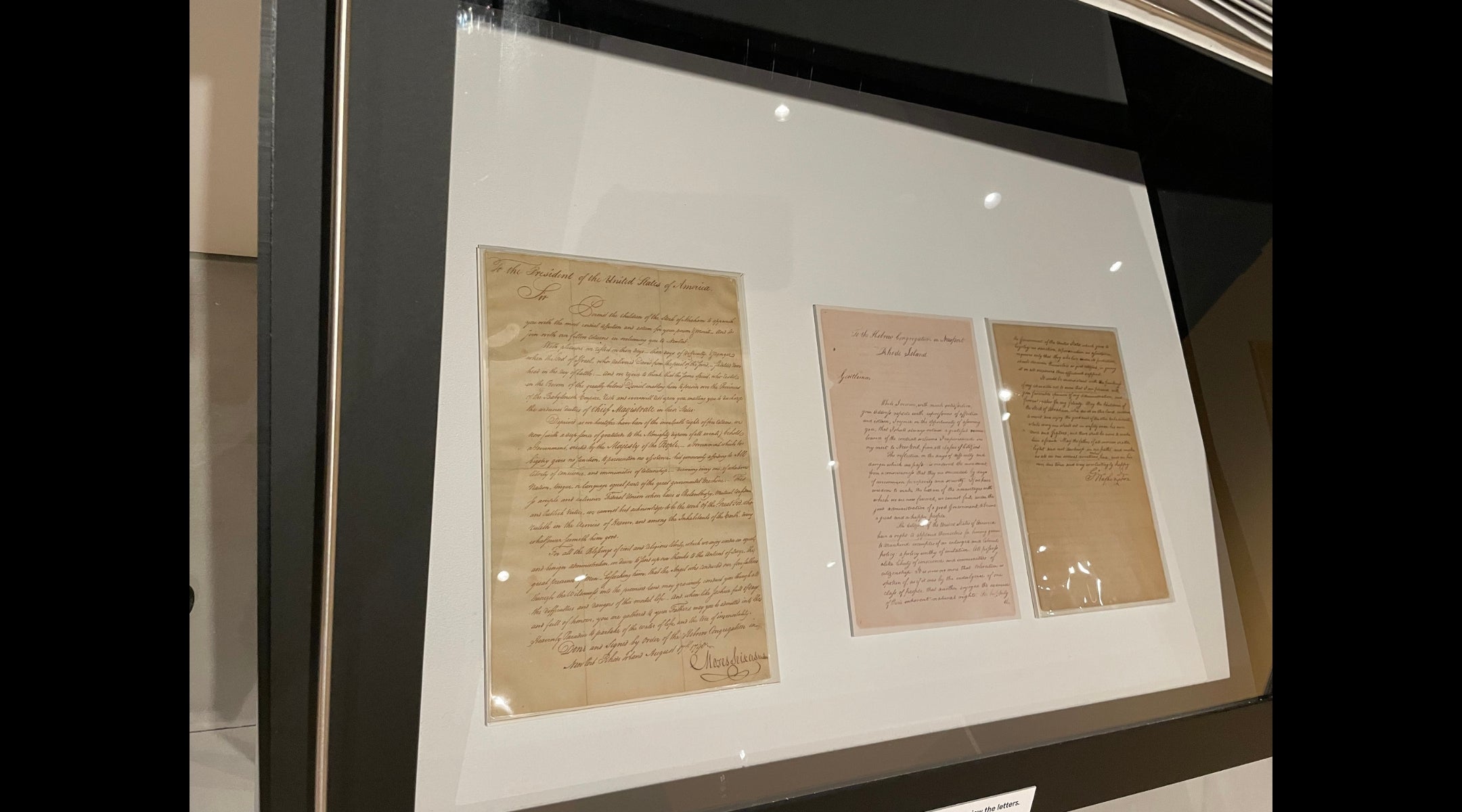
A letter exchange between Touro Synagogue president Moses Seixas and George Washington includes a classic statement on religious tolerance. (Jackie Hajdenberg)
The Biblical passages, the agency notes, are intended to fulfill a statewide requirement that school districts have “an enrichment curriculum that includes: religious literature, including the Hebrew Scriptures (Old Testament) and New Testament, and its impact on history and literature.” Christian activist groups within Texas, and several elected officials, have pushed for years to promote Evangelical Christian texts in public schools.
The inclusion of Washington’s letter, which assures the Newport congregation that Jews will find safe haven in the United States, also struck Hawes as suspicious. The list contains numerous texts promoting patriotism but does not include any material addressing ongoing antisemitism in America.
“This is making us think that George Washington solved antisemitism. And he didn’t,” she said.
Lauter said that if Texas’s policy of statewide Holocaust book requirements becomes a broader trend, she would welcome it — despite her concerns.
“I think it’s a positive. We support more Holocaust education in schools,” she said. “It’s certainly better than the opposite, which is banning books.”