
Jews in Ireland reported over 100 antisemitic incidents through a communal reporting system within six months after it launched, according to a new report.
The findings published early Monday by the Jewish Representative Council of Ireland constitute the first attempt to document antisemitic incidents in Ireland.
Irish Jews, a small community of about 2,200, reported 143 incidents between July 2025 and January 2026. These were dominated by verbal abuse, vandalism, threats, exclusion or discrimination and direct digital hate messages. Physical assault was less common, with only three instances reported.
All incidents were self-reported to the JRCI, which cannot independently investigate or adjudicate them. Ireland does not have an official state mechanism for recording antisemitic incidents, the group said. And while the police record hate crimes based on nationality, ethnicity or religion, they do not isolate crimes motivated by antisemitism.
The JRCI said that 30% of incidents were triggered by cues of Jewish identity or Israeli origin, such as a Jewish symbol, an accent or speaking Hebrew in public. Such patterns often crossed the boundaries of hate driven by nationality, ethnicity and religion.
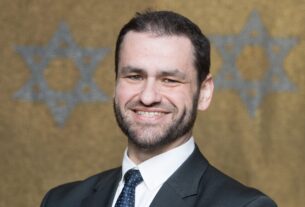
“These dynamics cannot be adequately addressed through generalized anti-racism frameworks alone,” JRCI chair Maurice Cohen said in a statement. “Antisemitism presents distinct characteristics requiring targeted policy responses.”
Cohen called for “a dedicated, standalone national plan to combat antisemitism in Ireland.”
Of the reported incidents, 25 included “Holocaust distortion” or antisemitic conspiracy theories. These findings add to a Claims Conference survey in January, which said that 9% of Irish adults believed the Holocaust was a myth, while another 17% believed the number of Jews killed had been greatly exaggerated. Half of Irish adults did not know that 6 million Jews were killed in the Holocaust.
At the same time, a November 2025 survey by the European Commission surfaced broad recognition of antisemitism in Ireland. 41% of respondents said that antisemitism was a problem in the country and 47% said it had increased over the past five years.
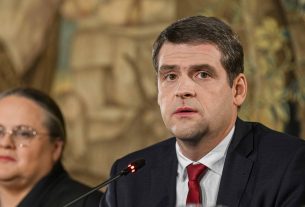
At a ceremony for International Holocaust Remembrance Day in January, Ireland’s taoiseach (or prime minister) Micheál Martin said, “I am acutely conscious that our Jewish community here in Ireland is experiencing a growing level of antisemitism. I know that elements of our public discourse has coarsened.”
Martin has strenuously criticized Israel’s actions in Gaza, saying at the United Nations last year that Israel committed genocide and demonstrated “an abandonment of all norms, all international rules and law.” Catherine Connolly, a socialist politician who has faced backlash for saying Hamas is “part of the fabric of the Palestinian people,” was elected as Ireland’s president in October.
Ireland has historically supported the Palestinians, a stance often linked to the country’s own history of British imperial rule, and formally recognized a Palestinian state in 2024.
In Martin’s Holocaust commemoration speech, he also condemned the most recent event to inflame the Irish Jewish community. Late last year, a proposal to rename Herzog Park in Dublin — named for Chaim Herzog, the son of the first Irish chief rabbi who became Israel’s sixth president in 1983 — was decried by Irish Jews who said it would erase Irish Jewish history. The proposal was later tabled.
Martin, who also denounced the proposal when it was active, said the Jewish community “has every right to be deeply concerned and to express that concern.”
Gideon Taylor, president of the World Jewish Restitution Organization and an Irish Jew who grew up in Dublin, said the JRCI report showed a picture of antisemitic incidents that were separate from “a debate about the policies of Israel or a debate about the Palestinian state.”
“When you have discontinuation of service because somebody is heard speaking Hebrew, or has a Jewish-identifying symbol on them, that’s not about a political position on the spectrum towards Israel,” said Taylor. “That’s something that crosses into antisemitism.”
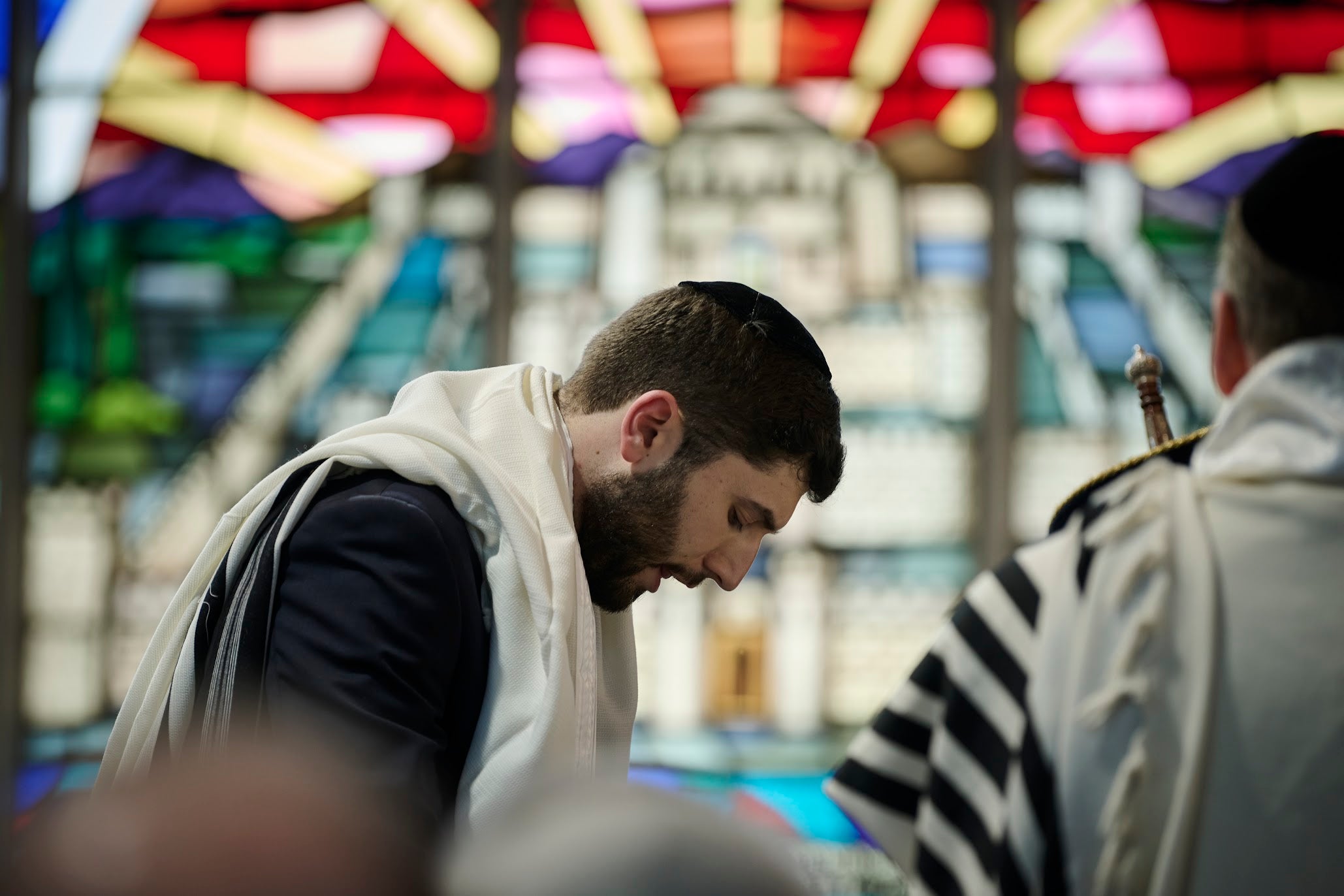
Ireland’s chief rabbi Yoni Wieder said the report reflected experiences he already heard from his congregants.
“The report does not claim that antisemitism has become a daily reality for all Jewish people in Ireland — it has not,” said Wieder. “What it does show is that antisemitism surfaces often enough, and in ordinary enough settings, that it cannot be dismissed as rare or confined to the margins of society. This means that for many, Jewish belonging in Ireland feels more fragile than it should.”