
First, the good news. Among Americans under 50, the overall cancer mortality has plummeted by 44% over the last quarter-century. Better diagnostic tools, along with a sharp drop in smoking, helps explain why deaths from leukemia as well as lung, breast and brain cancer are falling so dramatically.
Now the bad news: Colorectal cancer (CRC) is killing more people under 50 than ever.
In early February, James Van Der Beek — the 48-year-old star of the teenage TV drama “Dawson’s Creek” — died of advanced colon cancer, two years after being diagnosed with the disease and one year after going public with it. Overall, deaths from CRC have risen by 1.1% a year since 2005, advancing it from the fifth most common cause of cancer death in the early 1990s to second place today, reports the American Cancer Society.
Jews should be especially alarmed, given that people of Ashkenazi, or Eastern European, Jewish descent are two to three times more likely to develop colorectal cancer than nearly anyone else, according to the Norton and Elaine Sarnoff Center for Jewish Genetics.
The Israel Cancer Research Fund (ICRF) — a New York-based nonprofit organization that funds Israeli research into the prevention, diagnosis and treatments for cancer — is determined to find out why CRC rates are rising and what to do about it.
“Colorectal cancer is rising at an alarming rate among young adults, challenging long-held assumptions about who is at risk,” said Alan Herman, the executive director of ICRF, which is the largest non-governmental funder of cancer research in Israel. “These realities make research more urgent than ever. By funding Israel’s most promising cancer scientists, the ICRF is driving discoveries that can lead to earlier detection, better treatments and ultimately lives saved. Our supporters are helping ensure that the breakthroughs patients need are within reach.”
Here’s a look at three leading Israeli researchers who have been funded by ICRF over the years, and how they are racing to find those CRC breakthroughs.
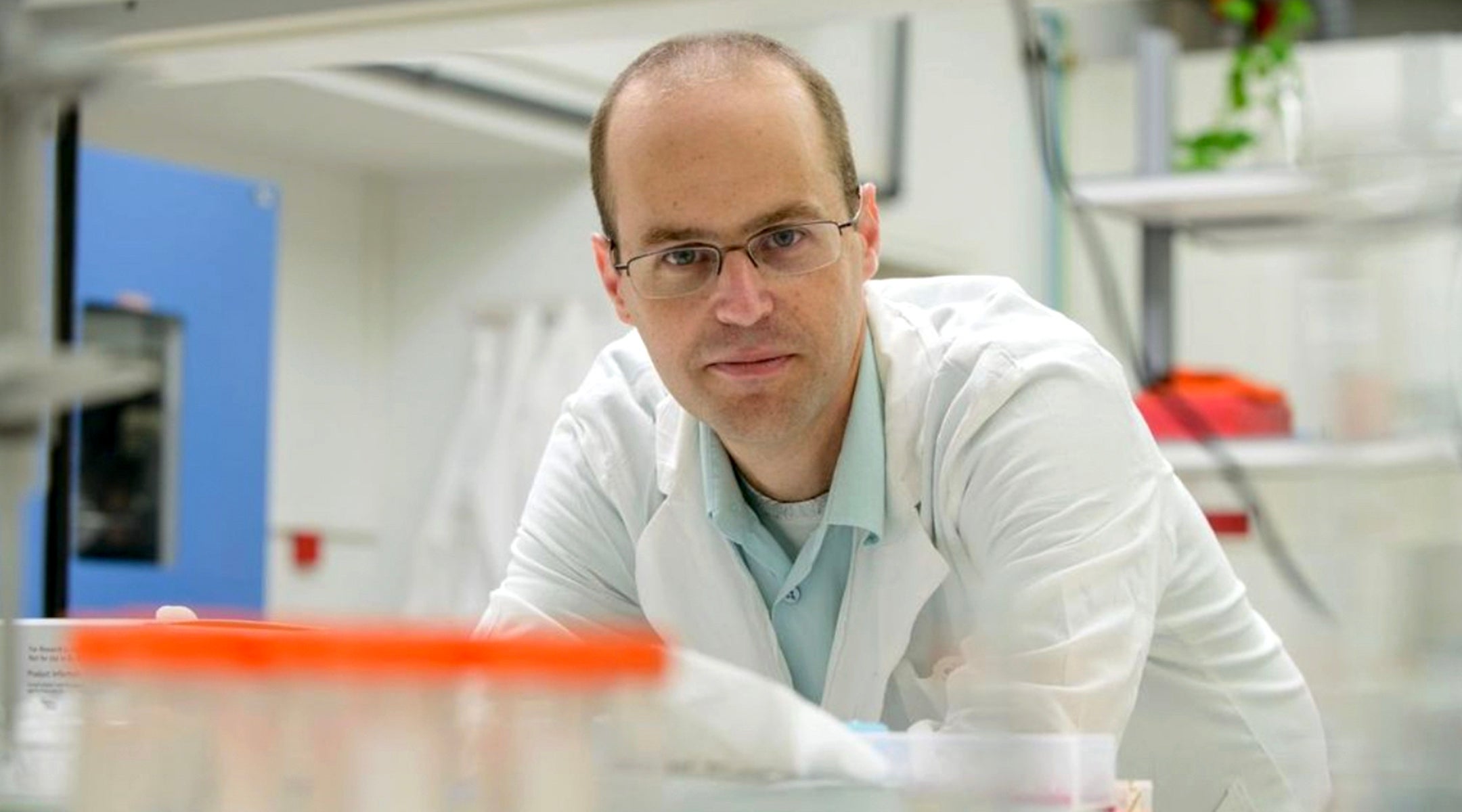
Irit Ben-Aharon is a medical oncologist specializing in gastrointestinal cancers. (Courtesy)
1. Solving the early-onset puzzle
Irit Ben-Aharon, MD, PhD, a medical oncologist specializing in gastrointestinal (GI) cancers, directs the Fishman Oncology Center at Haifa’s Rambam Health Care Campus. She also heads the European Organization for Research and Treatment of Cancer task force for young-onset GI cancer.
“There’s been an increase in the past three decades of early-onset colorectal cancer, and we don’t really know the reason,” she said. “Only 15% to 20% of these cases are hereditary; the rest came out of the blue.”
It’s widely believed that eating red meat — particularly highly processed meat such as cold cuts, hot dogs and sausages — is a major risk factor in early-onset colorectal cancer. But Ben-Aharon isn’t convinced.
“I don’t think it’s diet only — it’s multi-factorial,” she said. “When you look at the data, if it would have been only diet, you’d not see the incidence of early-onset CRC rising all over the world. Diets are different in the U.S., Japan and Scandinavia, yet you see this increasing trend everywhere, and we probably would have seen a much higher incidence, as many people eat ultra-processed food and don’t develop colorectal cancer.”
She added: “Some toxins from specific bacteria have been shown to have increased levels in cases of early-onset colorectal cancer, implying these bacteria may induce cancer. Also, there is evidence linking increased risk due to exposure to specific pesticides.”
Ben-Aharon said that, in the U.S., studies have shown that obesity is linked to an increased risk of early-onset CRC. “But this correlation is weaker in other parts of the world. Most of our patients are not obese,” she said. “They are fit.”
In Israel, she said, colorectal cancer is more common than in other countries because Ashkenazi Jews are genetically predisposed to the disease — though not necessarily to the early-onset form of CRC.
“I’ve seen patients as young as 20,” Ben-Aharon said. “Last week I saw a 16-year-old, but with a genetic disposition toward colorectal cancer. Because our population is young, it brings a whole basket of issues that are unique.”
She emphasized, however, that while Ashkenazi Jews are diagnosed with CRC at a younger age than the general population, it doesn’t necessarily mean they’re under 50 at the time of diagnosis. “There are some specific mutations more common in Ashkenazi Jews and are correlated to early-onset CRC, but that doesn’t correlate to the sporadic trend of increase in incidence,” Ben-Aharon said.
One area of Ben-Aharon’s research is the pathogenesis — the process by which a disease develops — of early-onset GI cancer.
“Environmental factors such as diet and other exposures like plastic and pesticides — and the combination with specific predisposition and host features such as microbiome and other pathways — may underlie this trend,” she said.
“Elucidating the unique interplay between environmental factors and unique features of patients predisposed to developing cancer at an early age would allow us to delineate the high-risk population,” she added.
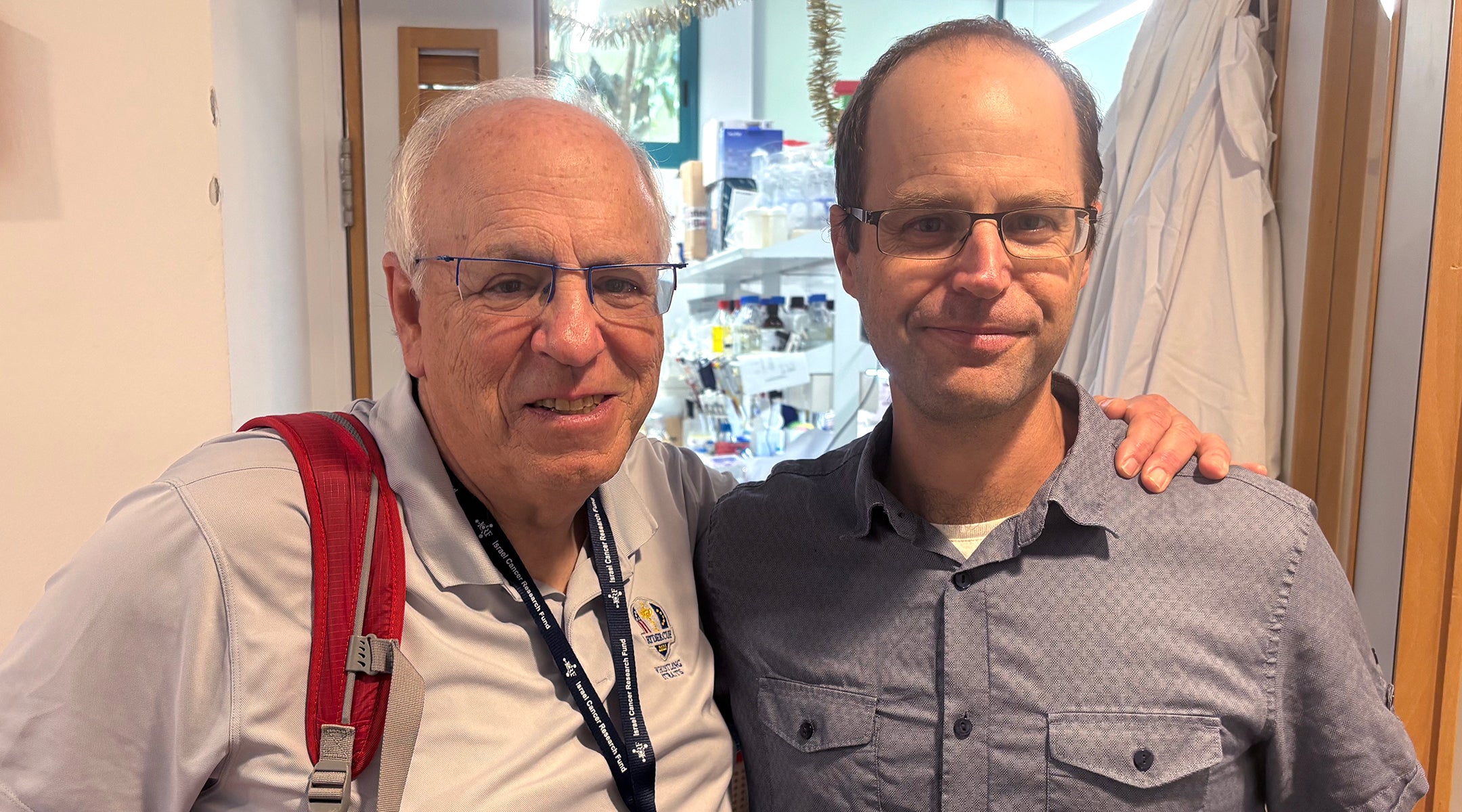
Israel Cancer Research Fund chair Arnold Baskies, MD, left, and drug discovery expert Nir London at the Weizmann Institute of Science. (Courtesy)
2. Hope for more effective, less toxic treatment
Drug discovery expert Nir London, PhD, is an associate professor at Rehovot’s Weizmann Institute of Science as well as the president of the Israel Chemical Society’s medicinal chemistry section.
“Many cancers are driven by specific mutations, which we call driver mutations. They tend to appear in the same types of cancers,” London said. “If a particular cell gains this mutation, it has a high propensity to transform into a cancerous cell. Such cancers get addicted to the mutation, so if you inhibit a protein with this mutation, you’ll have a way to mitigate the cancer’s growth. It’s a soft spot.”
KRAS, the protein London’s lab is studying now, signals normal cells to proliferate. In normal cells, KRAS is turned off, so to speak, but external stimulation like human growth factors could cause the cell to suddenly start multiplying.
“Cancer hijacks this pathway and it loses its regulation, and is continuously active,” he said. “It keeps telling the cell to divide. This is beneficial for cancer.”
Using new chemistry developed by his lab, London is designing, synthesizing and testing molecules with chemical groups that react specifically with a KRAS mutant known as G12D mutant — forming the basis to develop drugs targeting that mutation. This research, he said, offers new hope for more effective and less toxic treatments.
“Not all colorectal cancers are the same,” London said. “We are focusing on developing drugs that are specific to a vulnerability found in about 13% of CRC patients. If successful, this could bring hope to hundreds of thousands of patients.”
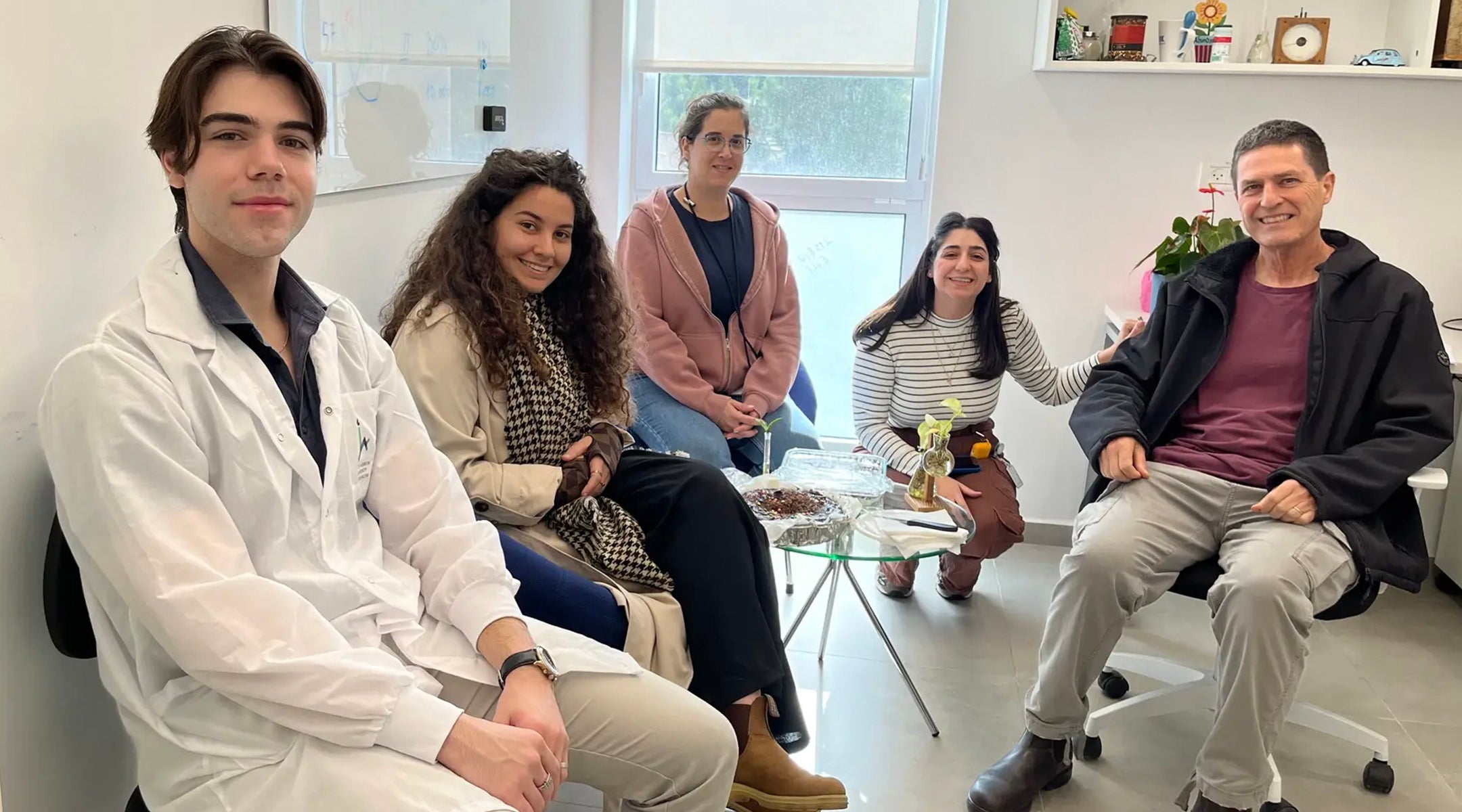
Gilad Bachrach, right, with his students and lab manager in his office. (Courtesy)
3. The promise of bacteria
Gilad Bachrach, PhD, teaches at Hebrew University-Hadassah’s Institute of Dental Science in Jerusalem. Bachrach focuses on oncobacteriology — the study of bacteria as a treatment for cancer.
“Cancer has been treated by surgery and then by chemotherapy, radiotherapy and, most recently, immunotherapy. We believe bacteria therapy can be the next potential option in cancer treatment,” Bachrach said.
“We know bacteria are involved in cancer promotion, as well as anti-cancer activities,” he added. “Now the challenge is to harness bacteria for cancer detection and therapy.”
Bachrach said he initially focused on mapping the genetics for Fusobacterium nucleatum, an oral bacterium associated mainly with periodontal disease.
“This didn’t interest anyone. But then, in 2012, it was found in colon cancer. Suddenly we had the most developed genetic tools to study this bacterium,” said Bachrach, who knew little about cancer at the time. “We had to transition from oral microbiology to oncobacteriology — and the ICRF was the first to fund this transition. We made this shift together.”
Ultimately, he said, “surgery, radiotherapy, chemotherapy and immunotherapy are established cancer treatments. My hope is that using bacteria to identify and target cancer will become the next major breakthrough in the field.”
Reporting the stories that define our era. When history unfolds in real-time, the Jewish world turns to JR. Your support ensures we can document the complexities of war and the resilience of Jewish communities with integrity.