
The president of PEN America resigned over the weekend in protest of a report on boycotts targeting Jewish and Israeli authors, part of yet another round of internal division over Israel at the literary free-speech institution.
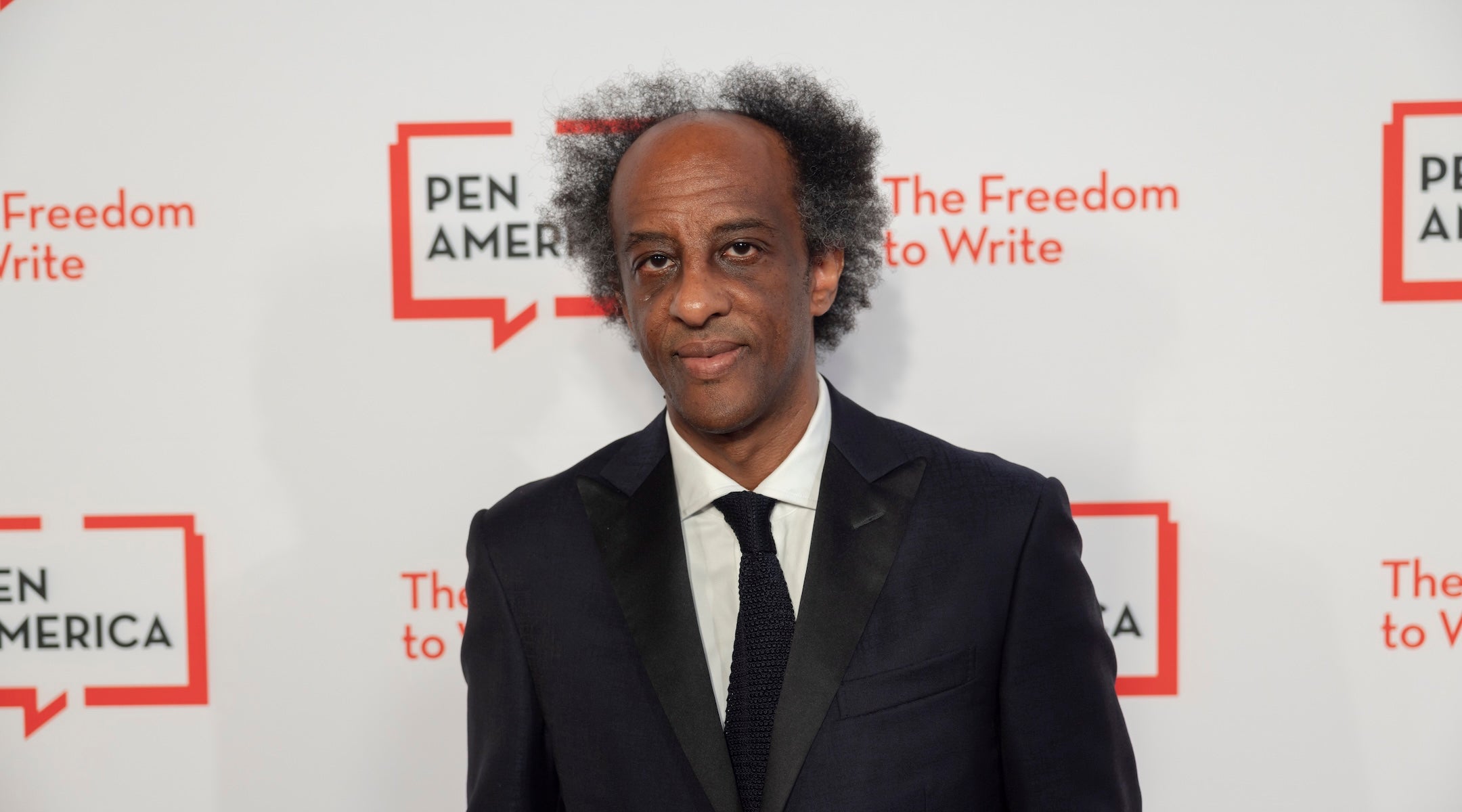
Dinaw Mengestu, an Ethiopian-American novelist and Bard College professor, told The Atlantic he was stepping down because he believed the PEN report, “A Silent Moratorium,” failed to defend the free-speech rights of participants in the movement to boycott Israel.
“It’s the First Amendment that allows all of us to engage in boycotts, not PEN America,” Mengestu told the publication. “PEN America as a free expression organization is supposed to defend that right.”
The author did not respond to multiple Jewish Telegraphic Agency requests for comment, but in an Instagram post Monday alluded to an interest in creating a new organization to rival the prominent nonprofit, which defends the free expression rights other writers.
In response to an interview request, PEN sent a statement to (JEWISH REVIEW) saying it was “grateful” for Mengestu’s leadership and would “respect” his decision. The statement also alluded to PEN’s own past turmoil: “We tell hard stories, in politically challenging moments, about writers from a range of perspectives, even when it’s uncomfortable for us given our own recent history.”
In its report, published on its blog, PEN described “Jewish and Israeli writers who feel that the mainstream literary world is increasingly shutting them out because of their identity, nationality, or views.” Interview subjects include several Israel critics, as well as literary agents who assert that they face more difficulties signing Jewish authors after the Oct. 7, 2023, Hamas attack on Israel and amid the subsequent war in Gaza. The report also repeatedly cited a (JEWISH REVIEW) report about a 2024 viral list of “Zionist” authors to boycott.
Among other details, PEN’s report revealed that Israeli novelist Etgar Keret and public radio host Ira Glass had cancelled a planned live event in Australia over fears of threats and protest.
“This silencing and exclusion of writers is a threat to what PEN America is fundamentally committed to defending: a culture of free expression for all,” according to the report.
In addition to the report, PEN also altered its institutional policy toward cultural boycotts, which the organization has long opposed. Although its report on Jewish authors asserted that boycotts “threaten the free expression rights” of their targets, the revised guidelines say that the group will also defend the right of writers to participate in boycotts.
Mengestu’s resignation comes at a perilous moment for Jews facing cultural boycotts, both within the standard-bearers of PEN and elsewhere. PEN’s Jewish former longtime CEO stepped down in 2024 following months of blowback from rank-and-file authors who felt the organization was insufficiently critical of Israel and caused PEN to cancel a festival for global authors.
Since the leadership change, PEN leadership has published and retracted a condemnation of a boycott effort trained at an Israeli comedian and also published a report cataloguing Israel’s “cultural destruction in Gaza.”
Mengestu had assumed the role of board president in 2025. But PEN’s report about Jewish and Israeli writers on Thursday, he wrote, “makes clear that [change] will not happen.”
The Anti-Defamation League said it was “deeply troubled” by Mengestu’s resignation Monday. “Freedom of expression means opposing efforts to boycott, silence, or exclude writers because of their identity or nationality,” the organization tweeted, saying that the author’s decision to leave PEN over his objections to the report on Jewish authors “sends a chilling message.” Jewish authors also objected.
“Imagine running a free expression org and resigning because it refuses to blacklist authors based on their nationality,” the author David Zweig wrote on X, musing whether Mengestu would object to boycotting authors from his birth country: “Ethiopia doesn’t exactly have a good human rights record.”
In response to The Atlantic’s story that quoted sources from inside PEN who were critical of his resignation, Mengestu wrote a lengthy Instagram post Monday in which he stated, “This piece is about trying to suppress constitutionally protected speech,” criticized past PEN reports critical of the BDS movement, and added, “What PEN America fails to understand is that boycott is a form of dialogue.”
He announced his intention to “help make something better,” receiving affirmative comments from notable authors including Viet Thanh Nguyen, Angela Flournoy, Jewish pro-Palestinian novelist Jess Row and Pulitzer Prize-winner Benjamin Moser, author of a forthcoming history of Jewish anti-Zionism.
Other Jewish authors on the left were among those defending Mengestu’s decision to step down.
“Dinaw is one hundred percent correct that this kind of fake victim propaganda can be used to support anti-Boycott legislation which violates the First Amendment and is everywhere as popular support for Palestinians grows,” author Sarah Schulman wrote on Facebook. Calling PEN’s blog about Jews “one of those fake anti-semitism pieces,” Schulman added, “If PEN wants to survive, they have to get out of the Israel/Zionism business.”
Reporting the stories that define our era. When history unfolds in real-time, the Jewish world turns to (JEWISH REVIEW). Your support ensures we can document the complexities of war and the resilience of Jewish communities with integrity.