


The lieutenant governor of Texas says his recent call for the state’s public schools to remove “over 2,000 titles” of “dirty, filthy and vulgar books” was not meant to include books about the Holocaust.
Dan Patrick’s statement, provided exclusively to the Jewish Telegraphic Agency on Friday, comes after a month of confusion following a press conference in which he and a conservative Christian activist threatened schools with potential loss of state funding if they did not comply with his directive to purge their libraries.
“I believe Texas students must learn about the Holocaust, and that includes reading books such as ‘Night’ by Elie Wiesel, ‘The Diary of Anne Frank,’ and other books about the Holocaust,” Patrick told (JEWISH REVIEW), singling out two books on the removal list he had promoted – one of which, “Night,” that he previously explicitly called for removal from middle schools.
Patrick added that his initiative was “focused on age-inappropriate, sexually explicit books in public school libraries across Texas.” At his earlier press conference, he had directed viewers to an online list compiled by an activist group that features several books about the Holocaust and Jewish identity.
Patrick’s threats have teeth. In Texas, lieutenant governors are more powerful than in many other states, playing central roles in shaping the budget and determining the legislative agenda.
Patrick also appeared to walk back some of the harsher proclamations from his Aug. 19 press conference, at which the Republican had stated, “We’re coming for the books.”
“As the law states, local communities have the right to make their own decisions about their public school libraries,” he told (JEWISH REVIEW) Friday.
The lieutenant governor, who is up for reelection this fall, appeared at the conference with Bonnie Wallace, the head of the activist group Recover America, and told viewers to “go to RecoverAmerica.com.” That group has circulated a list of more than 2,100 “Harmful Books in Libraries.” Its list, which it describes as “books with harmful, sexually explicit, and vulgar content,” includes more than a dozen titles of particular import to Jewish readers.
Recover America’s flagged books include both volumes of Art Spiegelman’s “Maus,” a comic-book adaptation of Frank’s diary and Bernard Malamud’s novel of a blood libel “The Fixer” — all books that have been removed from school districts in Texas and other states in the past amid broader conservative-led library culture wars. In some cases those books were restored to the districts following public outcry, but spurred deeper dialogue about the state of Holocaust education and antisemitism awareness in public schools.
Patrick’s latest push would go much further than a handful of districts, affecting the more than 5.5 million students in public schools across the state.
One book of particular contention on Recover America’s list was “Night,” Elie Wiesel’s bestselling memoir of surviving Auschwitz and Buchenwald, which has been taught in schools for decades. After a Houston Chronicle story noted the book’s inclusion on the Recover America “harmful” list, Patrick initially doubled down on “Night,” saying that it was not appropriate for middle schools owing to its “violence.”
“If ‘Night,’ by Elie Wiesel, were made into a movie, it would likely be rated R,” Patrick wrote on the social network X on Aug. 26. “‘Night,’ which includes depictions of graphic violence and the machine-gunning of babies, should not be available to sixth graders in middle-school libraries. High school is more age-appropriate.”
His tweet appeared to contradict the state’s own K-12 required reading list, passed this summer, which mandates that “Night” be taught in the eighth grade beginning in 2030.
Now, in response to questions from (JEWISH REVIEW), the lieutenant governor said he would defer to the Texas State Board of Education on the appropriate grade to teach “Night.”
“The State Board of Education decides the appropriate grade level for books and will determine whether ‘Night,’ by Elie Wiesel, is at the appropriate grade level,” Patrick told (JEWISH REVIEW) in his statement.
He continued to insist that books in schools should be held to “FCC standards,” referring to the Federal Communications Commission, an agency that governs broadcasting content and does not regulate publishing.
The head of the Texas Holocaust, Genocide and Antisemitism Advisory Commission, a governor-appointed panel which advised the state on the inclusion of “Night” and other Holocaust texts on its required reading list, did not return a (JEWISH REVIEW) request for comment.
In a statement, the Texas Educational Authority, which drafted the required-reading list, told (JEWISH REVIEW), “When Texas students learn about the Holocaust, they will be exposed to the horrors of the Holocaust. That is why the SBOE placed the book in 8th Grade to ensure age appropriateness for students.”

At the Emmys this week, when “The Librarians,” a documentary about librarians facing book removal threats, won an award, retired Texas librarian Carolyn Foote joined the producers on the stage and held up a copy of “Night” in protest.
“I felt like it was very symbolic to bring ‘Night,’” Foote, a subject of the film and a co-founder of the librarian activist group FReadom Fighters, told (JEWISH REVIEW). “Having read it, I just know the importance of not forgetting our past. And that’s part of Elie Wiesel’s whole legacy, is remembrance, and so it just felt very important for me to carry that book, coming from Texas.” Another librarian onstage for the win held up “Anne Frank’s Diary: The Graphic Adaptation.”
Elisha Wiesel, Elie’s son and chair of the Elie Wiesel Foundation, told (JEWISH REVIEW) that “Texas deserves credit for recognizing that Holocaust education belongs in the eighth-grade curriculum.” Yet, the younger Wiesel suggested, Patrick’s concerns about the book’s violence were misplaced.
“‘Night’ contains violence because the Holocaust was violent; its purpose is not to shock young people, but to help them understand where hatred and indifference can lead,” he wrote in an email. “With context and guidance, students should not be shielded from this history. They should be equipped to confront it.”
Despite having directed viewers to Recover America’s book list during his press conference, Patrick’s new statement to (JEWISH REVIEW) said, “I do not have a book list.” He pointed instead to a law passed in the state legislature in 2025 regulating school books that he said districts were required to follow.
Yet some districts in the state have removed every book on Recover America’s list from their own libraries out of fear of losing funding, Foote told (JEWISH REVIEW). While the list nominally contains a ratings system, many of the books do not have a rating.
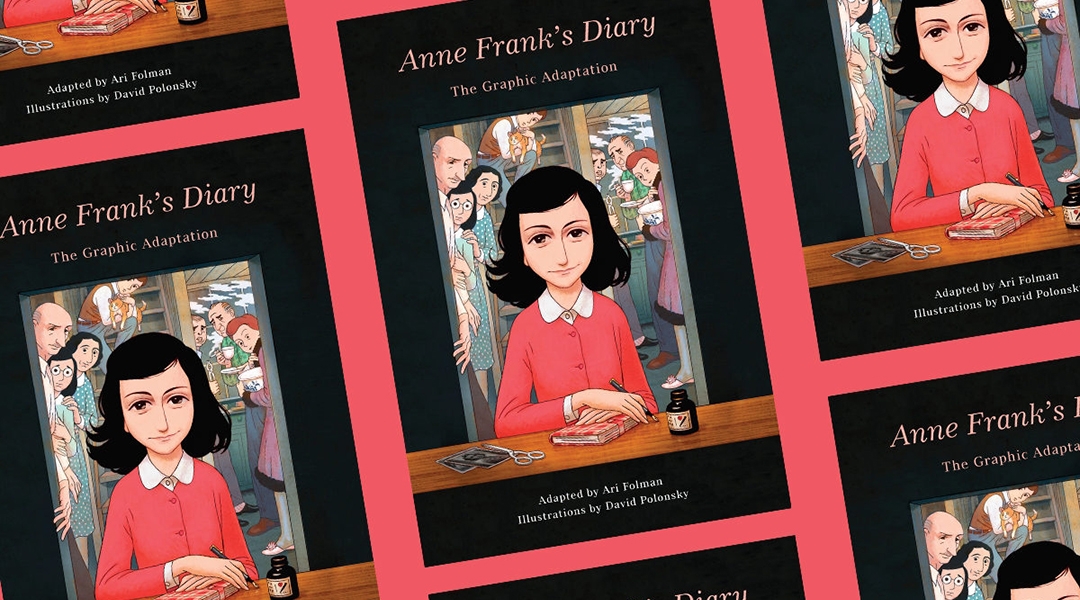
Besides “Night,” “Maus,” “Anne Frank’s Diary” and “The Fixer,” other books about Judaism and the Holocaust on Recover America’s list of “Harmful Books” include:
- “Annexed,” a young-adult novel about Peter van Pels, who hid in the Amsterdam annex with Anne Frank
- “The Berlin Boxing Club,” a young-adult historical novel based on German boxer Max Schmeling, who helped young Jews during Hitler’s rise to power
- “Black, White and Jewish,” a memoir by Rebecca Walker, the mixed-race Jewish daughter of author Alice Walker
- “Caste: The Origins of our Discontents,” a nonfiction book analyzing the “caste systems” of Nazi Germany. “Caste” had been included on an earlier, Wallace-spearheaded list of books for removal from a Texas public library in a case that the U.S. Supreme Court declined to hear in 2025, allowing the removals to proceed.
- “Kasher in the Rye,” a memoir by Jewish comedian Moshe Kasher
- “Pride: the story of Harvey Milk and the Rainbow Flag,” a children’s picture-book biography of the pioneering Jewish LGBTQ legislator
- “Sophie’s Choice,” the bestselling Holocaust novel for adults
- “The Violin Maker’s Daughter,” a historical novel about a Jewish family of musicians during the Holocaust
- “White Bird,” a young-reader graphic novel about a Jewish girl in Nazi-occupied France
In response to (JEWISH REVIEW) sharing a list of the above books, Patrick’s statement mentioned only “Night” and Anne Frank by name. The Recover America list is largely made up of romance and fantasy novels, many with an LGBTQ element, while also including classics such as “The Glass Menagerie” and “Cat’s Cradle” and some picture books for children.
Recover America did not immediately return a (JEWISH REVIEW) request for comment Friday on Patrick’s new statement. Wallace, the group’s leader who has also appeared on Patrick’s podcast, previously told the Houston Chronicle that she had “thought long and hard” about including “Night” on her list.
She ultimately did so, she said, because “an eighth-grade student is 13 years old. Do they need to read about soldiers massacring, throwing up babies, and killing them with machine guns?”
She added, “It’s not to say this doesn’t happen in life. And the Holocaust was maybe the worst tragedy in the history of the world.”
For Cameron Samuels, a Jewish alum of Texas public schools and founder of the activist group Students Engaged in Advancing Texas, such efforts do not help Jewish students.
“Non-Jewish people are deciding for us what’s best, and making this public policy,” Samuels said. “We can’t readily access these books and stories. And that makes students feel alone. It also means that our classroom peers are not learning authentic Jewish narratives.”
As the Year Turns, Support the Journalism You Trust. (JEWISH REVIEW) covers the stories shaping Jewish life around the world — with the depth this moment calls for. As you reflect on the year ahead, consider a gift that keeps independent Jewish journalism strong.