

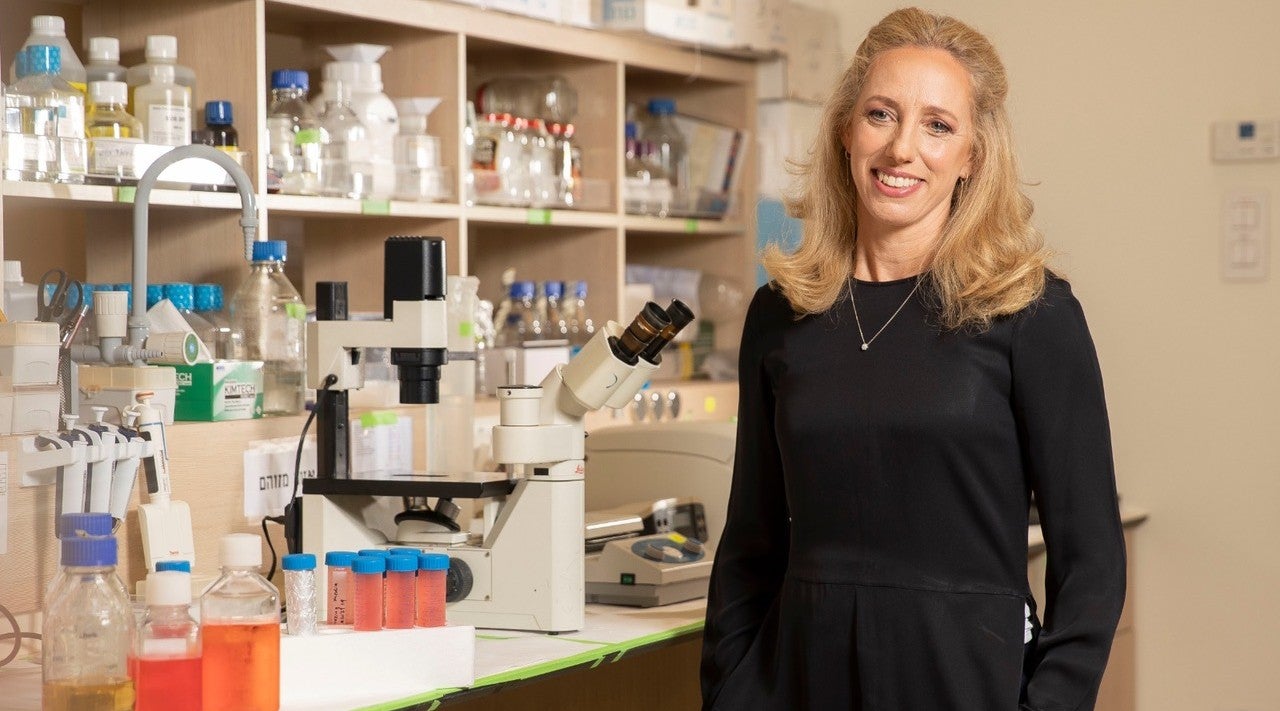
HAIFA, Israel — From his fourth-floor lab at the Technion-Israel Institute of Technology, Professor Ron Kimmel can see Haifa Bay, the green slopes of Mount Carmel and the distant hills of Galilee. But it’s the view of microscopic breast cancer cells on his computer screen that really excites him.
Kimmel is an expert in computer vision, machine learning, medical imaging and scientific computation. He believes artificial intelligence can dramatically improve the accuracy and efficiency of identifying cancer subtypes — which, crucially, can help oncologists tailor treatments to individual patients.
“We’re not trying to diagnose if a patient has cancer; these are already confirmed cases of invasive breast cancer,” Kimmel said. “But one of the challenges is deciding exactly which patient will benefit from which treatment. You don’t want to overtreat or undertreat.”
Kimmel said that AI — which can analyze large amounts of data from clinical trials — is often more accurate than human observations, making it particularly useful in determining how to treat breast cancer.
AI is also the focus of Dr. Debbie Anaby, founder of the Breast Cancer Imaging Lab (BreaCIL) at Sheba Medical Center in Tel Aviv. Her aim is to minimize patient anxiety and slash the number of unnecessary biopsies by using AI-driven computational approaches for analyzing scans.
“MRI is the most sensitive imaging tool available to detect breast cancer — especially for women at high risk like carriers of the BRCA mutation or those with a family history. But that high sensitivity also finds many lesions that appear suspicious, but ultimately turn out to be benign,” Anaby said. “The goal of my research is to develop AI-based tools to help radiologists distinguish more accurately between cancer and findings that are harmless.”
Also at Sheba is Dr. Talia Golan, who leads the institution’s Pancreatic Cancer Program and the Pancreatic Translational Research Lab. Among the most lethal of all cancers, pancreatic cancer is particularly difficult to treat. And like breast cancer, pancreatic cancer is more common among Ashkenazi Jews due to the increased presence of BRCA1 and BRCA2 mutations.
According to research, about 1 in 40 Ashkenazi Jews carry a BRCA1 or BRCA2 mutation, which is 10 to 20 times higher than in the general population. While having a mutated or defective copy of the BRCA1 or BRCA2 gene can lead to pancreatic cancer, the risk is 2-6 times higher than those who don’t have such mutations.
Golan said the last year or two has seen “leaps and bounds in the field of AI-guided research” when it comes to pancreatic cancer.
“Science’s ability to integrate the full spectrum of research data — including clinical data and all the other data points surrounding a patient — and analyze it in an unfiltered way is limited,” Golan said. “However, we can capture and integrate these data and use AI to predict which treatment trajectory is most likely to benefit each patient, based on analysis of very large cohorts.”
Of course, despite all its promises, Golan cautions that AI can also be a double-edged sword.
“You need to learn to use AI, but it’s like a monster,” she said. “You’ve got to be careful because AI can predict things that are inaccurate. You need to have enough deep knowledge to identify inaccuracies, and you need to know what prompts you’re putting in to guide the AI.”
What Kimmel, Anaby and Golan have in common isn’t just that all three are using AI to transform cancer research, treatment and diagnosis. All three have also been awarded grants from the Israel Cancer Research Fund (ICRF), an international nonprofit based in New York that invests in Israeli scientists leading global cancer research breakthroughs.
Alan Herman, ICRF’s executive director, said BRCA-mutant cancers — particularly breast and pancreatic cancer — remain among the most urgent challenges in oncology, and that AI is opening doors that traditional research methods simply couldn’t reach before.
“These three projects reflect exactly what ICRF was built to support: bold science that will translate into real clinical impact for patients,” said Herman, himself a cancer survivor. “We’re proud to fund researchers who are using cutting-edge computational tools to find these cancers earlier, understand them more precisely and ultimately treat them more effectively.”
Kimmel, who founded and leads the Technion’s Geometric Image Processing Lab, is receiving $180,000 in ICRF funding over a three-year period. That grant is going toward an AI model Kimmel is working on that is trained to analyze routine pathology samples to predict whether a breast cancer patient is likely to benefit from chemotherapy.
“Traditionally, doctors examine a few slices of a tumor using basic staining, and then perform more detailed tests on selected areas to understand its type and characteristics,” Kimmel said. “Our AI-based method looks at all of these basic slides across the tumor, so it can capture features that may be missed in a few selected samples. We showed that this broader view can also help determine the best course of treatment.”
Such a system requires only a digital scanner and internet access, making advanced analysis of biopsy samples possible in any clinic — even in areas with limited medical resources. This technology “should eventually lead to enhanced pathological methods and better prognostic tools for oncologists, and should ultimately improve the quality of life for patients worldwide,” according to ICRF.
Anaby — winner of an ICRF Career Development Award worth $135,000 over three years — is working to combine advanced image processing, quantitative image analysis and AI to extract from breast MRIs information that clinicians don’t routinely use.
For example, Anaby said AI can detect extremely small lesions the human eye may miss; it can also help distinguish between cancerous and non-cancerous breast tumors.
“Rather than treating breast MRI simply as a collection of images, we transform it into objective quantitative measurements that capture subtle imaging patterns within breast tissue,” said Anaby, who works closely with Professor Miri Sklair-Levy, who is head of breast radiology at Sheba Medical Center. “We then investigate whether these measurements reveal imaging signatures of cancer, and whether machine learning can use them to better distinguish malignant tumors from benign lesions and normal breast tissue.”
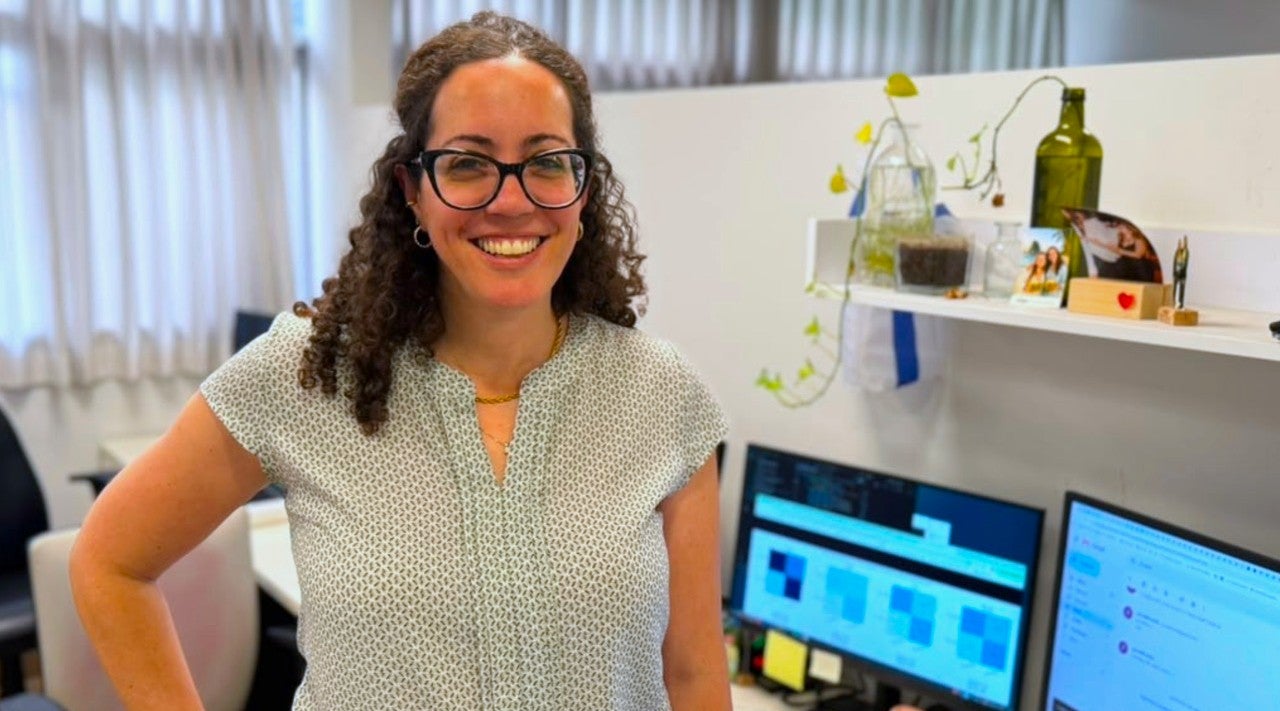
At Sheba, women at high risk of breast cancer get MRI screenings once a year throughout their lives, from age 25 or 30 until their early 70s. Between 60% and 70% of those MRIs result in false positives, according to Anaby.
“These women usually get more biopsies because doctors don’t want to take any chances,” Anaby said. “It’s a very anxious time for these women.”
Anaby said support from the Israel Cancer Research Fund allowed her team to take the first step. “Thanks to ICRF, we were able to develop these models using data from Israeli patients,” she said. “Next, we want to see whether these imaging patterns hold true for women of different backgrounds, so the knowledge we gain can help as many people as possible.”
Anaby added that the ICRF grant “will allow us to develop a new idea in-house, get some first results and then go on from there to a wider set of populations — for Black, Hispanic and Asian women too, not just the Israeli population which includes a high percentage of Ashkenazi Jews with BRCA mutations,” she said. “That means a real mix of data.”
Golan, who was born and raised in South Africa, has been at Sheba since 2004, where she treats pancreatic cancer, with a special interest in patients with inherited BRCA1 and BRCA2 mutations. Such patients, she said, generally respond well to platinum-based chemotherapy and PARP inhibitors, a type of targeted cancer drug.
Between 900 and 1,000 patients are diagnosed with pancreatic cancer annually in Israel; about 380 of them receive treatment at Golan’s clinic. Globally, around 5% of people with the disease have BRCA mutations, though in Israel the prevalence is higher.
“There are new drugs that have recently received FDA approval, but it’s still a very aggressive cancer, and the five-year survival rate is quite low,” she said, adding that besides genetic factors, pancreatic cancer is on the rise due to preventable causes such as obesity and smoking.
Golan’s five-year, $500,000 grant will fund the testing of new biological agents in pre-clinical settings using patient-derived models that mimic the patients’ clinical journey.
“By utilizing these preclinical model systems, we investigate mechanisms of resistance to biological treatment, and try to discover novel treatment combinations to improve the outcome for this unique subset of patients,” she said. “AI will help us identify specific subtypes of patients who can benefit from precision treatment. Some can really benefit from intensive treatment, while for others, the best you can do for them is offer good palliative care.”
For researchers embracing AI, the potential is huge, despite the risks. “It’s really a fascinating time,” Golan said. “I myself am still learning this.”
As the Year Turns, Support the Journalism You Trust. (JEWISH REVIEW) covers the stories shaping Jewish life around the world — with the depth this moment calls for. As you reflect on the year ahead, consider a gift that keeps independent Jewish journalism strong.