
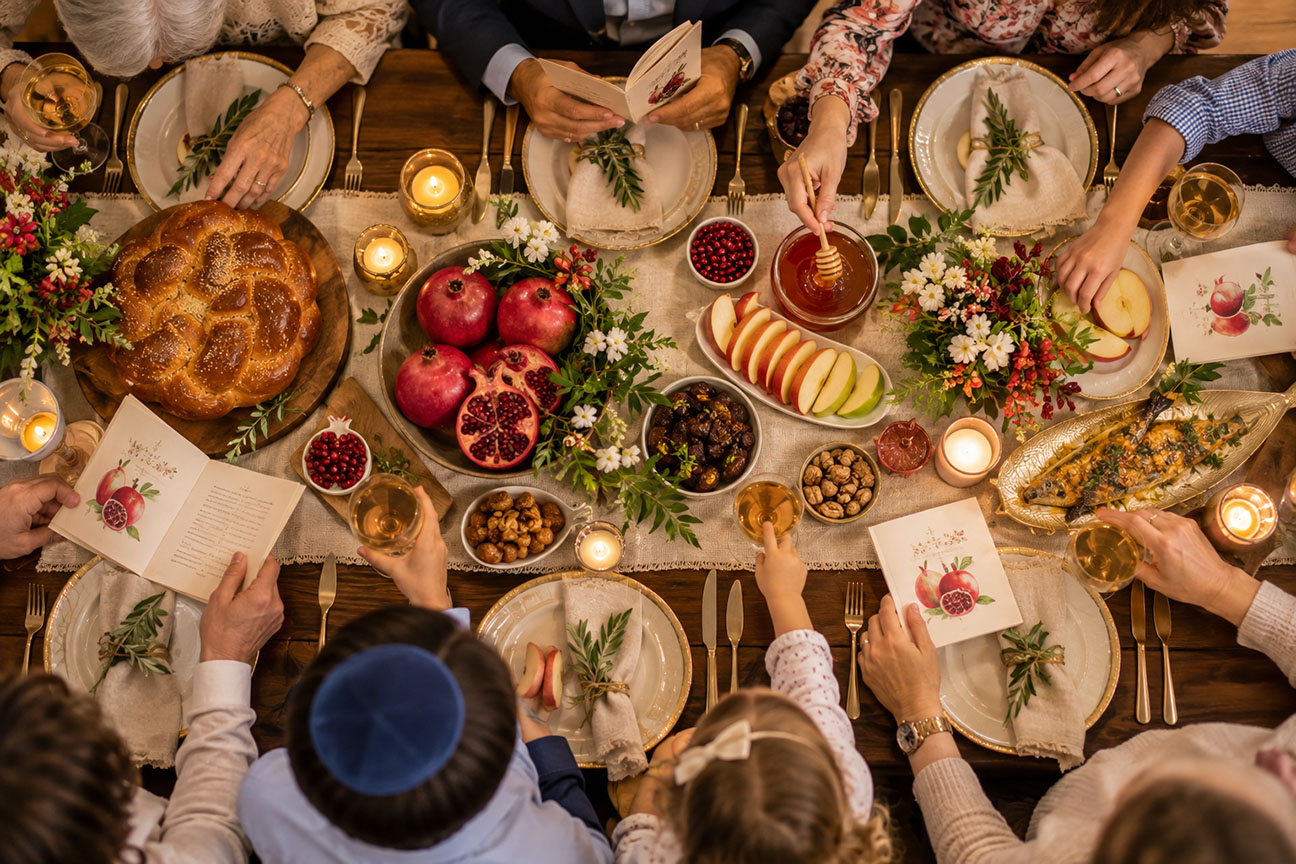
The scene was breathtaking: a massive, illuminated table set in the backyard of my family’s Los Angeles home on the second night of Rosh Hashanah.
As Persian Jews, the evening had its distinct warmth, energy, and vibrant vibe. Every place setting was arranged with precision—apples, honey, pomegranates, and all the traditional symbolic foods reminding us of our heritage and our hopes for the year ahead.
Yet, as the small booklets were passed around and we began reading the traditional blessings together, a familiar dissonance took root in me.
As a deeply spiritual person, I enter these sacred moments thirsting for connection, elevation, and genuine soul-fulfillment. Instead, as the text was read aloud, I was struck by two dominant refrains: a heavy emphasis on asking God to destroy our “enemies,” and a transactional approach to prayer that feels like a child asking a vending machine for personal favors.
Looking around the table at people reciting these words with matter-of-fact acceptance, I couldn’t help but feel that this text reflects our ancestors operating in existential survival mode—people who felt unsafe and surrounded by hostility.
Historically, that may very well have been their reality. Having witnessed as a child in Iran how one specific water faucet out of several was allocated to “Jews” in a public square, I fully understand that fear. But now, as a new grandfather to two thriving toddlers, I stand at the bridge between that painful past and the future they are stepping into.
Are we to run the exact same “spiritual software” year after year, without reflecting on what has changed and what it takes to get to the world we want to live in? Would this not be a missed opportunity to meet the moment and express the true spirit of our tradition, rather than just its literal, handed-down text?
Modern insights from psychology, sociology, neuroscience, consciousness, and quantum physics—all demonstrate how our mindset, intention, and words shape our reality. Feeding our minds, and the minds of our children, a linguistic diet of fear, division, and self-centered requests contradicts higher spiritual growth, and risks alienating the very younger generation we hope to retain.
Even from a purely religious perspective, this insular framing contradicts one of Judaism’s most profound callings of this season: Teshuvah—the duty to repair our individual relationships and fulfill our responsibility to elevate the wider world. How can we be a light to the nations if we trap our foundational prayers in an exclusive, self-focused bubble?
Imagine a holiday table where our children and adults are invited to contribute their own prayers to the group. Can we feel as much ownership of our texts as our ancestors did when they adapted liturgy as they moved cities, survived new rulers, and marked new eras? Change has always been essential to our survival.
One of the most inspiring features of the Iranian Jewish diaspora in Los Angeles is how committed its second and third generations remain to Jewish practice and community. As we look to the year ahead, may we pass along tools for our children and grandchildren to practice a Judaism focused on supporting the future they envision, rather than the pressure to fossilize the past they inherited.
In traditional circles, challenging original texts is often met with pushback or viewed as “not being one of us.” But as a grandfather, I write this out of deep respect, love, and hope for our community. I want our tradition to stay relevant and thriving. Loving a tradition doesn’t mean leaving its ancient language frozen in stone; it means having the courage to help it evolve.
I hope I speak for many who feel in their hearts that it is time to upgrade our spiritual language—moving beyond fear and exclusivity toward a consciousness that embraces the collective enlightenment, well-being, and cooperation of all humanity. I humbly ask our spiritual leaders to reflect, speak from the heart, and open the path toward updating our spiritual software. This is how we honor the memory of our ancestors, elevate our children, and fulfill our mission to heal the world.
Joseph Sumekh is a grandfather and life coach, living with his family in Los Angeles.