
We never saw anything like Oct. 7.
We never saw anything like Sept. 30.
Sept. 30 was a miracle as much as Oct. 7 was a catastrophe.
They’re both impossible to describe.
Even saying “there are no words” to describe Oct. 7 doesn’t cut it.
I also haven’t found words to describe Sept. 30.
Seriously: A hijacked plane that is about to crash when an Israeli plumber suddenly comes to its rescue?
When did we ever hear such a story?
A friend mentioned “Entebbe,” but that was a brilliant and carefully planned rescue of hostages. Sept. 30 was a hair-raising improvised rescue of a nosediving plane whose fanatic co-pilot was determined to see it crash.
Not all miracles are created equal.
Indeed, Sept. 30 stands out because we’ve never seen a miracle come so close to being a nightmare.
The closest analogy I can think of is Flight 93 on Sept. 11, when a group of passengers and crew members fought back to retake the cockpit. They managed to force a crash in an open field rather than the U.S. Capitol. Their bravery turned into a nightmare that prevented a bigger nightmare.
Sept. 30 showed us a nightmare that turned into a mind-blowing miracle.
It made me dizzy.
Yes, I rejoiced at the sight of the rescued passengers, but I couldn’t ignore how close they came to becoming obliterated bodies; how close this Sukkot story came to becoming a calamity that would have consumed us for years, for decades, forever.
Dare I say: A calamity that would have joined Oct. 7 as one of our most traumatic memories.
But no! The calamity never happened!
The situation looked hopeless after the co-pilot, an Omani national named Hamam al-Hammami, began hacking at the Indian pilot, Capt. Smit Machchhar, with a crash ax.
When the injured and bloodied Machchhar managed to open the cockpit door, a group of passengers rushed to confront the attacker and overpowered him.
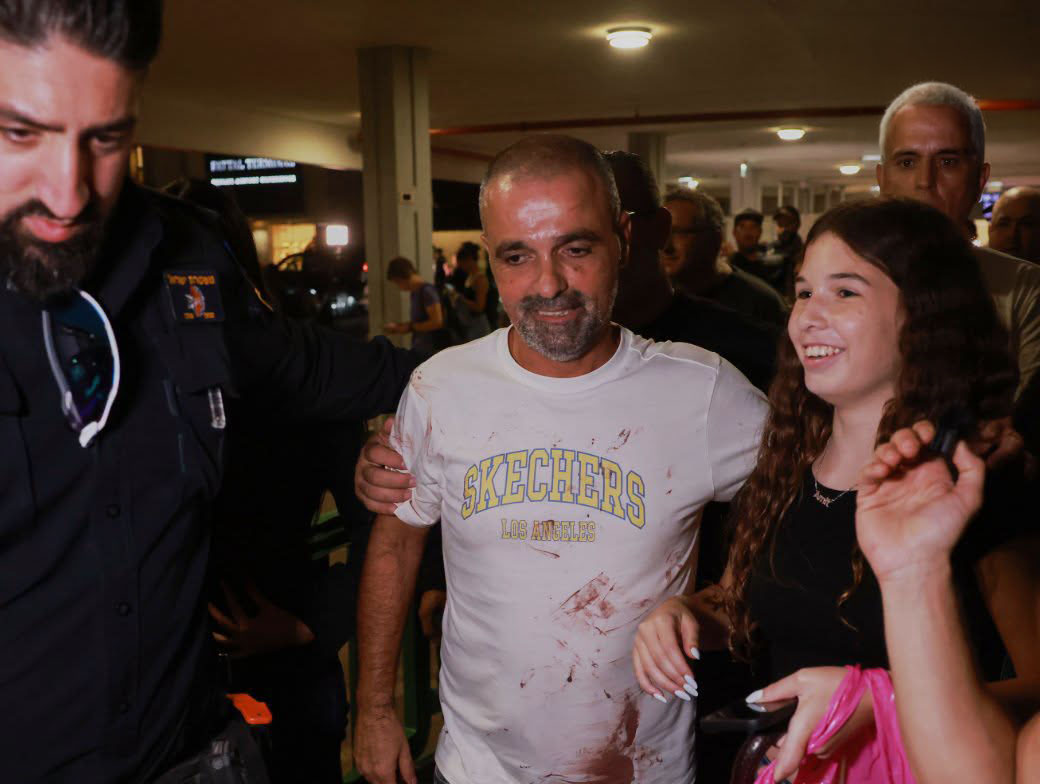
In the group was Yaniv Hayoun, the Israeli plumber-turned-hero who likely will never have to pay for another restaurant meal in Israel.
Using tips he picked up from the TV show “Air Disasters,” Hayoun managed to stabilize the plane 30 seconds before it crashed, saving the life of all 174 passengers, including his wife and two daughters.
That sounds like a Tom Cruise action thriller, not a news story.
After I pinched myself and realized it was real, I had the unfortunate recollection of doing the same thing three years ago as the Oct. 7 nightmare was unfolding. I couldn’t believe it was real.
But Oct. 7 was real, just as Sept. 30 was real.
Perhaps Sept. 30 showed up right before we paid tribute to Oct. 7 to deliver this message: Remember the tragedies but never forget the miracles.
Miracles come in all shapes and sizes. When reflecting on values such as gratitude and humility, as we have over the past holiday month, we often expand our definition of “miracles” to include those we take for granted.
The very fact that I can breathe, see, hear and walk is a miracle. The existence of an ocean where I can stroll and meditate over a sunset is a miracle. The relationships in my life, my family, the blessings of reading and writing—all those are miracles I dare not take for granted.
Sept. 30 was a whole other kind of miracle.
It came not from our minds or books but our hands. Every detail of the miracle was physical—people fighting back, struggling, pushing, improvising and ultimately finding the steering control to pull a plane out of a steep nosedive.
As much as I value the everyday miracles we take for granted, I’m infinitely grateful for the miracles we can create out of our own hands.
The greatest such miracle is surely Israel.
We talk about the spiritual miracle of a people returning to its biblical homeland after 1900 years in exile. But that miracle wouldn’t be alive without the millions of hands that built the nation and fought to defend it.
The miracle of Israel includes the nightmare of Oct. 7, but now it also includes the miracle of Sept. 30. It’s the Jewish story– inexplicable curses co-existing with unimaginable blessings.
Next year, let’s make sure we commemorate both.