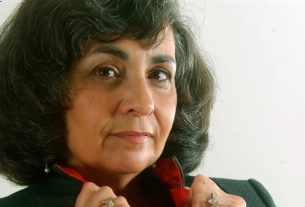

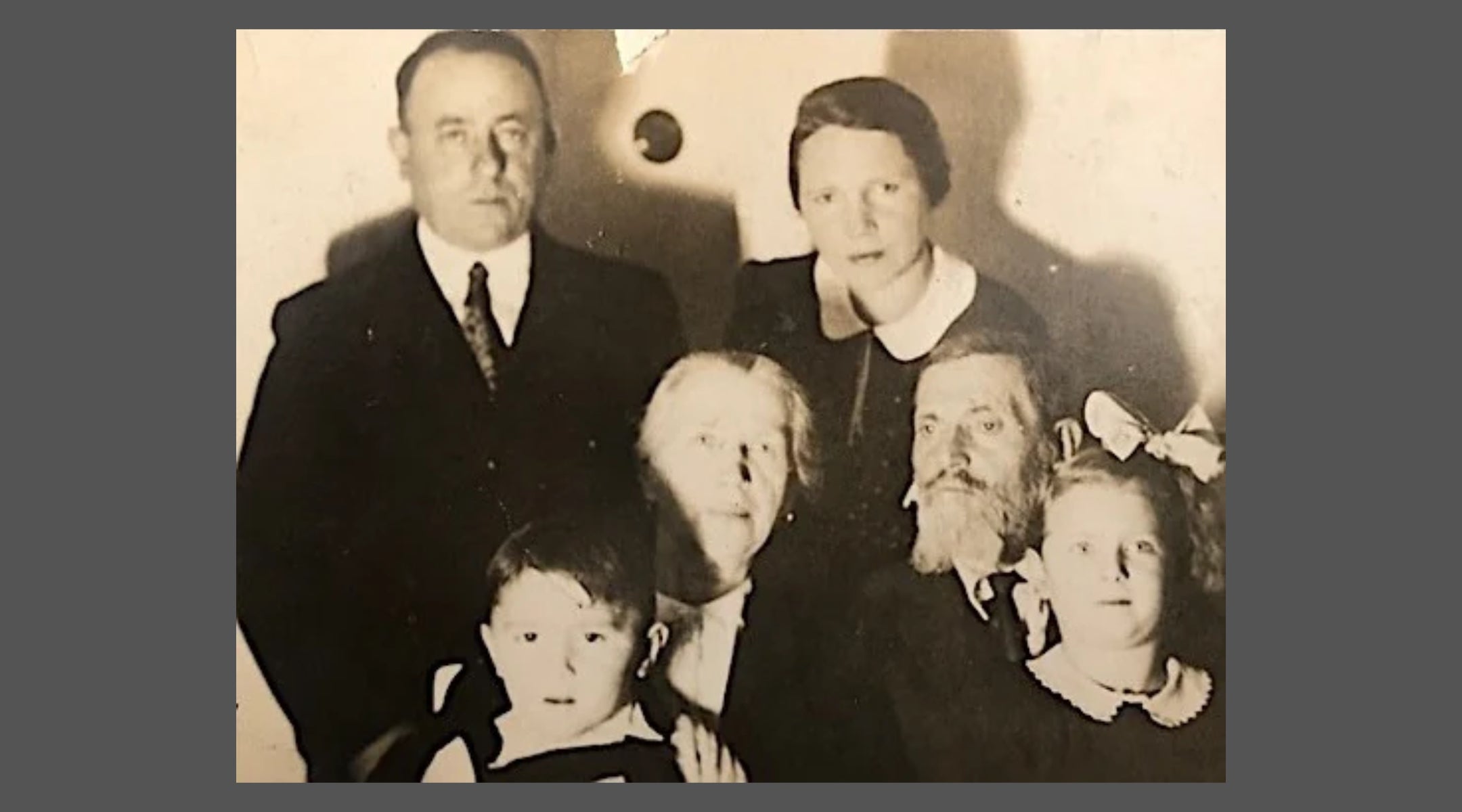
As the Nazis stripped Vienna’s Jews of their dignity, livelihoods and basic rights, a Jewish woman named Mignon Langnas faced an agonizing choice: She could join her husband and two small children in escaping the city to whatever country would take them, or she could remain behind with her elderly parents, who were unable to leave.
Langnas’ story, gleaned from her wartime letters and diaries, is the emotional backbone of Douglas Smith’s “The City Without Jews: Life and Death in Jewish Vienna,” a sweeping, meticulously researched account of how Vienna’s Jewish community was destroyed. And it offers an unusually intimate view into the impossible decisions facing the Jews of a once-thriving metropolis as it collapsed under fascism.
Smith, a historian of Russia and Central Europe, begins the story in the Middle Ages, tracing the cycles of persecution and tolerance that characterized Jewish life in what became the Austro–Hungarian Empire. Before World War I, the city’s Jews had flourished as never before: Smith quotes estimates that 70 percent of its financiers, 65 percent of its industrialists and lawyers, and 59 percent of its physicians were Jews. Sigmund Freud, Gustav Mahler and Theodor Herzl all emerged from this remarkable Jewish Vienna.
Resentment of this success met a persistent strain of antisemitism, exploited by local politicians and embraced by disaffected Viennese — among them a young Adolf Hitler. Non-Jewish Viennese were ecstatic when Hitler’s forces annexed Austria, a takeover known as the Anschluss.
“One of the things that for me was startling and profoundly disturbing was the degree to which, overnight, with the Anschluss in March of 1938, these quote, unquote ‘upstanding, behaved’ Viennese citizens turned on their Jewish neighbors with a fury that no one expected, and was utterly shocking,” Smith told me during a public conversation earlier this month sponsored by the Olga Lengyel Institute for Holocaust Studies and Human Rights.
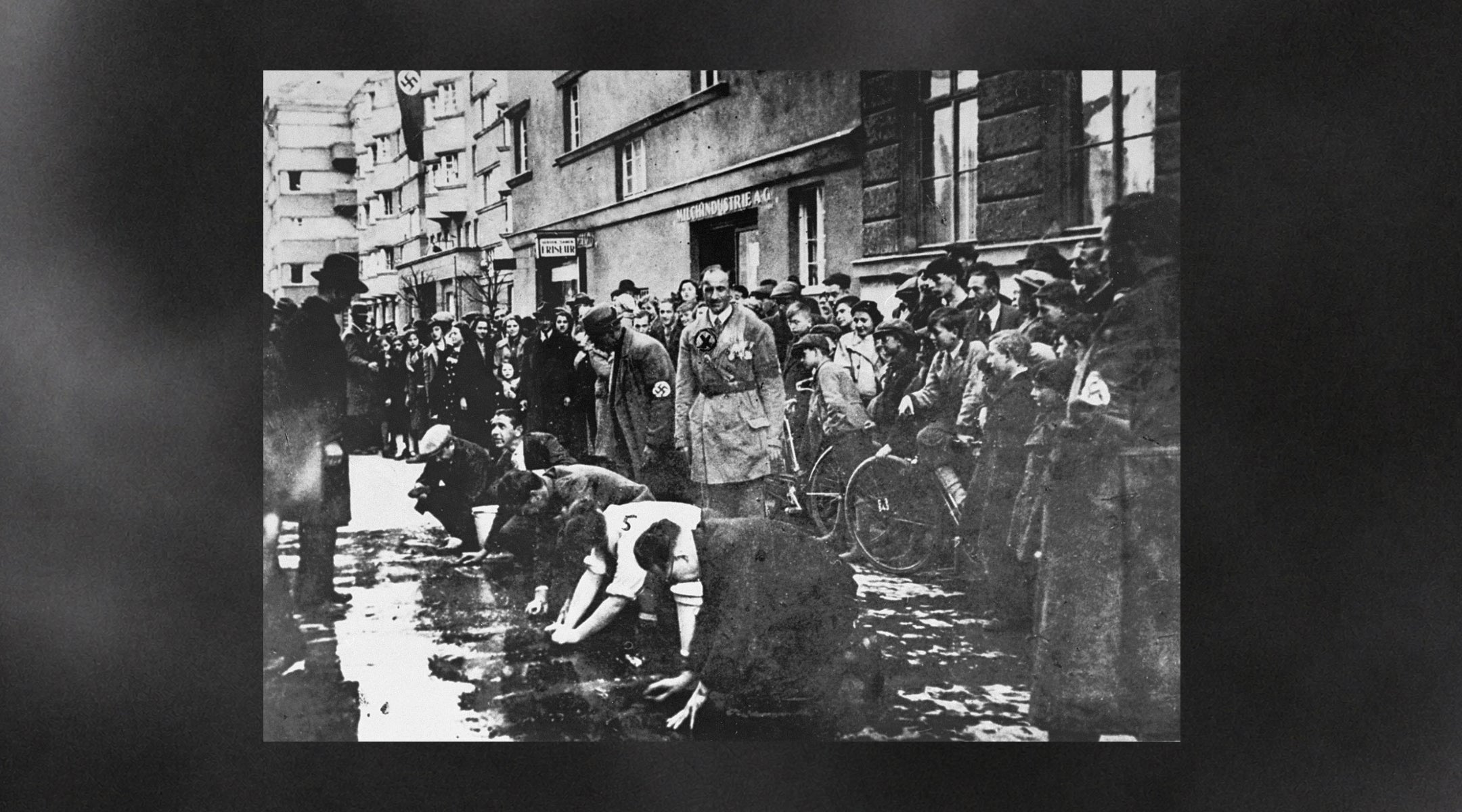
The humiliations heaped on the Jews, who were forced to scrub streets with lye-soaked rags and paint “Jud” on their businesses, grew into an increasingly organized campaign of dispossession and expulsion. What became known as the “Vienna Model” included the seizure of Jewish businesses and property, the forced emigration of Jews and the exploitation of wealthier Jews to finance the escape of poorer ones. The initial wave of private looting, or what the Germans called “wild Aryanization,” became so chaotic that Nazi officials intervened — not because they objected to the theft, but because they wanted the booty for themselves. Officials in Berlin watched what was happening in Vienna and adopted its methods elsewhere.
If there was anything to be said for the ferocity of Vienna-style antisemitism, it was that it encouraged many Jews to flee earlier than in some other countries soon to fall under Nazi rule. Where they could go was another question. Leon Langnas, Mignon’s husband, did leave ahead of his family, as a passenger on the ill-fated SS St. Louis, which was turned away by Cuba, the United States and Canada before returning to Europe with its cargo of refugees. By December 1939, Leon had made his way to England. Eventually he was reunited with their children, George and Manuela, who were able to emigrate in 1939 with U.S. immigration visas.
Mignon, meanwhile, remained in Vienna with her parents, Charlotta and Moses Rottenberg, not knowing when, or if, she would see her children again.
For the next seven years, Mignon would live under the increasingly cruel and maddeningly arbitrary Nazi rule. She found work as a nurse, tending to her parents and caring for Jewish and non-Jewish children in a pediatric hospital that managed to continue functioning despite the war. She survived Allied bombings. She kept diaries. She wrote letters to relatives abroad. The documents record the anguish of separation, the terror of living under a regime that was steadily narrowing the space in which Jews could exist and the stubborn resourcefulness of a woman determined to keep herself and her parents alive.
Mignon’s is not the only story Smith tells of terrible choices imposed on powerless people.
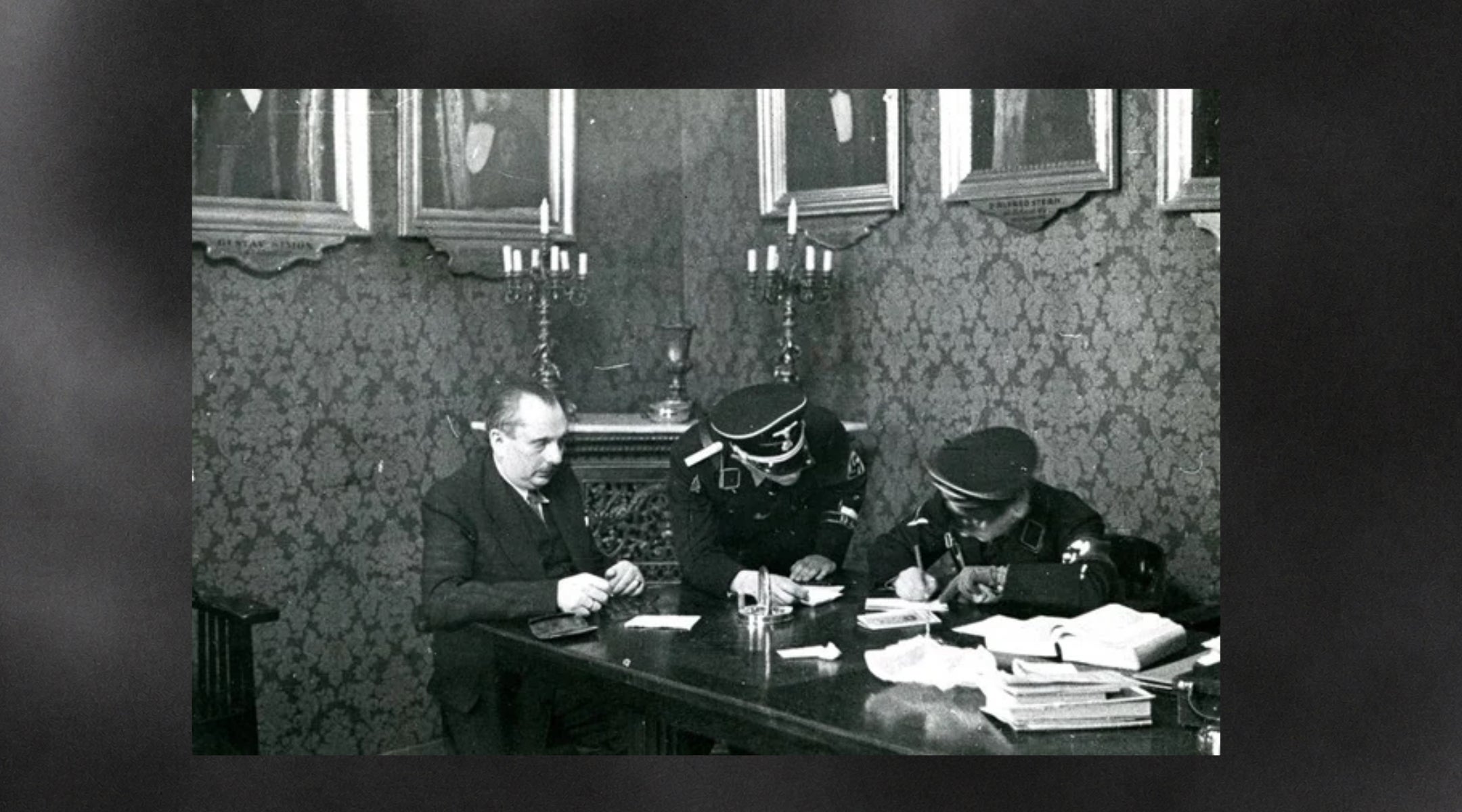
He writes extensively about Josef Löwenherz, the head of Vienna’s Jewish communal organization, which was forced by Adolf Eichmann to help carry out Nazi orders. Smith’s account is particularly compelling in its reassessment of Löwenherz, a figure whose place in Holocaust history has often been clouded by the role he and the Israelitische Kultusgemeinde, or IKG, were forced to play.
The Jewish organization’s cooperation with the Nazis has led some to regard its leaders as collaborators. Hannah Arendt called Löwenherz Eichmann’s “pet.” But Smith sees him as a tragic figure, compromised but eager to do what he could to protect the Jews under his charge.
He points to Löwenherz’s trips abroad to raise money for Jews left behind in Vienna, who had been stripped of their property, denied the right to work and left with almost no means of support. The Nazis often kept his wife, Sofie, in Vienna as a hostage while he was away. On at least two occasions, when they were outside the country and could have remained safely abroad, both she and Löwenherz returned.
Remarkably, Langnas managed to keep herself and her parents safe throughout the war. Her parents died of natural causes in their home; Mignon’s name appeared on deportation lists three times, but each time was removed. In one instance, she appealed to Löwenherz in a letter, writing: “Herr Doctor, I implore you, as only a mother who longs after her children can beg: Help me if it is in your power!” He intervened. Smith could not establish how her name was taken off the other lists.
And while her survival owed in large part to what Smith called “sheer good fortune and luck,” he describes the suspicion with which other Jews regarded survivors like Mignon, whom they suspected of collaborating with their tormentors in order to avoid the worst.
George Langnas, who also took part in our conversation, was 4 when he and his 6-year-old sister left Vienna. They spent three years in a Jewish orphanage on the Lower East Side before living with relatives. Even when they were reunited with their father, they rarely spoke about Mignon.
“We never discussed my mother because they didn’t think she was coming back,” George said. “And it was just total silence.” He said that questions about her pained their father, and that the children understood enough not to ask.
When Mignon finally arrived in New York in June 1946, the children did not recognize her. “We were separated from our mother [for] seven years,” George said. She died in 1949, at 46, just three years after their reunion, from a host of ailments exacerbated by her trauma.
Thirty-three years after her death, a cousin contacted George with a cache of his mother’s letters. He had them translated and made a booklet, but the family still found it difficult to discuss what had happened. George spent decades trying to piece together the story. “I never really told people I was a refugee,” he said. “I never knew exactly what my refugee story was.”
“The City Without Jews” fills in the blanks. It is not only a history of how a city’s Jewish population was driven out, dispossessed and murdered. It is an account of the lives that continued, in all their ordinary variety, even as the machinery of persecution made living intolerable.
Count yourself in. Independent Jewish journalism runs on thousands of readers. Join them with a year-end gift. We can’t do it without you.