

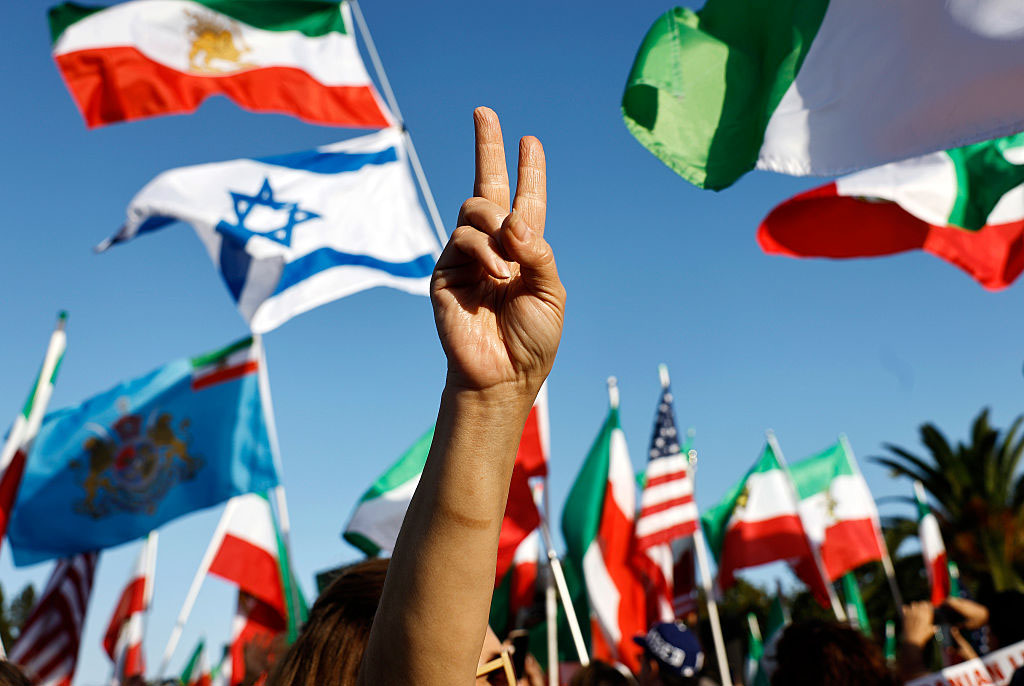
Thugs, it is said, fear only one thing – physical might more powerful than their own, combined with the demonstrated capacity to wield it. After the shockingly swift decapitation of the Maduro regime in Venezuela, mere days into this new year, the surviving authoritarian regimes are on notice: democracy is once again on the march.
The protests that have broken out in every one of Iran’s thirty-one provinces clearly demonstrate that the message is being received, loud and clear. The world’s ugliest dictatorships: neo-Maoist China, a resurgent autocracy in Moscow, and above all, the medieval theocracy subjugating Iran, have adapted to modern times, using internet-enabled communications and surveillance technologies to maintain a brittle yoke over their subject populations. Yet there is one force that still terrifies these brutal regimes: thefree West, which combines a far more attractive model of life for its citizens with overwhelming military superiority, when it musters the will to use it.
True, the the United States’s dramatic appearance in the skies over Caracas, and its subsequent apprehension of Venezuela’s dictator Nicolas Maduro and his extradition under arms to New York for trial,has not yet resulted in the fall of the Chavista regime. Venezuela’s new dictator, Delcy Rodriguez, in her first moments after seizing power, embraced the ambassadors of China, Russia, and Iran while threatening defiance to U.S. power. Yet America’s effortless overwhelming of the air defenses provided to Venezuela by the dictator powers reveals how naked these tyrannies would find themselves in an all-out war with the Western Allies.
The Iranian people are well aware of the vulnerability of the monsters who oppress them, thanks to Israel’s incredible performance last summer in the short, sharp kinetic conflict known as the twelve-day war. Israel launched 360 attacksagainst Iranian targets in twenty-seven provinces, likely setting back its nuclear weapons program by a matter of years.
This matters because the Iranian people are fed up with their own repression. A boiling point was reached with the regime’s murder of a 22-year-old Kurdish woman, Mahsa Amini, in 2022 for allegedly failing to satisfy the regime’s harsh, head-to-toe-concealed female dress code. Immediately after, the Iranian people took to the streets, embracing the slogan “Woman, Life, Freedom” and demanding systematic change. The dictatorship responded with a brutal crackdown, killing at least 500 innocents and perpetrating heinous acts of sexual violence on female detainees, including gang rape.
For decades, Iran has built what it considered a firewall against Israeli and even American intervention,a coalition of aggressive terrorist groups it styles the “Axis of Resistance.” These, too, have proven to be a paper tiger. Hamas, which rules Gaza, has been decimated following its surprise invasion of Israel on October 7, 2023,.
Hezbollah, which unwisely joined in the onslaught on the Jewish democracy, has seen a sharp Israeli response killing Secretary General Hassan Nasrallah and other leaders in quick succession, and the weakened remnant is now under intense pressure to disarm.
Another of Iran’s chief allies, the Assad regime in Syria, has fallen outright. Only the Houthi gang in Yemen remain dangerous, but even they are reeling from the intervention of a coalition of moderate Gulf states.
Even the regime’s most powerful outside allies have little capacity to intervene to protect their terror-sponsoring partner. Russia is bogged down in a self-chosen interminable conflict with the plucky nation of Ukraine, which, instead of buckling under assault as the Kremlin predicted, has proven capable of responding against Russian territory – oil refineries, naval bases, and even targets in Moscow itself.
After America’s Venezuela intervention, which suffered no casualties despite Caracas’s Russian-built air defenses, it is clear that Russia and China themselves, which use similar systems, would be deeply vulnerable in a full-scale conflict. The same goes double for Iran, which has already conspicuously failed to defend its own territory from aerial assault.
Most importantly of all, America has declared its clear support for the people of Iran, as they stand up to reclaim their rights and dignity, with no less a figure than President Trump proclaiming that the “USA stands ready to help” Iranians desirous of change. This matters greatly, as the theocratic regime in Tehran has answered the just demands of its citizenry with cruel violence, with over 12 thousand civilian protestors reportedly murdered by the Ayatollahs’ thugs.
In 2009, the last major politically focused nationwide uprising in Iran, the Obama Administration failed to unambiguously take the Iranian people’s side, a mistake that President Obama himself has since acknowledged. Today, Elon Musk’s SpaceX is providing Starlink to bypass the regime’s cutoff of demonstrators’ internet access, and President Trump has indicated that military action is on the table to help the Iranian population in their quest for freedom.
The United States must continue to stand with our true friends, the people of Iran. It is sometimes forgotten that Iran under the Shahs was an ally not only of the West, but even of Israel, until the 1979 Islamic Revolution brought the current jihadi regime into power.
If they can bring down the heinous regime that has ruined the lives of generations of Iranians, then overnight, we may see one of our greatest geopolitical foes become a pillar of support for the Western coalition in the region and beyond. Imagine for a moment unleashing 90 million Iranian artists, engineers, doctors and peacemakers on the global stage after they have been oppressed for nearly five decades: the world will be a better place.
Shirin Yadegar is an Iranian-born journalist, publisher, tv host, and mother. Her magazine, LA Mom Magazine, shares expert advice to help parents live a healthier, more meaningful family life.