

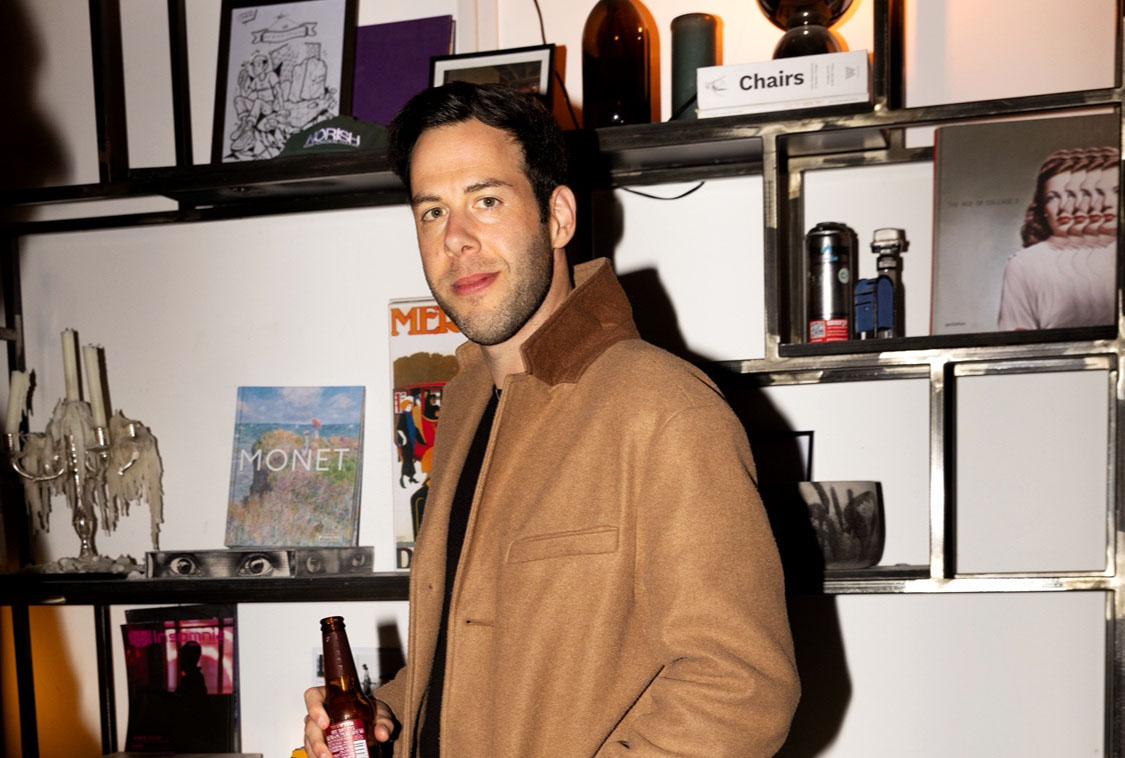
Ari Frenkel is in the middle of making a feature film titled “See You on the Other Side” that grew out of grief that has not been resolved. The film is unfinished. The production is ongoing. The fundraising continues. Frenkel describes the project as something that began while he was mourning his father and has continued without waiting for clarity or closure. As the lead actor, he wrote the character for himself.
The New Jersey-born actor and writer grew up in a family of Israeli scientists. His father was a plant biologist and longtime professor at Rutgers University. His mother is a flavor chemist who runs her own flavor and vanilla extract company in New Jersey. Both of his parents were born in Israel.
“We live in a world where the audiences respond best to authenticity, and this is my authentic representation and I’m going to unapologetically tell that story,” Frenkel told the Journal. “It’s really important to me that their heritage and my heritage is represented in a positive and joyful light because I think Israel desperately needs that. And I love Israel. I love being Jewish. My father, who this is based on, was Israeli, he was born there and so was my mother.”
Frenkel said the film did not begin as a film. After his father died, he began writing scenes each morning as a way to move through grief. He said the writing was not structured as a narrative and was not meant for an audience at first.
“I would write scenes every morning as I was going through grief,” Frenkel said. “And then I had a hundred scenes after a hundred days, and then I knew there’s a story in here.”
Those scenes were drawn from the mundane “new normal” moments he experienced after his father passed, not from a planned plot. Frenkel said the scenes reflect the year after his father’s death and the daily acceptance of loss. Only later did he shape the material into a feature-length script.
“Over years of working on the script and developing with my producers and the casting director and a dramaturg, it’s developed into a fiction and a more cohesive story for an actual audience,” Frenkel said. The pace of the current film’s development mattered to him. Frenkel said an earlier version of the project would not have been as strong if it had been rushed into production.
“Things take as long as they need to,” Frenkel said. “You can rush it all you want, but it’s going to take as long as it needs to.”
That approach has shaped the production itself. Frenkel said the film has been shot in separate phases rather than a six to eight week shoot.
“It’s unorthodox to be breaking up your film shoot,” Frenkel said. “I have leaned into the idea that this is for the benefit of the film.”
The story covers one year after his father’s death. Frenkel said continuity concerns are reduced because he is the only actor who appears across all shooting periods and because the story allows for change.
Dialogue includes lines taken from real emails his father wrote to him.
“I literally pulled quotes from emails he wrote me,” Frenkel said. “A lot of real things he said to me are said in the movie.”
Frenkel spent a year living in Israel during seventh grade while his father was on sabbatical at the Technion. His family returned often while he was growing up. He was most recently in Israel as part of the Birthright Israel Onward Storytellers Program. He describes his father as a scientist who was proud of his work, his Israeli background, and Jewish culture. Frenkel said his parents were born in Israel and that Israel has always felt central to his identity.
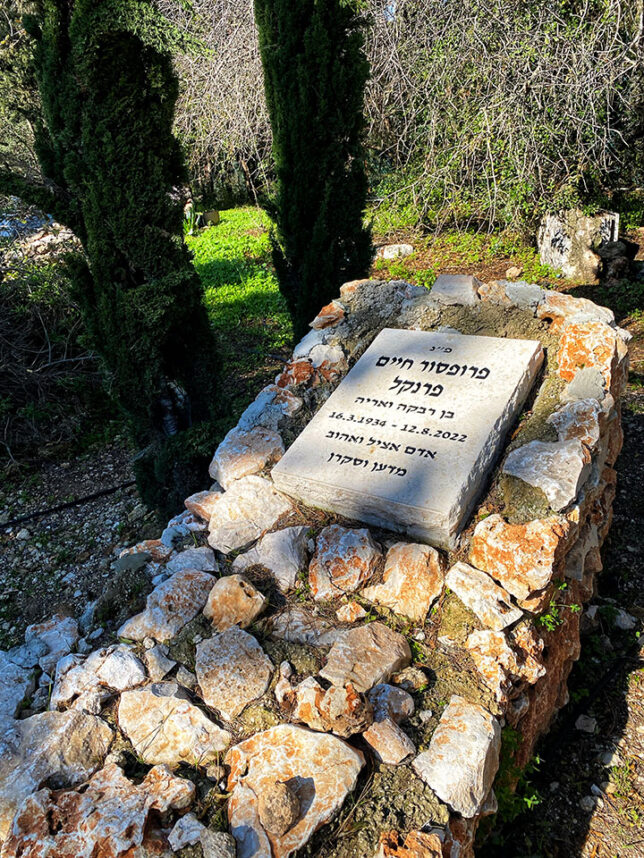
Frenkel said he refused advice from some filmmakers to change the family away from being Israeli to cater to a broader audience.
“This movie has nothing to do with anything political,” Frenkel said. “It is about a family that is from Israel. It is an authentic story about a family that is truly from Israel.”
Frenkel said grief, not politics, is the core of the story.
“Grief is universal. Loss is universal,” Frenkel said.
He said the film exists because his father died and because the act of making it gave him direction during periods when work felt uncertain.
“Without him dying, I wouldn’t be making this,” Frenkel said. “I think about how proud he would be. My goal is that the movie is something that ten years from now someone gives to someone because they lost a family member and it makes them feel better for an hour and a half.”
He described the production as communal, with many people involved bringing their own experiences of loss to the work.
“My producer said, ‘You’re not making a film. You’re building a community around it,’” Frenkel said.
Frenkel did not confirm how much of the film has been completed and no distribution plan or release date has been announced.
“We are still fundraising for it,” Frenkel said. “I don’t care if it’s five dollars or ten thousand dollars. Once it’s done, it belongs to the audience. But right now we are still in process.”
Frenkel did not describe a timeline for completion or release. He spoke instead about continuing to work while answers remain open.
“‘See You on the Other Side’ — this movie’s getting made,” Frenkel said.