

Three action-packed days. Fifty expert speakers. Thirty-three compelling online sessions that will inform and educate more than 750 participants representing at least 300 different Jewish organizations.
It all adds up to the 2026 installment of 70 Faces Media’s Jewish Digital Summit, an online conference for Jewish professionals, lay leaders and anyone with a personal or professional interest in reaching the Jewish community online.
Now in its fourth year, the Jewish Digital Summit — which will take place Feb. 24 through Feb. 26 — promises to be more dynamic and more impactful than ever before. This year’s conference features a cast of high-profile speakers, a brand-new digital platform and reduced organizational rates to help ensure that entire teams can take advantage of this one-of-a-kind learning opportunity. Launched in 2023 to address the digital awakening spurred by the COVID-19 pandemic, the Jewish Digital Summit has attracted 1,500-plus registrants from across the Jewish professional and volunteer world who aim to engage Jews via a digital-first approach.
“We’re really proud of the caliber of speakers for this year’s Jewish Digital Summit,” said Jennifer Rubin, senior producer of digital events at 70 Faces Media.
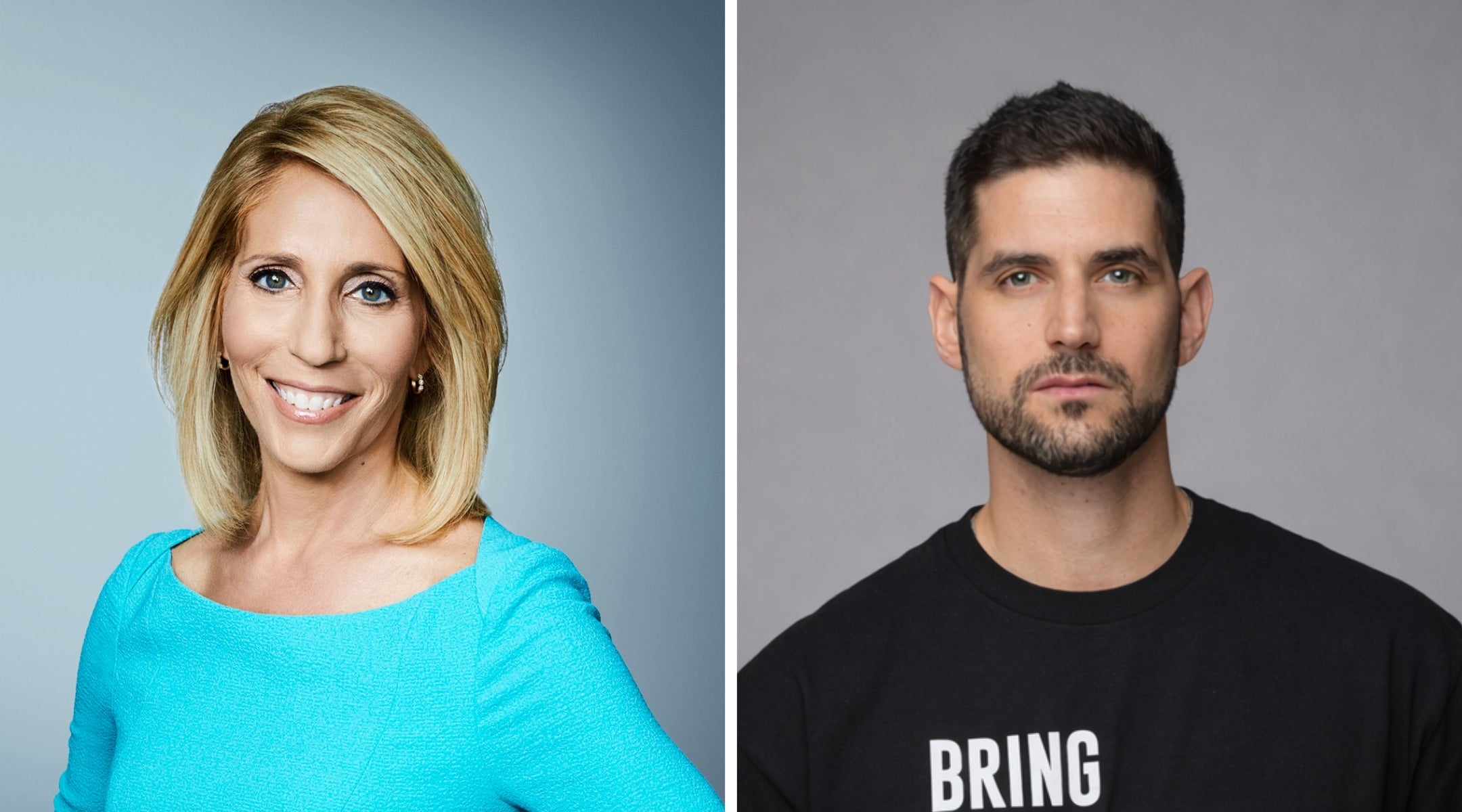
In addition to returning “crowd-favorite speakers” — like artificial intelligence in the workplace expert Jason Kuperberg and Elizabeth Neufeld, a fundraising strategist — there are two presenters this year that Rubin said she is particularly excited about: CNN anchor and chief political correspondent Dana Bash and Matan Sivek, the co-founder of the Hostages and Missing Families Forum-US.
“The keynotes that we are offering this year are really speaking to the moment that we are in, this actual moment of February 2026,” Rubin said. “Both Dana and Matan will really address what it’s like to be Jewish in the world today, and how the times we live in affect so many aspects of the role that Jewish professionals have in their communities.”
Bash, who will be in conversation with 70 Faces Media’s CEO and executive editor, Ami Eden, will discuss how the media covers topics that are pertinent to the Jewish world, as well as her experiences dealing with online antisemitism as one of the world’s most prominent Jewish journalists.
Sivek, meanwhile, will open the Jewish Digital Summit with a discussion about how he used storytelling and brand strategy to unite the world on behalf of Israel’s Hamas-held hostages and their families.
“When we operate as one strong, unified community, our collective voice scales dramatically, and this year we’ve seen how sustained collaboration can help bring hostages home,” Sivek told (JEWISH REVIEW). “This conference is also a meaningful opportunity to learn best practices from peers and sharpen the strategies that make our work more effective. Together, we can multiply our reach and achieve what none of us could accomplish alone.”
Also new this year at the Jewish Digital Summit: a track designed specifically for journalists who work for Jewish publications. “This is an effort to educate Jewish reporters and editors with the digital skills they need, and it’s also designed to create a connection between the Jewish organizations in a community and the journalists who cover them,” Rubin said.
Another hot topic at the 2026 Jewish Digital Summit is one that’s on everyone’s minds: artificial intelligence. This year, the conference will offer a variety of sessions on AI, including how-to information for beginners, tips on using AI for fundraising and grant reporting, ethical considerations on AI use and ways AI can help journalists land their stories.
“As organizers of the Jewish Digital Summit our goal is to provide sessions that speak to AI super-users as well as those who are on the fence,” Leo Lazar, 70 Faces Media’s chief data and analytics officer, who will present on the most essential AI changes organizations should implement, said. “In all cases, we believe the best formats are relatable and replicable experiments that show how to actually move the needle.”
When it comes to Jewish professionals, “our field stands to benefit from the increased integration of AI into everyday work apps,” Lazar added. “With software capabilities going up and costs for these tools actually going down, there has never been a better time to manage a limited digital budget.”
According to a previous Jewish Digital Summit participant, a Jewish communal professional, the conference provided “excellent opportunities to receive advice from experts who know digital platforms inside and out AND who are really on the pulse of what’s happening in the Jewish world.”
Organizers agree that staying up to date with the pulse of what’s happening is one of the key components that make the summit worth attending each year. “We’re in our fourth year of the summit now, but the sessions we’re presenting are very far from same old, same old,” explained Rebecca Phillips, 70 Faces Media’s publisher. “Each year feels fresh as we keep up with digital trends, technology developments, new tools, and emerging experts in the digital space.”
Other highlights this year include:
- A session on using data to build a synagogue community, led by Jason Plotkin, the executive director of Temple Israel in West Bloomfield, Michigan — one of the country’s largest Reform congregations.
- “Marketing Through Crisis: Staying on Message in Uncertain Times,” a session focused on crisis communications led by Gary Susswein, principal at BandOne and Tilly Shemer, director of strategic communication and advancement at Spertus Institute.
- For conference participants in the NYC area, the summit will conclude with an in-person gathering on Thursday, Feb. 26, with a conversation with Tony Award-winner Ari’el Stachel about how technology is transforming Jewish life. Light refreshments will be served.
Finally, this year’s Jewish Digital Summit boasts a new, inclusive price structure: While tickets for individuals are $65, a $180 organizational ticket allows an unlimited number of participants from the same organization.
“We really wanted to make it so that organizations weren’t just sending one person, but that they could send their whole team,” Rubin said. “We know that in order to really implement change and help Jewish organizations grow digitally, there needs to be more than one person who understands why it’s so important to put real strategy into the way they approach their online interactions.”
For tickets and more information about the 2026 Jewish Digital Summit, click here.