
When in June the Israeli Air Force launched a high-stakes mission to bomb elements of Iran’s nuclear arsenal, many of the technical crews behind the pilots who executed the operation shared a surprising detail.
They all graduated from the same high school: Holtz Interdisciplinary Air Force High School in south Tel Aviv. The school is part of the Amal Educational Network, an association of 50 schools in Israel including vocational schools that have educated some of young people behind the country’s key strategic defenses.
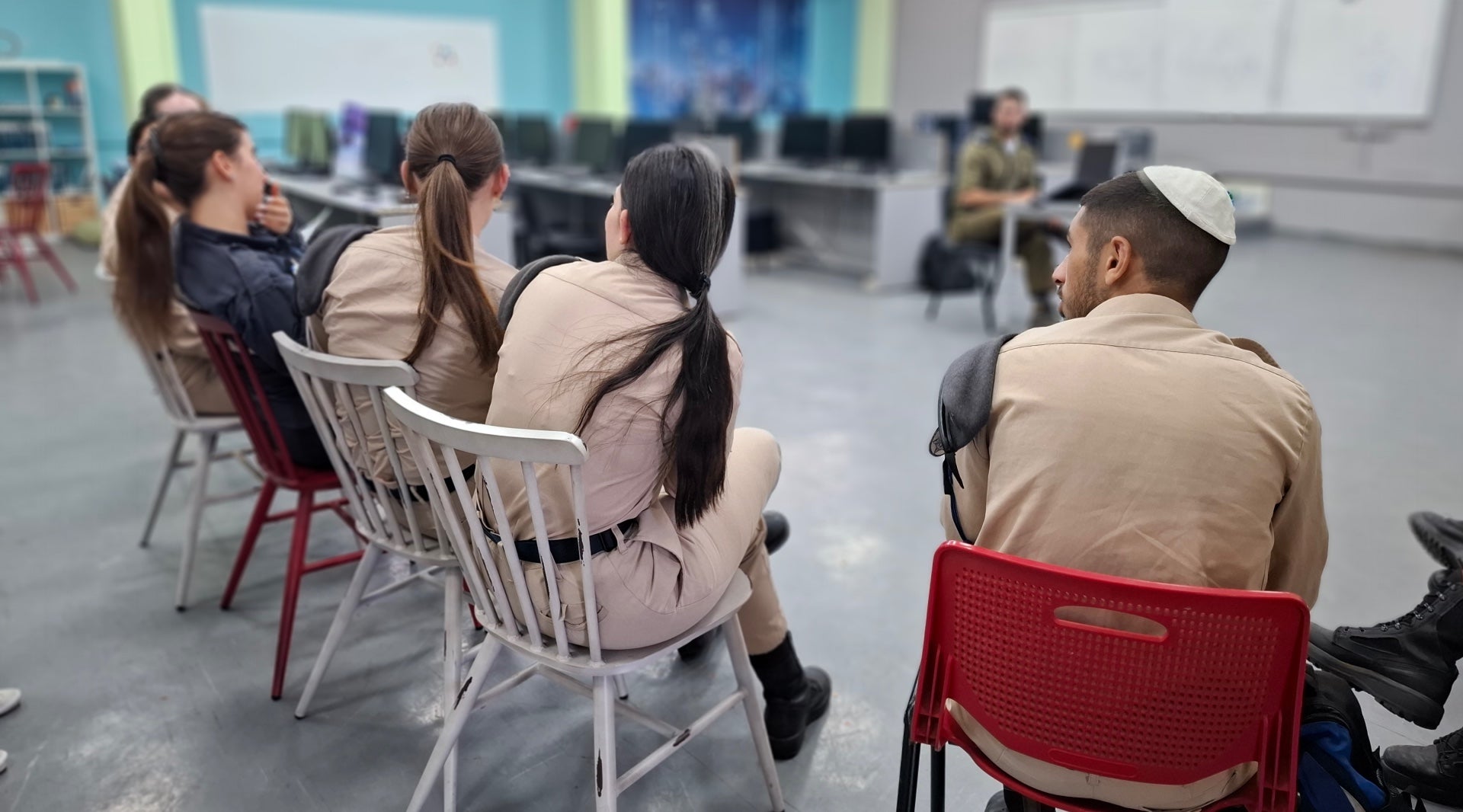
On its modest campus, Holtz trains high schoolers and graduates who spend two years after high school studying avionics, drone technology, computer engineering and other aircraft-related fields for future careers in air force technology. Despite its relatively aged facilities, Holtz offers one of Israel’s most advanced technical education programs, preparing teens from all walks of life for high-stakes military service in the Air Force’s elite units.
Many alumni play key roles keeping Israel’s Air Force aloft as it continues to monitor Hamas activities in Gaza, respond to threats from Yemen, and carry out occasional operations in such places as Lebanon and Syria.
Founded in 1954, Holtz is one of only three Israeli high schools dedicated to direct Air Force preparation. What makes it exceptional is not only the curriculum, but also its ethos. It is a regional magnet school that draws students from across the country: religious and secular, Jewish and Arab, from development towns and central cities. Many come from families facing serious financial hardship, housing insecurity or trauma. Holtz offers them a structured, supportive environment — and a path to excellence.
“We start in ninth grade with the goal of creating equity,” said Sarit Melamed, 60, Holtz’s principal and an alumna who has worked at the school for nearly four decades. “Some students arrive with gaps in learning and self-confidence. That first year is about leveling the playing field. Our job is to help every child believe they can make it to the top.”
Melamed’s ties to Holtz run deep: Her sister, nephew, and a cousin all studied at the school. After graduating, Melamed trained in avionics and worked on military aircraft and drone systems. She later returned to Holtz as an educator, driven by a passion for helping young people reach their potential. More than technical excellence, Melamed said the school gave her a sense of belonging and mission.
“This school changed my life. It gave me confidence and direction,” she said. “Now I try to give that back to every student who walks through these gates.”
Ofek Nissan, an alum who now works on the school’s educational staff while serving in the Air Force reserves, said this sense of commitment is deeply felt in the Holtz community.
“When you walk through these halls you feel it — the teachers, the graduates, the younger kids, everyone is connected. It’s not just a school; it’s a family, and you carry that with you even when you’re in uniform,” he said. “It was always a place I could come back to for advice, support or just to feel like I belong.”
Amal’s director general, Karen Tal, left, at a ceremony for students at the Holtz school in Tel Aviv. (Courtesy of Amal)
One of Holtz’s most distinct qualities is the strong ties between the school and its alumni. Years after graduating, many alumni maintain a relationship with the school, visiting to guest lecture or participate in other events while they’re still serving in the Air Force. Still others return to the school as staff or become donors.
The school was deeply impacted by the attack of Oct. 7, 2023, and the war that followed. Among the alumni killed in the Oct. 7 attack were Cpl. Karin Schwartman, a recent graduate murdered at the Nova music festival, and Police Sgt. Maj. Aaron Arthur Markovich, who fought Hamas terrorists at the festival until he ran out of ammunition and was shot and killed. The school has a memorial garden for alumni who fell in battle, and it’s now building a study room in memory of Schwartman.
“We lost students and alumni in the war,” said school educator Moti Peretz, who teaches technology and mentors students. “We’re not just building careers here. We’re carrying memories, shaping identity, living through history.”
For the duration of the war, a large display in the school’s main corridor features the names, photos and bios of all 250 hostages who were taken captive to Gaza on October 7. The display was more than a gesture of solidarity. It reflected how deeply the events of October 7 are etched into the consciousness of the students. Walking past the faces each day reinforced for them that national trauma is personal, that service is meaningful and that their technical training is tied to a larger mission, administrators said.
“These kids carry so much,” said Amal’s deputy director general for education, technology and R&D, Tamar Peled Amir, who previously worked in senior positions in the Prime Minister’s Office for over a decade. “They’re preparing for the most demanding futures while living through national trauma. And they still show up. That’s the power of this place.”
The school has a long list of stellar achievements. But after so many decades of prioritizing academic excellence over investing in the school’s physical facilities, Holtz’s leadership recently decided that some significant infrastructure updates are necessary to meet the needs of its students.
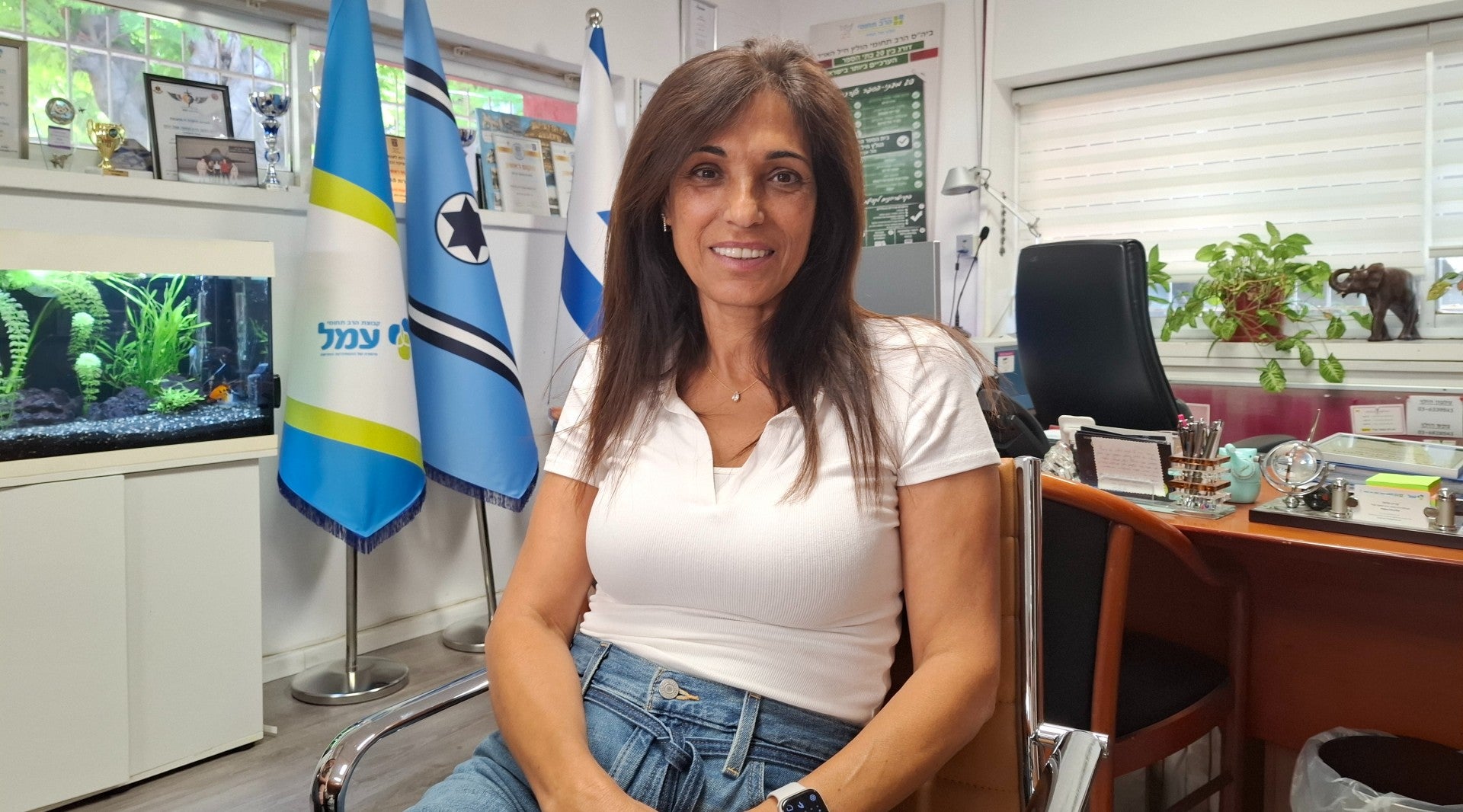
Principal Sarit Melamed is herself an alumna of Holtz. “This school changed my life. It gave me confidence and direction,” she said. “Now I try to give that back to every student who walks through these gates.” (Courtesy of Amal)
The aircraft hangars, which house some relics of Israeli Air Force planes, are seven decades old, with deteriorating walls and ceilings. The school lacks an auditorium or proper sports fields. When the school wants to hold an event for all its students or parents together, it has no place to do it.
“We’re doing top-tier training in spaces that are falling apart,” Melamed said. “We need a campus that matches the level of excellence our students achieve.”
The school, which celebrated its 70th anniversary last year at an event attended by many alumni, including senior military and Air Force officials, is currently seeking funding for renovation and reconstruction.
“Holtz students are doing their part for the country,” said Yael Nathanel, Amal’s head of resource development. “We hope Jewish communities around the world will be part of this effort, joining our alumni and local Israeli donors to help bolster this important institution.”
Karen Tal, Amal’s director general, says Holtz represents a model for a new kind of Israeli leadership.
“Shared society, equal opportunity, patriotism with humanity — Holtz brings all of that together,” she said. “We are proving that you can create elite excellence without leaving anyone behind. That’s the foundation of democracy.”
For Melamed and her team, the stakes couldn’t be higher.
“We are training the people who protect this country. But we’re also building lives, character, hope,” she said. “That’s what Holtz stands for. And we’re just getting started.”