

On May 10, 1951, more than 20,000 people packed New York’s Madison Square Garden to hear Israel’s first Prime Minister, David Ben-Gurion, make an extraordinary appeal. The young State of Israel was less than three years old, struggling to absorb hundreds of thousands of immigrants while building its economy from the ground up. Ben-Gurion was not asking for charity; he was asking Jews around the world to invest in Israel’s future.
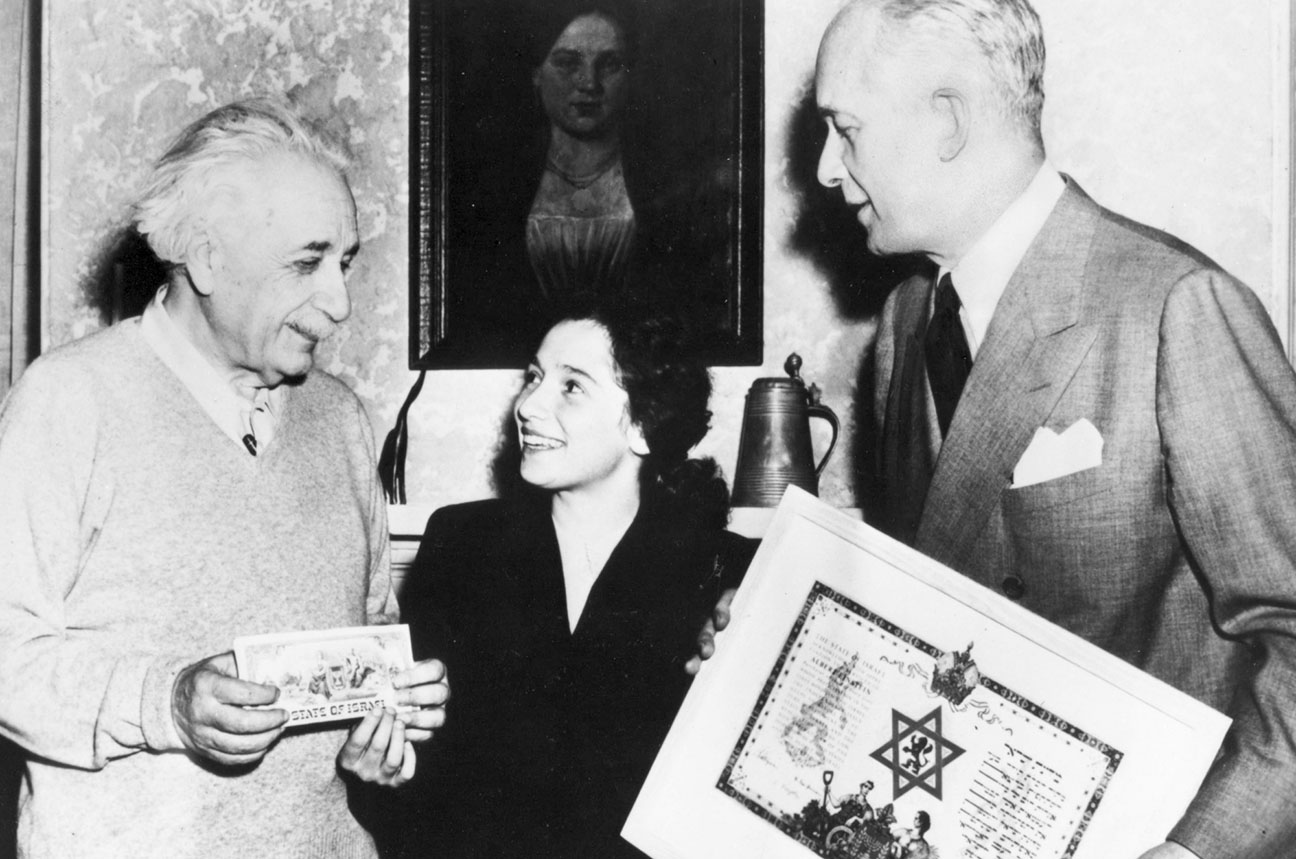
That evening marked the launch of Israel Bonds, a campaign that would become one of the most significant financial partnerships between Israel and the Jewish Diaspora. Among its earliest investors was one of the 20th century’s greatest thinkers: Albert Einstein, who just months after the Oct. 30, 1951 announcement, purchased a $500 Israel Bond from his home in Princeton, New Jersey. For Einstein, the bond represented more than a financial investment — it was an expression of faith in Israel’s ability to build a secure and prosperous future.
Seventy-five years later, Israel Bonds has raised $57 billion for the State of Israel.
Throughout Israel’s history, in moments of crisis and uncertainty, the Jewish Diaspora has stood alongside the country through Israel Bonds. During the Six-Day War in 1967, communities around the world purchased approximately $200 million in bonds. During the Yom Kippur War in 1973, that figure reached $500 million, and during the COVID-19 pandemic, investors purchased $1.8 billion in bonds as Israel faced unprecedented challenges.
The response following the Oct. 7, 2023 Hamas attack was even more dramatic. Within the first 30 days after the attack, more than $1 billion in Israel Bonds were sold, with total sales eventually surpassing $5.7 billion in the months that followed.
The surge was driven by a global campaign launched by Israel Bonds, under the leadership of President and CEO Dani Naveh, to provide Israel with financial backing during a time of unprecedented need. In a Zoom interview from his New York offices, Naveh reflected on the extraordinary response.

“We found ourselves in the most challenging times after Oct. 7,” Naveh said. “We started a special campaign for Israel, and in terms of what we achieved, it has been record-breaking. We have surpassed $8 billion in sales worldwide, and this year is going to be the fourth year in a row that we reach $2.5 billion annually — 2.5 times more than the average sales before Oct. 7.”
That surge also served as a powerful counter-message to the global BDS (Boycott, Divestment and Sanctions) movement, launched in 2005 with the goal of economically isolating Israel. While BDS advocates for divestment, Israel Bonds has seen growing institutional investment: more than 90 U.S. state and municipal pension funds and treasury funds have invested over $3 billion in Israel Bonds. In the aftermath of Oct. 7, Palm Beach County alone committed $700 million, underscoring the continued financial ties between American institutions and Israel.
“About half of the money we raise comes from local governments — from elected officials, treasurers and controllers who invest in Israel Bonds because they believe in the steady and strong returns for their funds, while at the same time wanting to express support for the U.S.-Israel relationship,” Naveh said. “Over the past two-and-a-half years, we have seen a strong BDS campaign targeting American officials, trying to pressure them not to invest in Israel Bonds. I’m proud to say that the vast majority have not caved in. They continue to stand on the right side of history. Some of them have even told me, ‘We’re going to double down on our investments.’”
The reach of Israel Bonds extends far beyond the traditional centers of Jewish life. While states with large Jewish populations, such as New York, New Jersey, Florida and California, have historically represented some of the largest sources of investment, participation has also come from local governments across the country – including Oklahoma, Illinois, Ohio and Texas. The broad geographic reach of these investments underscores that Israel Bonds is not limited to communities with large Jewish populations but has become part of a larger American institutional relationship with the Jewish state.
With offices and investors across Europe, Canada and Mexico, Naveh said many people internationally view Israel Bonds as a meaningful way to maintain a connection with Israel and participate in its future.
Beyond the surge in sales following Oct. 7, Israel Bonds is also seeing a growing number of new investors, including younger generations. Naveh said longtime investors continue to reinvest their bonds when they mature rather than withdrawing their funds, while families who have supported the organization for decades are passing the tradition to their children and grandchildren. Some younger investors first received Israel Bonds as bar or bat mitzvah gifts and are now continuing that connection as adults.
Naveh said one of the organization’s greatest strengths is that it allows people from all backgrounds to participate. While some institutional and individual investors purchase bonds worth millions of dollars, others begin with a much smaller commitment.
“Anyone can be part of this story,” Naveh said. “The minimum investment is $36, and many people buy bonds as gifts for a bar or bat mitzvah, a wedding, or simply as an investment for themselves.”
Reflecting on the organization’s journey since its founding, Naveh added that David Ben-Gurion could hardly have imagined the impact Israel Bonds would have over the past 75 years. “I think he would have been amazed.”