

In 1944, in her final act of defiance, Hannah Senesh refused to be blindfolded. She wanted the men who executed her to look her in the eyes.
Before that, she could have likely saved her life had she asked for a pardon or been apologetic, yet she brazenly criticized the Hungarian judges presiding over her trial, telling them they’d soon face the consequences of their actions, as Hungary collaborated with the Nazis, who she knew would lose the war.
Douglas Century’s mesmerizing new book on Senesh, “Crash of The Heavens: The Remarkable Story of Hannah Senesh and the Only Military Mission to Rescue Europe’s Jews During World War II” which gets its title from one of her most famous poems, is meticulously researched, written with cinematic flair and one of the best books of 2025.
Century, a Princeton graduate who has written about El Chapo and the Mafia, recalled learning about Senesh in Calgary, when he was eight years old.
“I understood she was captured and tortured and would not inform on her people and was willing to die,” Century said. “The story we always heard is that she jumped and was quickly captured. That’s not true. From March to June, she was involved in shootouts. I think the story was mis-told to make her into a martyr where there was this doomed mission. It wasn’t some lunatic mission.”
From Folding Socks To Dodging Bullets
Born Anne Szenes in Budapest in 1921, her father Bela was a well-known writer and playwright. Century said had he not died before turning 44, the family might have moved to California and he might have been a successful Hollywood screenwriter. She left her mother and went to Kibbutz Sdot Yam, and became disillusioned with washing and folding socks, when she could speak six languages, was physically fit and highly intelligent. She completed a training of five day-jumps and one night-jump and when she finally jumped as part of her mission, she got suck in a tree but cut herself out. At that time Hungary was not yet overtaken by the Nazis, but Century writes that Senesh cried a few days later when she became aware of the Nazi progression.
For a few months before Oct. 7, 2023, Century was in Israel doing research and in speaking to Israelis, some of them knew little about Senesh or had the facts wrong.
“It astounded me that people don’t really know her anymore,” Century said.
While Anne Frank is known by nearly every Jew, few know about Senesh. “Hannah Senesh,” a play by David Schechter, was performed last month in Manhattan starring Jennifer Apple as Senesh; Century praised her performance. There hasn’t been a biopic about Senesh and her story has not received the attention or reverence of Anne Frank.
“New heroes are created so often in Israel, “ Century said. “Hannah was a foundational hero. But you had numerous wars since then. The trauma in Israel is so consistent, she got pushed out of the public consciousness. But not her poetry. ‘Eli, Eli,’ (‘My God, My God”) is like the second national anthem.”
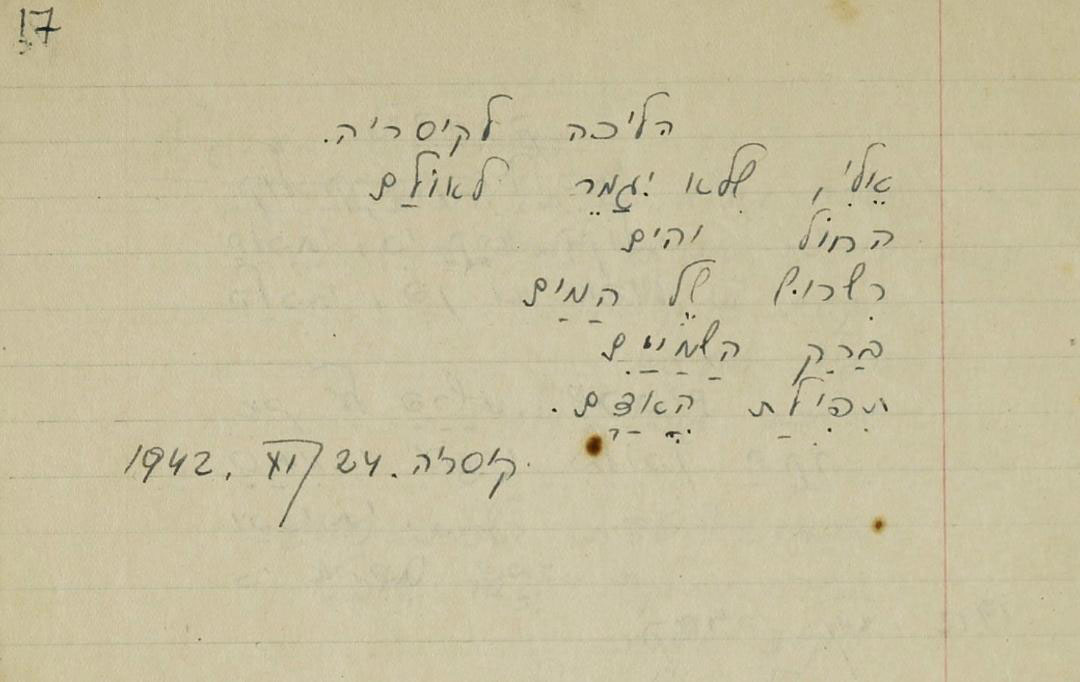
Set to music, Senesh’s short poem (originally titled “A Walk to Caesarea”) reads “My God, may it never end/The sand and the sea,/ plash of the water,/ the crash of the heavens/ the prayer of man. ”
Senesh parachuted into Hungary in March 1944, one of 32 Jewish volunteers from Mandatory Palestine who parachuted into occupied Europe. She was captured on June 8, 1944 in Murska Sabota Hungary.
Century writes that Senesh was stripped naked, had a tooth knocked out and was kicked, punched and flogged.
Though she was not given a cyanide pill, she tried to run up the stairs to possibly jump from the top of the building, but tripped and was tied to a chair. Even with a threat made that her mother would be killed, she did not give up military secrets.
Century quotes Senesh’s unbowed statement to the judges who held her fate in their hands.
“I stand before you as a captured British servicewoman. I’m not guilty of espionage or treason. I’m not traitor to Hungary. The traitors are those among you who brought this calamity upon the Jewish people and upon Hungary itself. I implore you now – don’t add to your crimes. You surely realize that your own day of reckoning is soon coming …”
That would be an unbelievably brazen thing out of the mouth of a hardened soldier, let alone a 23-year-old who had not seen significant combat time.
Century said Senesh was a person of great conviction but may have given too much credit to a legal system that was not following the letter of the law (a huge understatement).
“The prosecutor, (Col. Julian) Simon came on his own initiative to execute her,” Century said. “Like all the rats, he was found in Argentina. He gave in interview years later and he said he didn’t have any regrets. He said ‘she made us so God damn angry with her Jewish pride’ Hannah asked how she could be guilty of treason when they took away her citizenship. It was a brilliant defense. She would have been a great lawyer. She was playing with fire. I don’t think she wanted to die. She had incredible moral clarity and thought it was right to tell the judges the truth.”
Century writes about a bizarre offer from Adolf Eichmann, who offered to save the lives of 1 million Jews of Hungary in exchange for 10,000 winterized trucks and other supplies. This never took place; in a different deal, Eichmann allowed 1,686 Hungarian Jews to go on what would be called the Kastner train as the deal was made by Rudolf Kastner, Jewish lawyer and journalist who was criticized for saving some of his friends and relatives. The train also took the Satmar Rebbe, Joel Teitelbaum.
“Crash of the Heavens” hits home even more so now, when opponents of Israel have attempted to give Zionism a negative connotation. The book demonstrates how Senesh went from not speaking Hebrew, to coming to a realization that when Hungary was turning its back on Jews, it was her duty not only to go to Israel but to build up the country. He cites her writing that her obligations were ‘leami vleimi” or “to my nation and to my mother.”
Her mother, Katherine Senesh, on a death march, was able to escape as artillery flew in the air and she was able to be hidden by a righteous gentile. There is also an intriguing character named Enzo Sereni, a proud Jew and a proud Italian. A force of nature, he insisted on parachuting into Europe as well, even though Golda Meir told him it was a bad idea. More than decade earlier, in 1932, the Jewish Agency sent him to Berlin and he was able to convince Jews to make Aliyah and was was able to facilitate smuggling $25 million of Jewish money out of the country. Sereni was murdered at Dachau in November of 1944.
It is impossible to read this book at not marvel on how unselfish Senesh was and how she must have felt a sense of purpose that few share. “Crash of the Heavens” is a page turner. Century is able to transmit pride and pain on the page, like few can.
Senesh is a Hero For Many Reasons
Century said during that period most 22-year-olds thought about who they might marry. Senesh, despite having a number of suitors, brushed them off as she had incredibly high standards. She knew the mission to go into Hungary was extremely dangerous.
“They don’t make people like her anymore,” Century said. “How many of us our willing to die for a principle? She represents a universal story of a strong female foll of courage and bravery. Man, was she a badass!”