

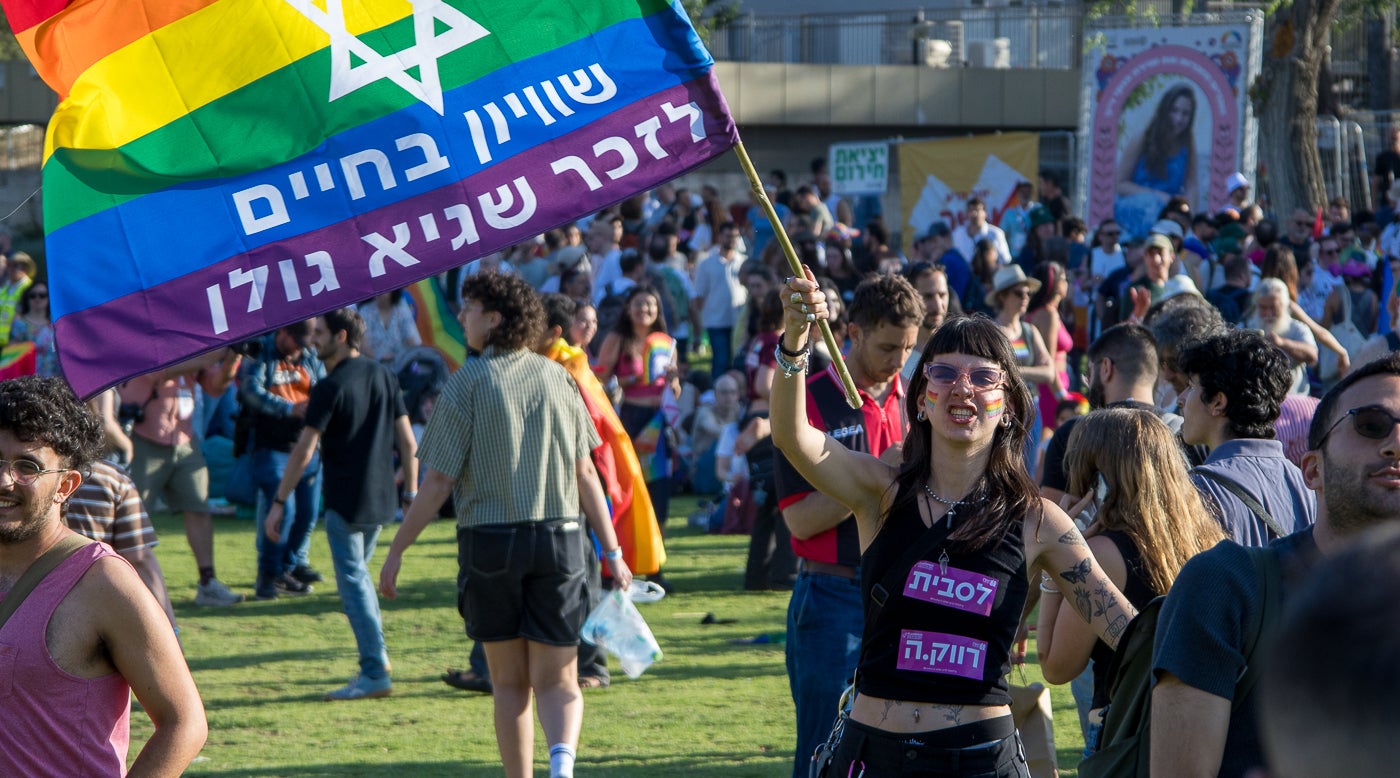
JERUSALEM — The Pride march in Israel’s capital city changed its traditional route on Thursday to end near the Knesset, in a show of force ahead of elections that could have major implications for the status of LGBTQ Israelis.
“If the current government has a problem with LGBTQ+ people, then the current government can go home, because the community is here to stay,” opposition leader Yair Lapid said during the culminating rally.
Jerusalem’s Pride march is always more muted than the raucous celebration that takes place each June in Tel Aviv. But this year, the looming election, which must be held by Oct. 27, galvanized participation.
More than 10,000 Israelis gathered in Sacher Park for the rally, according to Noa Fisher of the Jerusalem Open House, the LGBTQ+ equality organization that organizes the event.
“It’s always more like a protest than anything else. This year, especially,” said Hadas Bloemendal, chair of the Jerusalem Open House, walking alongside the crowd with her baby in a stroller.
“I’m supposed to be on maternity leave,” she said. “But this year, I had to be here.”
The status of LGBTQ Israelis is complex. While the country has a thriving gay culture and the speaker of the Knesset is openly gay, same-sex marriage is prohibited by law and some haredi Orthodox lawmakers have spoken with disdain about LGBTQ people and said they want to see their rights rolled back. The elections this fall will determine whether those lawmakers retain power in the next government.
Michal Rozin, a former lawmaker from the liberal Meretz party, urged rally-goers on Thursday to boo after recounting a 2023 comment by a member of the United Torah Judaism party, a partner in the governing coalition, who said the LGBTQ community is “the most dangerous thing for the State of Israel, more than Islamic State, more than Hezbollah, more than Hamas.” (He was commenting during Pride month, before Hamas’ Oct. 7 attack on Israel.)
Participants at the Jerusalem March for Pride and Tolerance walk toward the Knesset, June 4, 2026. (Theia Chatelle)
Avi Maoz, an anti-LGBTQ politician who was part of the current government until last year, called this year’s march an “abomination” in a post on social media on Thursday.
The rally marked 11 years since 16-year-old Shira Banki was killed when a haredi Orthodox man stabbed six Jerusalem Pride attendees, weeks after being freed from prison after staging a similar attack a decade earlier.
“Some of the friends she walked with are still, today, volunteering. That’s what echoes the most, what she chose to do,” Bloemendal said.
Security was intense Thursday, and the gathering area before the march was completely sealed off. More than 2,000 Israel Police officers and border agents were dispatched to protect the march, according to Israeli police spokesperson Dean Elsdunne.
Behind a wall of tour buses was a counter-demonstration hosted by the extremist group Lehava, which opposes Jewish-Arab coexistence and gay relationships. By the time the march left Sacher Park for the Rose Garden near the Knesset, only a few dozen men remained in the heavily policed and cordoned-off area.
“Those standing outside and protesting against us have forgotten what it means to be Jewish and have forgotten what it means to be human,” Lapid said from the stage.
Despite the counter-protest, spirits were high at the rally, where attendees said they were determined to make their voices heard at a time when they feel their country is closing itself off to LGBTQ+ life.
“The LGBTQ+ community is present everywhere that the fate of this country is being written,” Rozin said in her speech. “But there are those who continue to incite against it.”
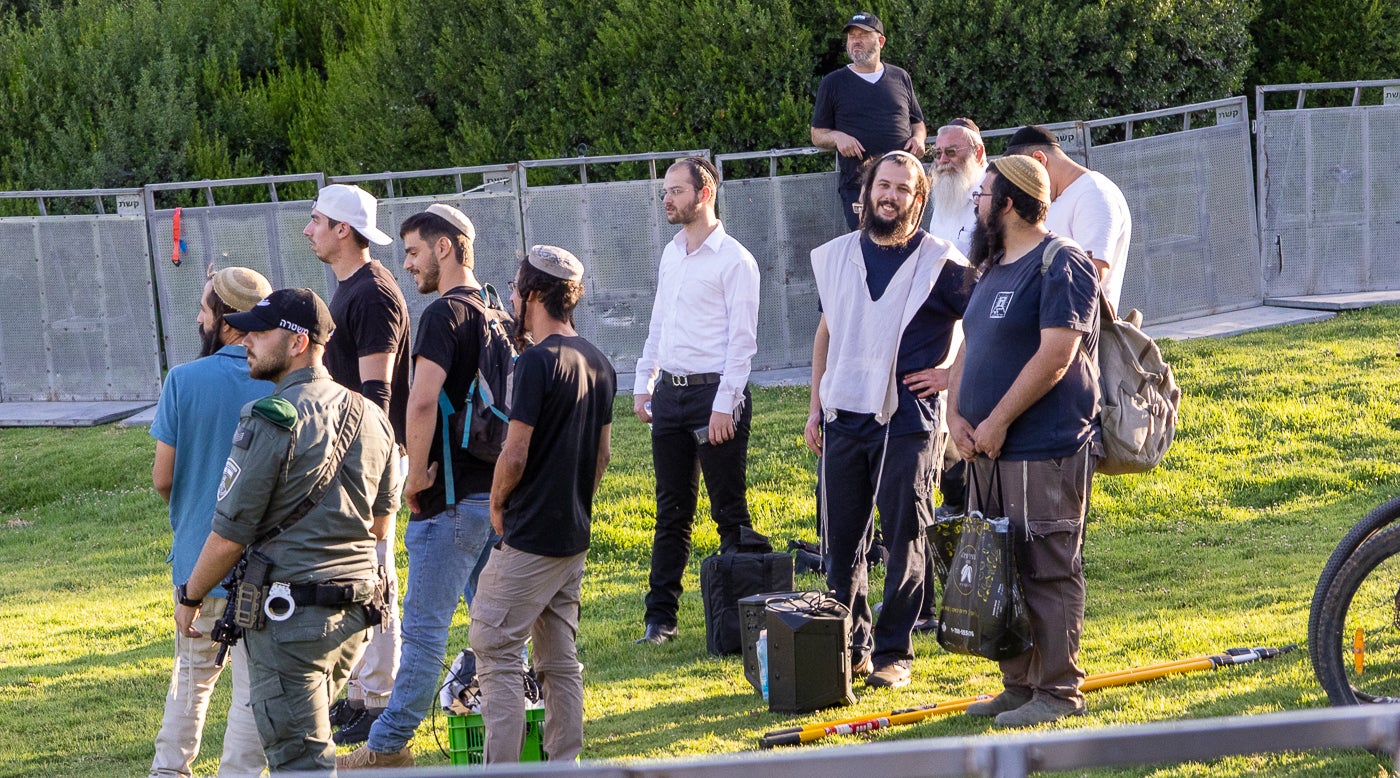
Counter-protesters from Lehava, a far-right Israeli organization, gather near the Jerusalem Pride march route, June 4, 2026. (Theia Chatelle)
Lapid has long made LGBTQ+ equality a central tenet of his platform. His alliance this year with Naftali Bennett (a religious Zionist who historically opposed same-sex marriage) is notable in part because Bennett announced at their April 26 press conference announcing a joint campaign that a government under his leadership would advance same-sex marriage in Israel.
Marriage in Israel is regulated by the Rabbinate, which prohibits LGBTQ+ unions, leaving many couples to wed abroad and petition to have those marriages recognized at home. Lapid promised that “in the first 100 days of the next government, we will bring legislation that says the rights of every couple in Israel will be equal. Mom and dad, dad and dad, mom and mom — everyone the same rights.”
The nearly 10,000 attendees gathered beneath different banners and identities, some flying the flags of their youth movements, from socialist to LGBTQ+ organizations, to different political factions, including the Democrats, which made a significant showing at the event.
Drummers from the Pink Front led the rally toward the Rose Garden near the Knesset, passing through a tunnel, with chants echoing off the stone walls.
Shira Zagury, CEO of Shira Banki’s Way, founded by Banki’s parents the year after her murder to build coexistence and pluralism in Israeli society, said the march “continues to mark a moment of inclusion and positivity.”
Before the march set off for the Rose Garden near the Knesset, Rabbi Tamar Elad-Appelbaum recited the Traveler’s Prayer, praying for the marchers’ safety and alluding to Banki’s death nearly 11 years before.
“In the face of violence, hatred, and attempts to send us back into the closet, we will march this year and every year and say, ‘We are here to stay,’” she said.
Reporting the stories that define our era. When history unfolds in real-time, the Jewish world turns to (JEWISH REVIEW). Your support ensures we can document the complexities of war and the resilience of Jewish communities with integrity.