

In late 1940, Nazi occupiers confined over 400,000 Warsaw Jews in a sealed ghetto, creating horrendous overcrowding, starvation, and disease. Tens of thousands died inside even before the mass deportations began. In the summer of 1942, the Nazis began the final “liquidation” of the ghetto under the guise of deportation to “labor camps.” Over 260,000 Jews were forced onto trains to the Treblinka death camp between July and September 1942, where almost none survived . By autumn 1942, only about 60,000 Jews remained in Warsaw. These survivors were mostly young adults – the elderly and children were already gone – and by then it was clear to even the skeptics that the Nazis intended to kill everyone whether Jews cooperated or not . With nothing left to lose, many began to prepare for resistance.
One of those young survivors was Mordechai Anielewicz, a charismatic leader of the Hashomer Hatzair Zionist youth movement . Born in 1919, Anielewicz had tried to escape occupied Poland (even attempting to reach British Mandate Palestine), but ultimately returned to Warsaw to organize the ghetto’s Jews .
By June 1941, as reports of Nazi mass-murder operations filtered in, he was convinced that armed self-defense was the only answer . Many older community leaders still opposed the idea of violent resistance, but by late 1942 it was evident to the remaining Jews that they were doomed to die in any case . In response, underground factions united. In November 1942, representatives of various Zionist and socialist groups formed the Jewish Fighting Organization (ŻOB), and 23-year-old Mordechai Anielewicz was chosen as its commander .
“We Will Not Go Quietly”: The First Clash
On January 18, 1943, German SS and police units unexpectedly entered the ghetto to resume deportations. This time, ŻOB fighters sprang an ambush. Small bands of Jewish fighters attacked the Germans with pistols and homemade grenades, taking the enemy by surprise. The stunned Germans pulled back after a few days of street fighting . Although several thousand Jews were captured in this raid, the resistance had disrupted the Nazi plan – a psychological victory that electrified the ghetto. For Anielewicz, this small success proved that defiance was possible; it “exceeded our boldest dreams,” he wrote in a report .
Over the next three months, Anielewicz’s group prepared for an inevitable all-out assault. They dug bunkers, fortified hideouts, and smuggled a handful of guns and grenades into the ghetto. In total, roughly 700 Jewish fighters – including many teenagers and young women – joined the effort.
Their arsenal was woefully small, consisting mostly of pistols and a few rifles, plus Molotov cocktails and improvised explosives. Yet their determination was immense. They knew they had no real chance of defeating the German army, but they were resolved to make a last stand on their own terms. As Marek Edelman, Anielewicz’s deputy, later put it, “We fought simply not to allow the Germans alone to pick the time and place of our deaths.”
The Uprising: Three Weeks of Heroic Defiance
On April 19, 1943 – the eve of Passover – German forces under Jürgen Stroop entered the ghetto to finally liquidate it. Over 2,000 heavily armed troops poured in, expecting to subdue the Jews in a day. Instead, they were met with a coordinated uprising. Jewish insurgents opened fire from lofts and windows and hurled grenades and petrol bombs at the troops, even detonating improvised mines under German vehicles. Caught off guard by the ferocity of the defense, the Germans fell back in disarray on the first day i’ve already got. For the first time in occupied Poland, Nazi forces had been forced to retreat by Jewish fighters.
Stroop soon regrouped and returned with reinforcements, including tanks and flamethrowers. A brutal, uneven struggle raged for nearly three weeks. The Jewish fighters, vastly outgunned, had few real military successes left, but they held out as long as possible. The SS began systematically burning the ghetto, building by building, to flush out resistance. The once-crowded Jewish quarter became a smoldering ruin. Amid the smoke and fire, the ghetto fighters refused to surrender. They moved from one collapsing safehouse to another, making the Germans pay for every inch of ground. In fact, the outnumbered Jewish fighters managed to kill or wound dozens of German soldiers during the uprising – an astonishing achievement under the circumstances.
By early May, however, the uprising was collapsing. On May 8, 1943, the Germans discovered the main ŻOB command bunker at 18 Mila Street. Surrounded and with no escape, Mordechai Anielewicz and about 100 comrades perished in that bunker – either by taking their own lives or being killed in the final assault . Even then, scattered clashes continued for days. Finally, on May 16, 1943, Stroop declared the operation at an end and infamously reported, “The Warsaw Ghetto is no more.”
The price of resistance was enormous. An estimated 7,000 Jews were killed during the fighting or burned alive in the ghetto. Another 7,000 were captured and sent straight to Treblinka, where they were immediately gassed. The remaining tens of thousands of Warsaw Jews – over 40,000 people – were deported to forced-labor camps; most would be murdered by the Nazis later in 1943. Only a few fighters managed to escape. Marek Edelman and a handful of others found a way out through the sewers and survived to join the Polish resistance on the “Aryan” side . Apart from such exceptions, virtually all the ghetto’s Jews were now dead. They had not saved their lives – but in choosing to fight, they died as free men and women, with weapons in hand.
Legacy of Courage and the Cry of “Never Again”
The Warsaw Ghetto Uprising was the largest Jewish uprising of World War II and the first urban revolt against Nazi occupation in Europe. Though it could not save its participants, this act of heroism shattered the myth of Jewish passivity. The young fighters of Warsaw demonstrated that Jews would resist and even lay down their lives to uphold their dignity. Their defiance inspired other revolts – notably uprisings in the Treblinka and Sobibor death camps later in 1943 – and has been remembered ever since as a turning point in the narrative of the Holocaust.
For the Jewish people, the story of Mordechai Anielewicz and his 700 comrades became a source of pride and resolve. In the midst of war, Jewish leaders in British Mandate Palestine named a new kibbutz Yad Mordechai (Mordechai’s Memorial) in his honor, even before the Holocaust had ended. To this day, that kibbutz – itself the site of a fierce battle in Israel’s 1948 War of Independence – hosts a museum dedicated to the ghetto fighters.
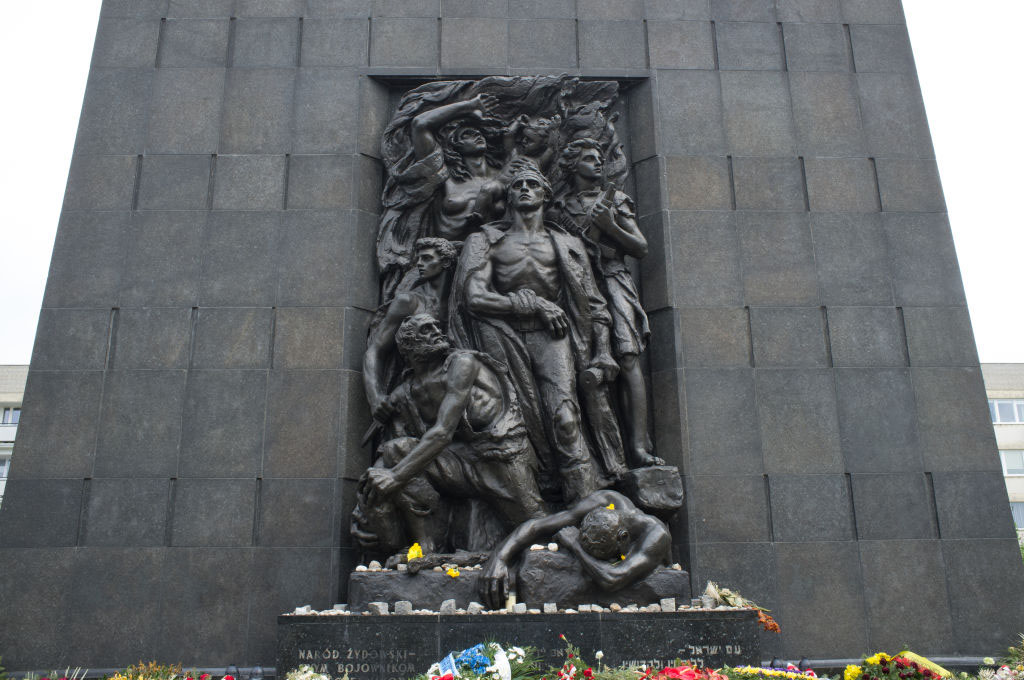
Monuments to the Warsaw Ghetto heroes stand in Warsaw and around the world, and the uprising is commemorated annually on Holocaust Remembrance Day. As one chronicler wrote, young Jews in 1943 “chose to die fighting rather than face mass murder in Treblinka,” and in doing so “they fought and died to preserve their honor as Jews”. Mordechai Anielewicz’s own last letter from the ghetto declared, “Jewish armed resistance and revenge are facts” – the fulfillment of his lifelong dream to see the Jewish people fight back.
The legacy of the Warsaw Ghetto Uprising is a clarion call: Never Again. Never again will the Jewish people submit quietly to extermination. Anielewicz and his fighters left behind a lesson that still resonates today. Even in recent times, when rockets rained on Israel, Jewish defenders remembered the ghetto fighters’ spirit. (In October 2023, a Hamas rocket hit the museum at Yad Mordechai, a poignant reminder that the fight against antisemitic violence continues.) The example of Mordechai Anielewicz – a 23-year-old who led an impossible revolt and died a free man – continues to inspire people to stand against tyranny and oppression. His courage and sacrifice urge us to do his memory justice by remaining vigilant in defense of human dignity.
Eighty years later, the cry of “Never Again” remains our enduring promise, in honor of Mordechai Anielewicz and the martyrs of the Warsaw Ghetto.
Rabbi Shmuley Boteach—“America’s Rabbi”—is the international bestselling author of 36 books and is described by The Washington Post and Newsweek as “the most famous rabbi in America,” by The New York Observer as “the most famous orthodox Jew in the world,” and by The Jerusalem Post as one of the 50 most influential Jews alive. Founder of the Oxford University L’Chaim Society, the second-largest student organization in Oxford’s history, he mentored many of today’s world leaders who were his students. He is the only rabbi ever to win the London Times “Preacher of the Year” competition and is the recipient of the American Jewish Press Association’s highest award for excellence in commentary. He is founder of The World Values Network, which champions Jewish values and fights antisemitism worldwide. Follow him on Instagram and “X” @RabbiShmuley.