
Does Paul Simon have a soft spot for killers?
The iconic singer-songwriter this week signed a petition demanding freedom for the Palestinian Arab terrorist Marwan Barghouti, a convicted multiple-murderer.
Barghouti is currently in an Israeli prison for his role in five murders. In 2001, he sent terrorists to ambush motorists on the outskirts of Jerusalem; they killed a young Greek Orthodox priest named Father Germanos. The following year, Barghouti masterminded an attack on a Tel Aviv restaurant that left three dead and 35 wounded.
But Barghouti is not the first killer to enjoy Paul Simon’s friendly attention. That distinction belongs to Salvador Agron.
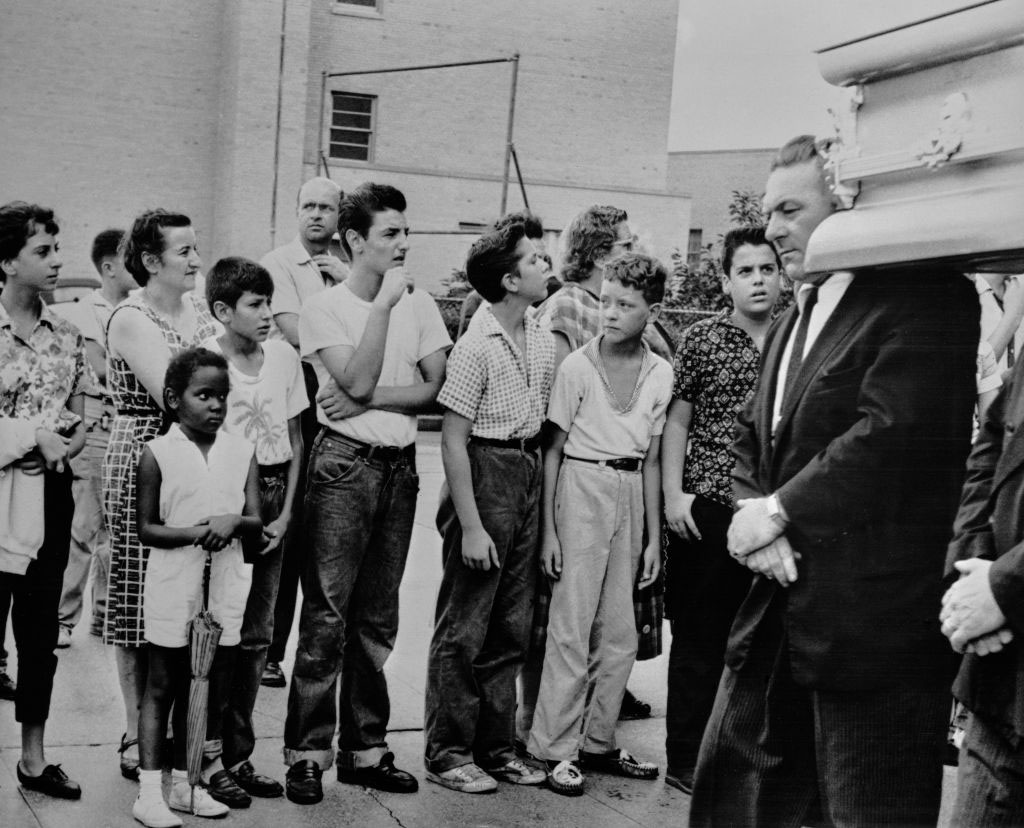
Agron was a member of a Brooklyn street gang called The Vampires. In 1959, he stabbed two boys to death on a New York City playground. The victims, Anthony Krzesinski and Robert Young, Jr., were just 16. The press called Agron “The Capeman” based on eyewitness descriptions of his clothing.
In 1998, Simon created a Broadway play called “The Capeman,” which portrayed Agron as a victim of society. Members of the Krzesinski and Young families, together with a group called Parents of Murdered Children, picketed the opening night performance.
The protesters charged that Simon was glorifying the killer, and objected that the deaths of their loved ones were being exploited for entertainment and profit. Robert Young’s cousin Kim carried a sign that read “Our Loss is $imon’s Gain.”
Simon said in an interview at the time that he was moved to bring Agron’s story to Broadway because “I was drawn to the environment that shaped him—the street culture, the poverty, the sense of being outsiders.”
It’s a shame that Simon has never taken an interest in the environment that has shaped young Palestinian Arabs, including Marwan Barghouti. Growing up, Barghouti was immersed in the virulent hatred of Jews and glorification of terrorism that permeates the Palestinian Authority’s school curricula, summer camps, news media, sermons in mosques, and speeches by political leaders.
Here’s what then-U.S. Senator Hillary Clinton had to say about the antisemitism in the Palestinian Authority’s schools:
“Their textbooks are still preaching such hatred…Young minds are being infected with this anti-Semitism…These messages of hatred and these enticements for martyrdom in these textbooks and on the media, take young minds and twist and pervert them and create a new generation of terrorists and insurgents…Using children as pawns in a political process is tantamount to child abuse, and we must say it has to end now!”
That’s the environment which inspired Barghouti to join the Fatah terrorist group when he was 15 years old. He wasn’t protesting “Netanyahu’s policies” or “settlements.” Yitzhak Rabin was prime minister at the time, and only a handful of settlements existed. Fatah’s goal was the destruction of Israel. That’s the path that led Barghouti to become a mastermind of the suicide bombings and machine-gun massacres of the Second Intifada. Wouldn’t that make for an interesting play?
Or how about a play about Barghouti’s victims? Each of them has a compelling back story.
Salim Barakat, 33, was a policeman who heard the shooting at the Tel Aviv restaurant and ran towards the gunfire, not away from it. He left behind a wife, a four year-old daughter, and seven siblings.
Yosef Haybi, 52, died while using his body to shield his wife from the terrorist’s bullets. A friend described him as “a magnificent soul,” a brilliant businessman, and a generous philanthropist. He left behind two children.
Eli Dahan, 53, came to Israel as a child when his family fled persecution in the Arab world. Yet he had many Arab friends and ran a cafe that was popular with Jews and Arabs alike. His co-owner called him “the symbol for existence.” He had four children and three grandchildren.
Father Germanos was raised in a deeply impoverished family in rural northern Greece. He left school at age 12 to earn money for his family by working in a fabric factory. When he turned to a religious lifestyle, he gave away his possessions and moved to the Holy Land to join St. George’s Monastery, near Jerusalem.
A play, or even just a song, about the victims of Palestinian Arab terrorism might not be popular among today’s political and cultural elites. But it would be the right thing to do.
Dr. Medoff is founding director of The David S. Wyman Institute for Holocaust Studies and author of more than 20 books about Jewish history and the Holocaust. His latest is The Road to October 7: Hamas, the Holocaust, and the Eternal War Against the Jews, published by the Jewish Publication Society & University of Nebraska Press.