

This story originally appeared in J. Jewish News of Northern California.
Outside the Palo Alto JCC in April, as hundreds of people entered the campus to celebrate Yom Haatzmaut, Israel’s 78th birthday, a group of Jewish and Israeli-American activists from the advocacy group Bay Area Jewish Coalition-Action stood at the entrance, holding yard signs for political candidates on the ballot this June.
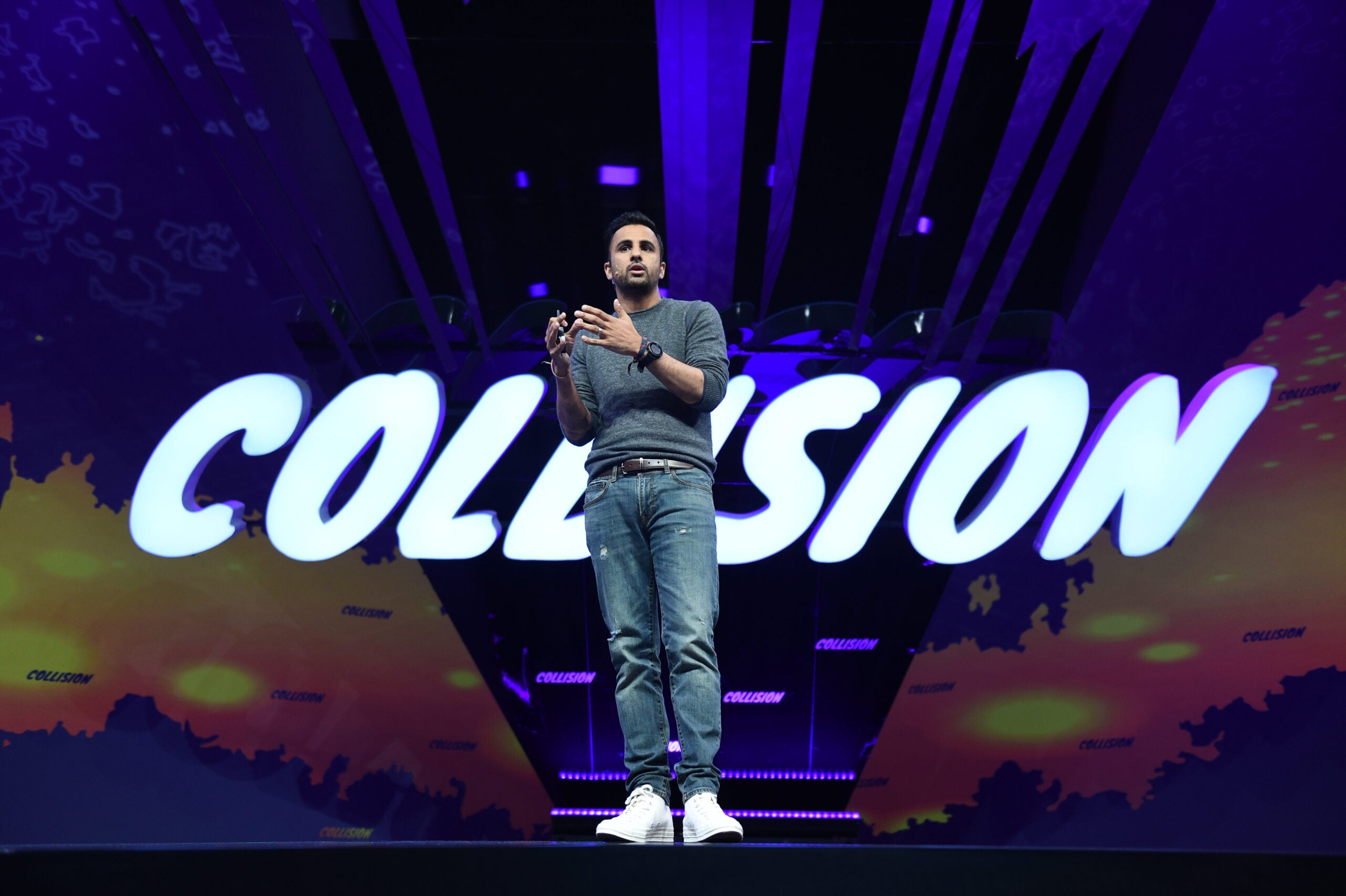
One name that stood out among those signs: Ethan Agarwal, a tech entrepreneur and political newcomer vying to unseat Rep. Ro Khanna in Congress.
A growing number of Jewish and Israeli-American voters are putting their campaign donations and votes behind Agarwal, who has positioned himself as the pro-Israel candidate in the six-person race. Under California’s primary system, the top two vote-getters, regardless of party, will advance to face each other in the general election in November.
No public polling has been conducted in California’s 17th Congressional District, but at least one prediction market and two prominent California political analysts favor Khanna to lead the field with Agarwal in second.
“Ro is the frontrunner,” said Sam Lauter, a principal at BMWL Public Affairs who has been following the race closely. “There is zero question that Ethan has the ability to give him a run for his money, and that Ro has to — has to — engage [his constituents], something he hasn’t had to do in a long time.”
Khanna has served California’s 17th district, which includes parts of Alameda and Santa Clara counties, since 2017 and won re-election comfortably in 2024. But he is also among Congress’ most vocal critics of the Israeli government and has backed legislation that would penalize Israel over what he characterizes as genocide in Gaza — a charge Israel and most pro-Israel Jews reject.
For many Israeli Americans in Silicon Valley, that posture has fueled a frustration that boiled over throughout the Gaza war — the kind of tension that surfaces in WhatsApp group chats, Facebook threads and dinner table conversations.
Tali Klima, a spokesperson for Bay Area Jewish Coalition-Action, is one of those trying to turn the frustration into votes.
“We have lost trust in his ability to represent us, and will not accept empty condemnations of antisemitism while he amplifies radical antisemitic messages at every possible turn,” Klima said in an email.
Klima was referring to Khanna’s association with social media influencers accused of promoting antisemitism. In October, Khanna shared a video clip about refusing to accept money from AIPAC that featured the antisemitic YouTuber Ian Carroll, sparking outrage from Jewish groups. Khanna has also been a repeat guest on a show hosted by Hasan Piker, a left-wing commentator who has drawn allegations of antisemitism from major Jewish organizations. (Khanna has said he would go on Piker’s show again, but that he didn’t know who Carroll was when he shared the video.)
Despite the tensions, Khanna has continued to engage with the Jewish community. Late last year, he visited local synagogues to defend his decision to say Israel had committed “genocide” in Gaza. A group of teens from Congregation Beth Am in Los Altos Hills visited Khanna at his Washington office in March. And in April, he convened a roundtable of more than a dozen Bay Area Jewish leaders to envision “how we can build a new coalition for a just peace and a new way forward,” he said at the time.
The son of Indian immigrants, Agarwal was born in Montreal and raised in the Bay Area. Most recently a tech entrepreneur, he founded and later sold Aaptiv, a popular fitness app, and Coterie, a consumer finance technology company. But before entering tech, he interned for Sen. Dianne Feinstein while he was an undergraduate at Johns Hopkins University.
Agarwal attended the annual conventions in Washington in 2005 and 2006 of AIPAC, the pro-Israel lobby that has lately become a bogeyman in Democratic politics. In 2010, while at Wharton Business School, Agarwal spent 10 days traveling through Israel on a trip organized by Israeli students that he credits with increasing his commitment to a strong U.S.-Israel relationship. He has said he has criticisms of the Israeli government but does not agree with Khanna’s characterizations.
“What Israel has done in Gaza, I don’t agree with all of it. I will not call it a genocide, though, because it’s not a genocide,” he said in April. “That specific word has very specific implications and has historical precedent, and it’s not a word that should be casually thrown around. I think [Khanna] uses it again as a bit of a dog whistle, because he wants to come across as being strongly anti-Israel.”
Khanna has an advantage because primary elections tend to bring out the most ideologically motivated voters, according to Larry Gerston, professor emeritus of political science at San Jose State University.
“For Democrats, that would be progressives who are least supportive of Trump/Israel. That would probably help Khanna,” Gerston said.
Encompassing a large swath of Silicon Valley, Khanna’s district is home to one of the largest concentrations of Israeli Americans in California, though they make up only a fraction of the overall voting population.
“Generally speaking, it’s difficult to oust an incumbent without any scandal or outrageous behavior,” Gerston added. “I haven’t seen any of those with Khanna.”
Lauter expects Khanna and Agarwal, both Democrats, to be the top vote-getters in the June 2 primary and face off on the ballot in November.
Khanna has made little secret of his national ambitions. He served as Sen. Bernie Sanders’ presidential campaign co-chair in 2020 and has since built a profile far beyond his district — traveling to swing states, feuding with Vice President JD Vance and declining to rule out a 2028 presidential run as recently as this spring.
Lauter believes the focus on national politics has helped Khanna with campaign fundraising but cost him on the ground.
“There’s a very passionate community of people who are frankly just tired of the way Ro has conducted himself,” Lauter said. “They’re interested in having their congressperson pay attention to their district and not have an eye on other positions.”
Over Memorial Day Weekend, while Khanna was in New York City appearing on Fox News and “Meet the Press” to discuss national issues, Agarwal met with voters at the Santa Clara County farmers market and a nearby park in downtown Santa Clara.
“Ethan is an opponent he has to pay attention to,” Lauter said. Come November, “if he ignores this, if he thinks that he doesn’t have a problem, he could lose.”
Reporting the stories that define our era. When history unfolds in real-time, the Jewish world turns to (JEWISH REVIEW). Your support ensures we can document the complexities of war and the resilience of Jewish communities with integrity.