

Israel has a good reason to object to the inclusion of dignitaries from Turkey and Qatar in the so-called Gaza executive committee. That’s one of several bodies, committees and other bureaucratic infrastructure that were put together by the Trump administration to handle the “day after” in Gaza. A statement last Saturday made Israel’s displeasure clear, if mild. This inclusion of Qatar and Turkey, said PM Netanyahu, “was not coordinated with Israel and is contrary to its policy.” He then said that the Foreign Minister was instructed to discuss it with Secretary of State Marco Rubio. So Netanyahu, while objecting to the move, is shifting the burden of handling a delicate matter to a deputy. A clear sign that Israel isn’t going to break any dishes over this.
There are four things to consider as we ponder the U.S.-declared transition to a “second phase” in Gaza – namely, from a cease fire to a beginning of the process of “demilitarization, technocratic governance and reconstruction.”
The first of which is that the move’s timing is quite arbitrary. Neither Israel nor anyone else is readier and more willing to move to a second phase today than it was a month ago. Israel isn’t ready to withdraw. Hamas isn’t ready to disarm. No country seems ready to send in peacekeeping forces. The PA has yet to “reform.” The only thing that’s changed and prompted this move is the level of U.S. impatience. Trump and his team want to move forward. They seem to think that moving forward in and of itself can produce a positive result.
It is also clear that Netanyahu and his government are finding themselves in a bind. On the one hand, Hamas is still in power and the promise of elimination unfulfilled, on the other hand, the Trump administration seems insistent on moving forward, Israel’s protests notwithstanding. Moreover: it insists on moving forward without full consultation with Israel, hence the supposed uncoordinated inclusion of Turkey and Qatar in the process (it wouldn’t be overly out of line to assume that Netanyahu did know in advance this is happening and only faked surprise for political purposes).
Thirdly – the U.S. must understand that without Israeli cooperation nothing is going to happen in Gaza. With all due respect to all other players, Gaza is Israel’s backyard. Rebuilding it without Israel’s consent and active assistance will be impossible. True – the Trump administration has huge leverage over Israel, and it’s hard to imagine a government in Jerusalem publicly resisting it. But dragging its feet is always a possibility. Trump has a short attention span and already seems much more interested in Greenland than in Russia, Iran, Venezuela and Gaza combined.
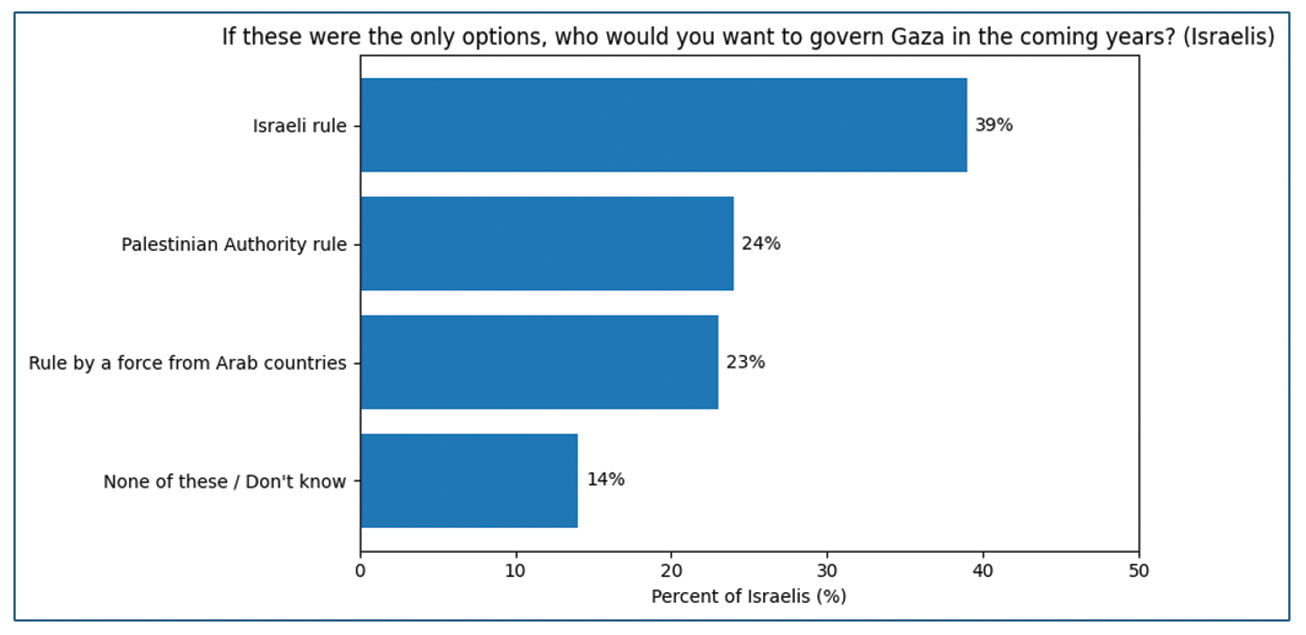
The fourth point is the most inconvenient from Israel’s standpoint: the new and troubling plan is, at least partially, its own fault. Starting in early 2024, when IDF forces were just entering Gaza and beginning the lost process of uprooting Hamas, Israeli military planners and diplomats pressured the PM to begin planning for the day after. Time and again they pleaded with him, time and again he refused to do such thing, for a mixture of tactical reasons (such as wanting to wait for President Trump) and political reasons (such as not wanting to upset his right-wing partners). Some of his partners, hearing Trump talking about relocation of Gazans, began to imagine a utopian future of an Israeli return to the settlements in the Gaza strip. In fact, they still do. Finance Minister Smotrich warned the PM on Monday that its “either full Israeli control [over Gaza], the destruction of Hamas, encouraging the voluntary emigration of the enemy, and permanent Israeli settlement – or, God forbid, letting the heavy price of this war go to waste.” Close to 40% of Israel still think that under the current circumstances, Israeli control over Gaza might be the only viable option for Israel to have security.
But Israel never had a plan. It had wishes, it had dreams, it had illusions, it had hopes. A viable plan – for complete occupation, for complete withdrawal, for whatever, was never presented by Israel’s leaders. The vacuum was an invitation for U.S. involvement. The vacuum was an invitation for Qatari and Turkish meddling.
Qatar and Turkey aren’t a part of a solution for Gaza. They are part of the problem – they support Hamas. If you’re an Israeli living on the Gaza border, the news of their participation in a process of disarmament would make you queasy. If you’re a military commander on the Gaza border the news of their participation in a process of disarmament would make you cock the gun.
The U.S. invited them in because these are the countries who can extract a grain of compromise from Hamas leaders, and because of other regional interests unrelated to the Gaza rebuild. If Israel doesn’t want them as part of the process it must present an alternative, and right now all it has is a bag of tricks filled with ideas of postponement (Netanyahu) or of apocalypse (Smotrich).
Something I wrote in Hebrew
When head of Shin Bet, David Zini, declared that he will not be shaking the hands of new female officers because of religious restrictions, I wrote this:
It is easy to be France, a country where young women are forbidden from coming to school with a headscarf, and where Zini would not be allowed to wear a kippah if he headed the security services. It is easy to be Iran, a country where wearing a head covering is mandatory, and where one cannot be appointed head of an organization without strictly observing the religious rules. It is hard to be Israel: this is a country that has not exactly decided what it wants to be yet, and therefore an incessant squabble takes place over things like a handshake.
A week’s numbers
If Israelis were getting what they want… (JPPI survey)
A reader’s response
Aron Komin writes: “Admit it: Trump blew it on Iran.” My response: Yes. “Help is on the way” was premature. But did he have a feasible option to help without complication? It’s not clear that he did.
Shmuel Rosner is senior political editor. For more analysis of Israeli and international politics, visit Rosner’s Domain at jewishjournal.com/rosnersdomain.