

CHERRY HILL, New Jersey — More than 50 years ago, ”Chicken Little” saw all this coming.
That’s how Lindy Snider said people responded when her father, Ed, would predict dire things happening to Jews throughout the world. That’s because the man who ran the Philadelphia Flyers from their inception in the late 1960s until his death in 2016 was passionate about many things besides his team.
Chief among them for Ed Snider, chairman of the company that owned the Flyers, was the oppression Jews faced in other countries, particularly Russia, where they were prevented from leaving. To bring attention to their plight, he joined forces with local groups to aid these refuseniks.
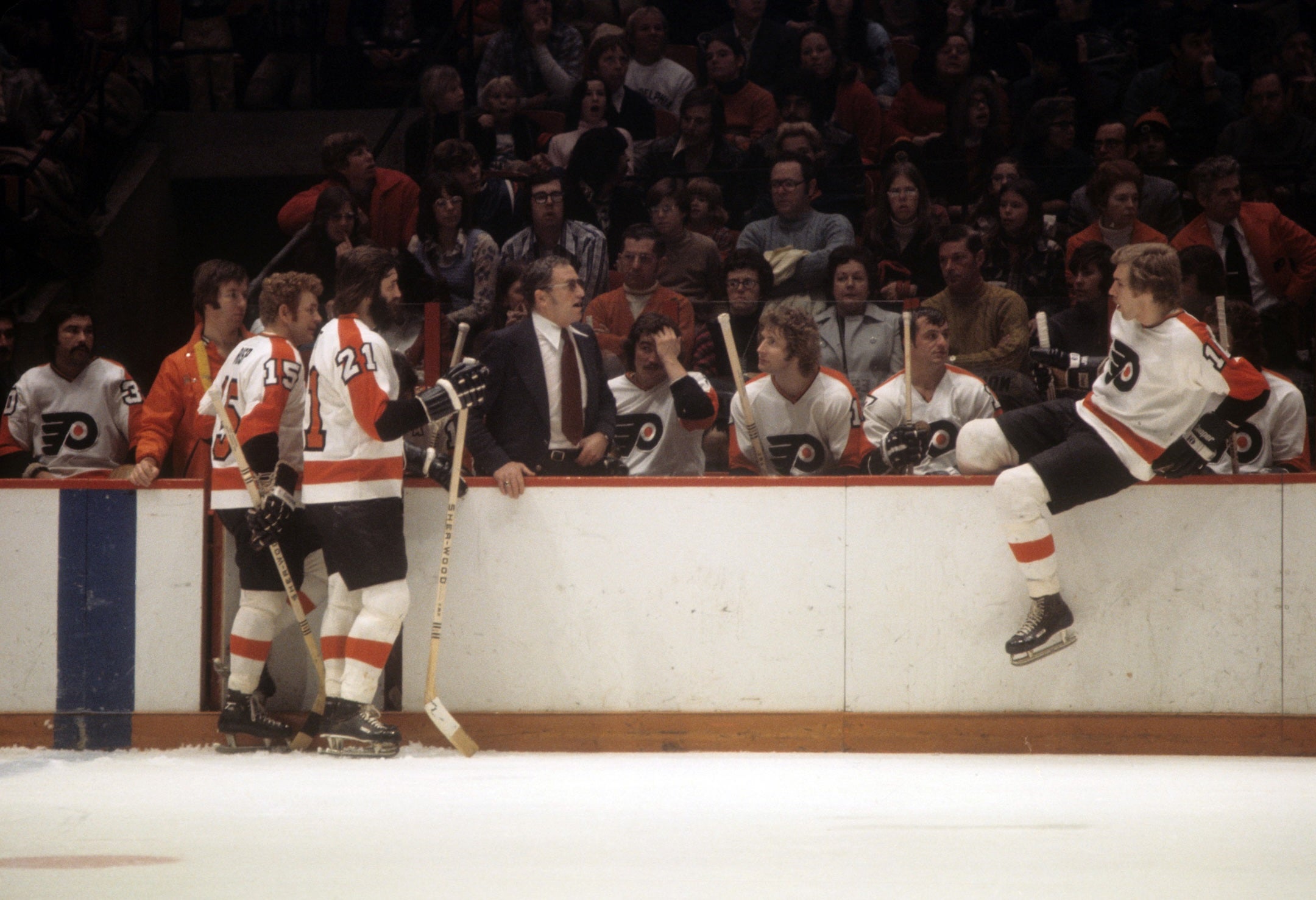
Never was that more evident than Jan. 11, 1976, when his Flyers, the reigning Stanley Cup champions, took on the Soviet Red Army at the Spectrum, the culmination of an exhibition series the two Russian teams (along with the Soviet Wings) had dominated.
That’s the backdrop for “Cold War in Philly,” a documentary about that game and the chain of events behind it. Released in May, it was presented last week at the Betty and Milton Katz JCC in Cherry Hill, New Jersey, where the building’s parking lot is adorned from end to end with Israeli flags. It’s a story that has resonated with the Snider family over the years. It’s a story that many walking through the JCC’s doors probably knew little about.
“That episode meant a great deal to him,” Lindy Snider said about this hockey game, which brought the plight of Soviet Jewry to light. “It stayed very fresh in his mind the rest of his life and sort of gave him a shot of adrenaline.”
“It underscored his feelings and it raised awareness,” she added.
“He was very, very early in recognizing what was coming and supporting organizations that were sounding alarm bells.”
Those who’ve seen the documentary since its release probably knew the basics. The Flyers dominated the game from the start, winning 4-1 to save some face for a league that otherwise detested the team known as the Broad Street Bullies for their aggressive and physical play. They also may have known that after Flyers defenseman Ed Van Impe delivered a hard check on Soviet star Valeri Kharlamov, the Russians pulled their team off the ice. They returned only after Snider warned them they would not be paid unless they came back.
But only some of them may have been aware how Ed Snider, working in conjunction with some of those outside agencies his daughter referenced, allowed them to post signs throughout the arena drawing attention to the plight of Soviet Jews.
As they headed onto the ice for pregame warmups, some of the players couldn’t help but notice.
“We were absolutely aware of it,” said Jimmy Watson, one of five Flyers from that game who atttended the event. “We were also aware of the politics. We saw the banners when we came out for warmups.”
Larry Goodenough, who scored the Flyers’ final goal in that game, also noticed the signs around the building. “We didn’t really understand it at the time,” he said. “It was more looking at the signs than asking. But we weren’t the brightest guys in the world,” he added. “Just a bunch of blue-collar guys in a blue-collar town.”
Not all of his teammates were as aware. “That wasn’t in our paygrade,” said rugged forward Bob “The Hound” Kelly. “We all had a job to do. I didn’t see anything up there.”
But the signs were gone at the Russians’ insistence by the time the game got underway. Reportedly they said they wouldn’t play until the signs were removed.
That didn’t surprise one player who could relate to what was going on then — and now. “I tell you who hated them more than him [Snider] was me,” said center Orest Kindrachuk. “This was during the Cold War and I’m 100 percent Ukrainian. So we hated them.”
In Snider’s case his actions were triggered by the antisemitism he encountered growing up, according to the documentary. It shaped the rest of his life as depicted by director Joe Amodei.
The director explicitly points out how the Spectrum was decorated with signs before the game, but neglects to mention they were removed before the opening faceoff. He still defends that decision, saying he preferred to focus on the game, leaving out an important piece of information not known to many watching the documentary.
Regardless, that day has had a lasting effect on the Snider family, which remains heavily invested in causes like those on behalf of the refuseniks of that time.
“I knew my dad was happy about it because it raised awareness in the stadium,” said Lindy Snider, who indicated her father taught his children well about this kind of inhumanity and what they could do to combat it.
“People put up signs and they had to take the signs down, but he supported what the signs said. I don’t think he was surprised by the reaction, but I don’t think the controversy bothered him,” she said. “He never shied away from controversy.”
If he were alive today, she says Ed Snider would still be stirring things up. “A lot of his peers might have thought he was like Chicken Little,” she said, referring to his “sky is falling” fears for the future. “But it’s amazing because he knew what was coming.”
There were occasional signs of antisemitism, she said. “But nothing that pointed to the antisemitism we’re experiencing now,” she added. “I think the grade of antisemitism since Oct. 7 would’ve shaken him to his core and would’ve made him very angry,” she said, referring to the deadly 2023 Hamas raids in Israel that launched the current war. “He would’ve taken action. For us as stewards of his legacy we’re doing that.
“The whole family is aligned to this. We don’t want to think about it. We want to do something. That’s what he imparted [to] us,” she said.
As they’ve sadly learned, more than 50 years after that game, life for far too many Jews throughout the world remains as chilly as ever.
A Season of Big Decisions. From the Knesset campaign to American midterms, Jewish communities are weighing what comes next. Help JR keep delivering the deeper context.


