

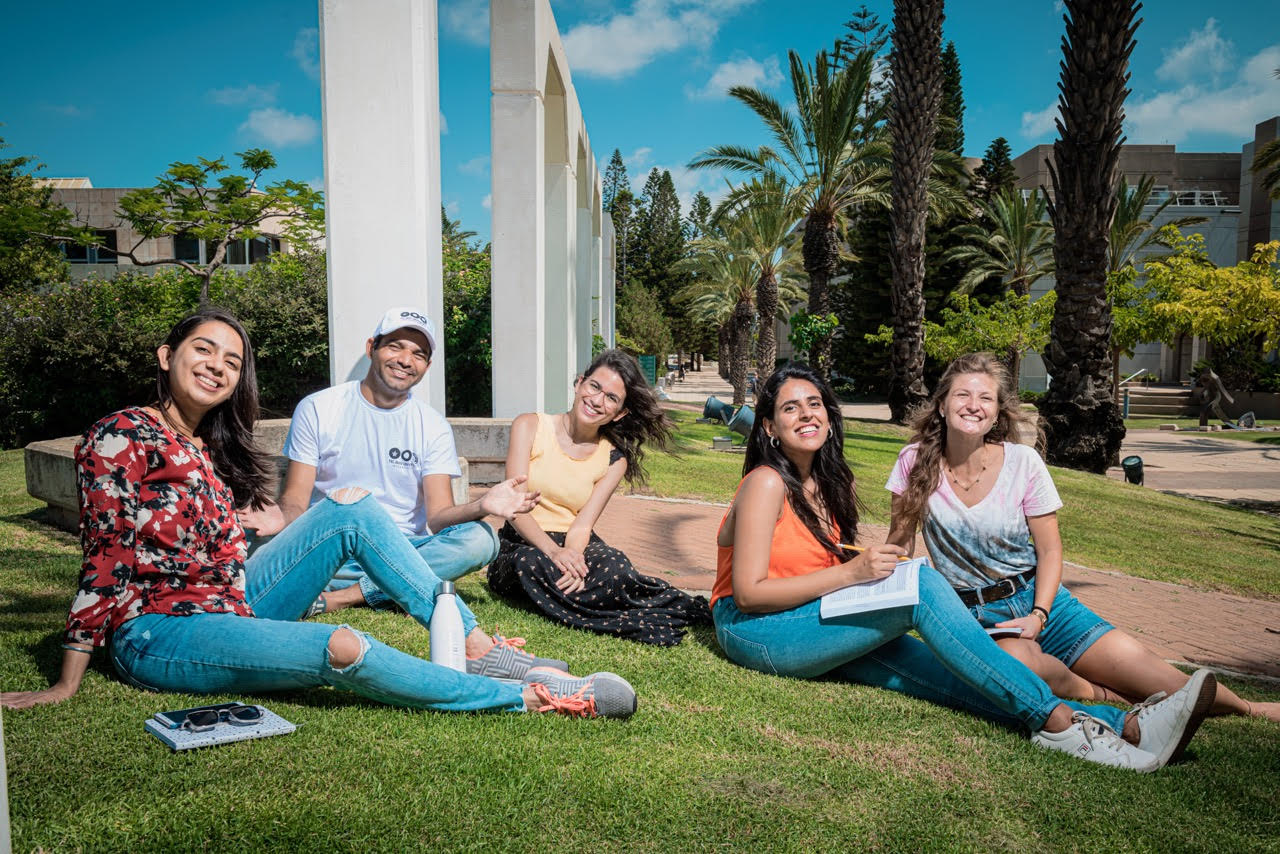
With American Jews experiencing rising antisemitism, particularly on college campuses, a growing number of Jewish high school students are considering options in Israel for their college education.
“In Israel, being Jewish isn’t something you manage,” said Ariel Fromowitz, a New Jersey native who moved to Israel after high school and is now studying engineering at Ben-Gurion University of the Negev in Beersheva. “It’s just who you are. No one notices it, and no one targets you for it.”
Against this backdrop, the Tzemach David Foundation has launched a new initiative, The Future is Calling, aimed at helping American students understand their options for college in Israel. The Future Is Calling seeks to provide American high school students, parents and guidance counselors with a clear framework for understanding Israeli higher education — all early on in the college applications process.
“A lot of students come to Israel for gap-year programs, learn about life here and find it really attractive,” said David Magerman, founder and president of the Tzemach David Foundation. “But by that point, they’ve already committed themselves to a college in America. They’re locked in.”
TheFutureisCalling.org offers resources explaining how Israeli universities work, how applications differ from the U.S. system and what campus life is like in Israel.
“We’re trying to make people aware of what exists and to give them real choices,” Magerman said.
Tamar Krieger Kalev, executive director of the foundation, said the project is responding to a real need.
“What we saw very quickly was that there was a real interest in students wanting to go to college in Israel, but there were huge informational gaps, practical gaps and emotional gaps,” she said. “People didn’t understand how the system works, what campus life looks like or how their kids would actually integrate.”
New programs and support systems are helping enhance campus life at Israeli universities for both foreign and Israeli students. (Courtesy of Ben-Gurion University)
In addition to offering resources for prospective students, the Tzemach David Foundation works more broadly with Israeli universities, gap-year programs, guidance counselors, and organizations that provide community and support on campus. The foundation’s goal is to transform education in Israel, with an initial focus on integrating new immigrants into Israel’s education system.
Given the anti-Israel climate on many U.S. college campuses, many American Jews considering education options in Israel are looking for normalcy.
“Parents want to know that their children can actualize their potential, be successful and be themselves without even thinking about it,” said Krieger Kalev.
Going to college in Israel is a very different experience than in America in myriad ways. Rather than applying to the university as a whole, for example, students must gain admission to a particular academic program. Admission is based almost solely on grades, rather than the more holistic approach of U.S. universities.
Campus life is also very different. Most Israelis start college later in life, after years of army service and sometimes travel. More than a few are already married and have children. They’re more focused on obtaining a degree than on experiencing campus life. Campus culture mirrors that seriousness.
“People here are older, more focused and more serious about why they’re here,” said Fromowitz, who began his own college journey in Israel after a stint in the army.
Of course, in contrast to North America, students in Israel have no concerns about antisemitism or anti-Zionism on campus.
“At Columbia, everything about being Jewish felt exposed,” said Yisrael De Dekér Cohen, who spent a year as an undergraduate at Columbia University in 2023-’24 before transferring to Tel Aviv University.
While at Columbia, he said, he was subject to constant antisemitic harassment, including in the classroom. The situation ultimately became untenable for him. Now Cohen is completing a degree in political science and Middle Eastern studies at Tel Aviv.
“Studying in Israel means I don’t have to think about being Jewish all the time. I can focus on school and on my life, instead of on whether I’m safe,” Cohen said. “That difference changes everything. I don’t have to explain myself. I can walk to class, wear a kippah, speak Hebrew and just live. It feels normal. It feels like home.”

Graduates celebrate at a commencement ceremony at Ben-Gurion University of the Negev, which is fielding a growing number of inquiries from Americans interested in enrolling for college at the university in Beersheva, Israel. (Courtesy of BGU)
Magerman stressed that his foundation doesn’t want to make people afraid of antisemitism or worried about life in America. Rather, he said, “The mission is to shine a light on what’s great about Israel and let people make an intelligent choice.”
The Tzemach David Foundation supports programs that enable students to begin coursework in English while completing intensive Hebrew study before they transition into Hebrew-language programs alongside Israeli peers.
The foundation also supports campus life — a critical component for students from the United States — including by funding expansion of the Orthodox Union’s Jewish Learning Initiative on Campus programs to Israeli campuses. Known by the acronym JLIC, the centers run programming for students, including Shabbat and social programs.
“Once JLIC opened here, it changed everything,” Fromowitz said about his experience in Beersheva. “There was a place for Shabbat, for people to meet, for life outside of class.
“I feel like I’m where I’m supposed to be,” Fromowitz added. “I’m challenged academically, I have community, and I feel part of something larger.”
The Future is Calling also works with American Jewish day schools and guidance counselors, encouraging students to delay early decision commitments and consider applying to Israeli universities during their gap year in Israel.
“So much of American culture is about dressing up your résumé to get into the best university,” Krieger Kalev said. “What we’re saying is to think first about where you actually want to live and learn.”
Magerman sees the initiative as part of a broader historical shift.
“The future of Jewish life is in Israel,” he said. “That’s not a slogan for me. That’s a reality, and education is one of the clearest paths to get there.”