

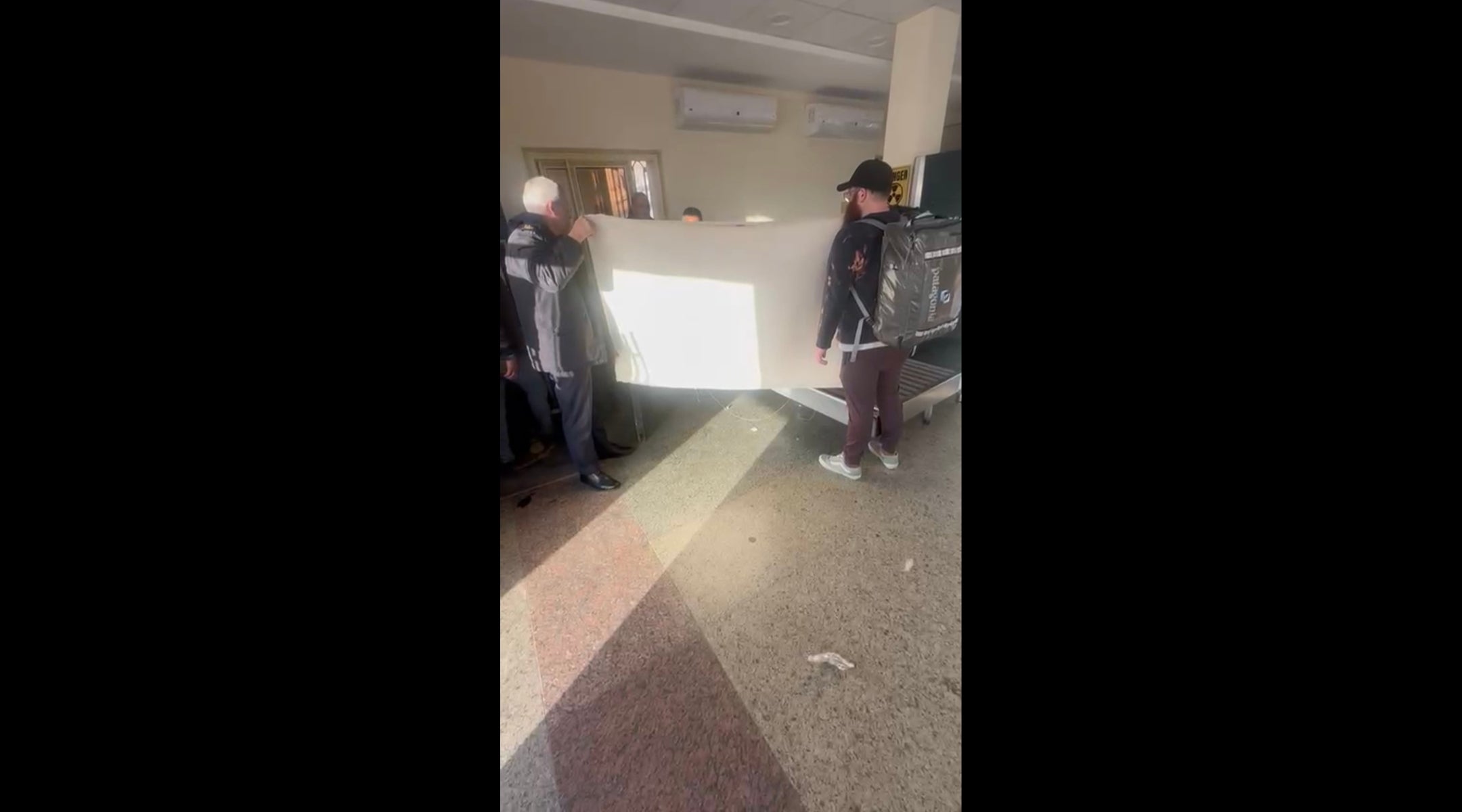
Zalmy Mochkin, a 36-year-old chef and artist in Israel, had lined up what seemed like a perfect Passover gig for this year: He would cook for an American family of 21 who were planning to spend the holiday in the northern city of Tzfat.
But then Israel and the United States attacked Iran on Feb. 28, and Hezbollah entered the war two days later, putting Tzfat in the line of fire. If Mochkin wanted to keep the gig, he’d need to get to the United States.
The war had largely grounded flights, with most carriers halting service to Israel altogether and El Al experiencing severe restrictions that limited departures in frequency and volume. Iranian missiles scrambled even the flights that stayed on the schedule.
So earlier this month, Mochkin boarded a bus to the southern city of Eilat, then hopped on a three-hour van ride to Sharm el Sheikh International Airport. For him, and countless others, the road to marking the Israelites’ escape from Egypt millennia ago would run through Egypt today.
Exterior view of the Sharm el Sheikh Airport in Egypt. (Courtesy Zalmy Mochkin)
Mochkin said every person he has told his story to has cracked jokes about him participating in a sort of reverse Exodus story. But he doesn’t see it that way.
“My choice of thought with this whole thing was like, ‘This is me traveling. This is not me going to Egypt,’” he said.
He may be in the minority. On social media and in conversation, Israelis and Jews around the world have been observing the irony of achieving freedom on Passover by heading to Egypt.
A parody of multiple Passover seder songs by the Israeli Tziporela Theatre Company starts with a simple tweak: Instead of praising God for bringing the Jews “out from Egypt,” the group sings about being brought out “through Egypt” — then connecting through Greece before heading on to Phuket, Thailand.
In the days leading up to the holiday, lines of travelers at the Taba crossing stretched far back into Israel, especially as an alternate escape route through Jordan faced cancellations.
This is a preferred route that the State Department advises, although it is not currently arranging ground transportation through Taba.
Some joked on various social media sites about how the lines are “40 years long,” in reference to the ancient Israelites’ 40-year wait in the desert after the Exodus from Egypt.
“To get into the Passover mood we made another Exodus out of Egypt (no smiling in Egypt pics),” Pleasanton, California, rabbi Raleigh Resnick posted on Facebook, accompanied by a photograph of his family. “It was a long trek (37 hours door to door!), but we’re, thank G-d, safely home & looking forward to spending a joyous Passover all together with our family & community.”
Cindy Seni, a social media consultant who appeared on the Netflix reality show “Jewish Matchmaking” in 2023, made a similar observation — even as she was one of the relative few to make the trip in the same direction that the ancient Israelites took.
“This year I physically left Egypt, wondered [sic] the Sinai to arrive to Israel, only to head to Jerusalem after,” Seni shared on Facebook. “Name a more biblical journey. I’ll wait. Come with me on my modern exodus.”
The dramatic shakeup in Israel’s travel situation has prompted more than jokes. Some have grappled with what it means that a core story of Jewish history has been inverted this year.
“The symbolism is almost too sharp to ignore. The place that once represented our oppression is now a transit point. The route of redemption is being retraced in reverse because of war,” wrote Ariel Leah Gold, an immigrant to Israel from Oakland California, who posts under the handle This Israel Life.
“Jewish history is never simple. We left Egypt to become a people, wandered, returned, were exiled, and came home again,” she added. “Today we have a state, an army, and sovereignty, and yet we are still living through sirens and uncertainty. On the eve of the holiday that celebrates freedom, the irony is heavy.”
And in WhatsApp groups created for people leaving Israel, hundreds of people have shared their experiences with exiting the country and offered tips about shared vans, cash fees, and which eSim cards work across the border. Facebook groups normally reserved for discussing kosher food, meanwhile, have also veered off-topic to asking for and offer advice for navigating the journey.
While a widely circulated public letter issued last month warned that the crossing could be harrowing for women, and some travelers have reported being shaken down for unexpected fees, most who have undertaken the unusual journey say it has worked out well, if only after a grueling travel day.
In total, Mochkin spent 12 hours in transit in Egypt before flying on to Turkey and New York before reaching his final destination in California.
He said he was asked to open his art portfolio to show that he was not carrying “Israeli propaganda.” (One of his paintings depicts the late Chabad Rabbi Menachem Mendel Schneerson.) He also said that while he and his group were required to wait outside the Sharm al-Sheikh airport before their flight, he saw a middle-aged Jewish man who did not speak English being harassed by a group of Egyptians.
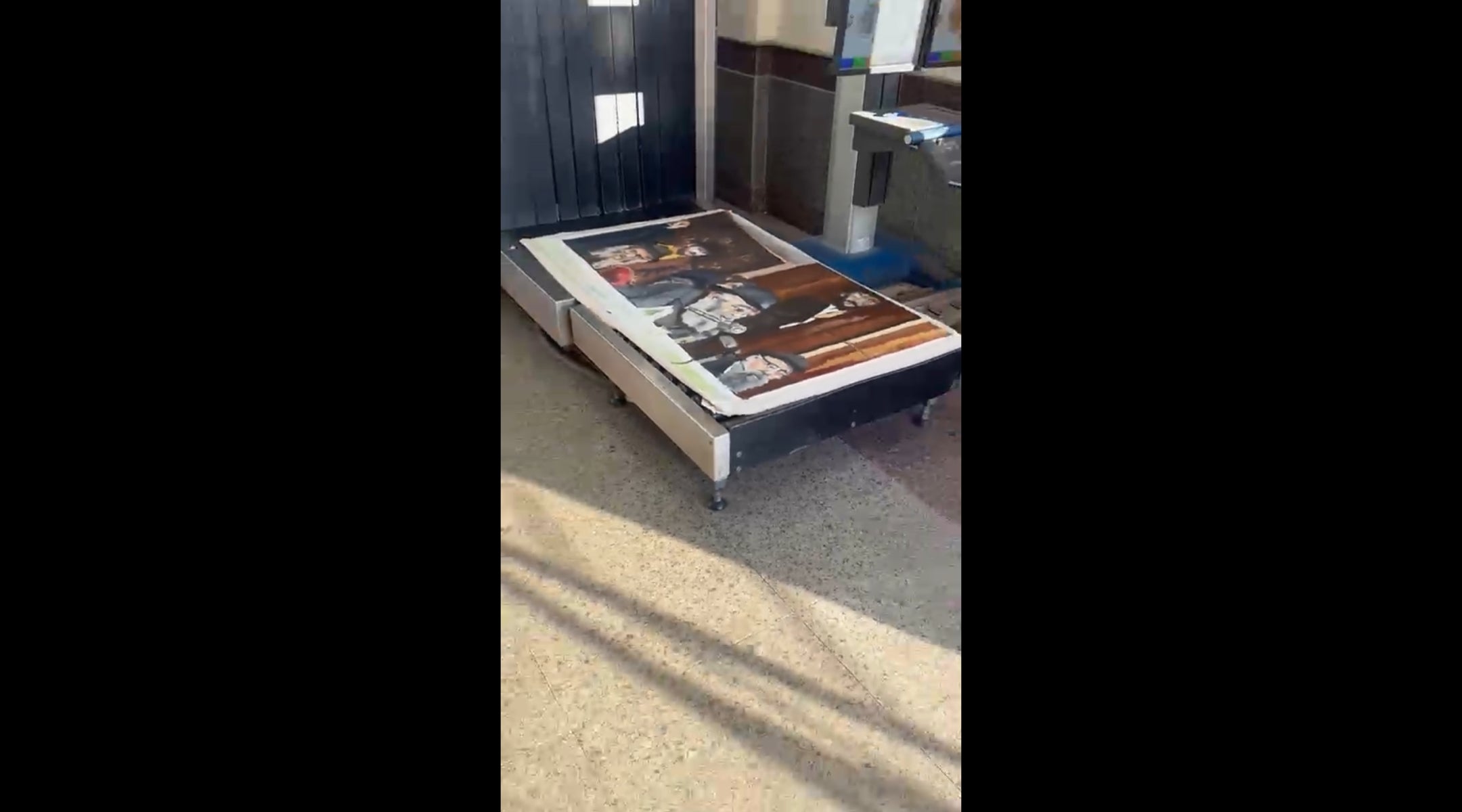
At the border, Mochkin was instructed to place his artwork in an X-ray machine. (Courtesy Zalmy Mochkin)
He said he was never scared but did feel overwhelmed — so much so that when he landed in Turkey, he forgot his paintings on the plane. Fortunately, he was able to retrieve them before catching his connecting flight.
“It felt like a pretty serious journey, without a dull moment at any point,” Mochkin said.
Reporting the stories that define our era. When history unfolds in real-time, the Jewish world turns to JR. Your support ensures we can document the complexities of war and the resilience of Jewish communities with integrity.