

BUDAPEST, Hungary — As Hungarians go to the polls in their most consequential parliamentary elections since the fall of communism 35 years ago, Ferenc Olti is torn.
Like most of the estimated 100,000 Jews who live in this Central European country, the 77-year-old Olti is a diehard liberal who despises the authoritarianism of Prime Minister Viktor Orbán, Hungary’s increasingly autocratic ruler for the last 16 years.
“It’s a catastrophe what Orbán is doing. He has destroyed democracy,” said Olti, a former vice-president of the Hungarian Jewish Association who lives in the lake resort of Balatonfüred. “Can you imagine that for a thousand years we dreamed of belonging to the Western world, and now that we’re a member of NATO and the European Union, along comes this man who says our best friends are Russia — and that our enemies are Brussels and Volodymyr Zelensky?”
On the other hand, he said, “Orbán did two things right: He didn’t let Muslim immigrants into Hungary, and he strongly supports Israel. As a Zionist, this is my hesitation.”
Such is the inner tension of the Hungarian Jewish electorate on the eve of Sunday’s election, which pits Orbán, 62, of the ruling Fidesz party against a younger former ally, Péter Magyar, 45, of the upstart Tisza party, who has promised to restore some of the democratic safeguards that Orbán has eroded.
This week, U.S. Vice President JD Vance made a quick stopover in Hungary in a bid to boost Orbán’s chances of winning Sunday’s election, which are widely seen as unfair and rigged against the opposition.
Even so, this illiberal, far-right icon faces his first real chance of defeat since coming to power in 2010. The latest polls give his ruling Fidesz party only 39% of the vote, compared to around 50% for Magyar. (There are also other candidates in the race.)
Orbán now ranks as the EU’s longest-serving leader, fancying himself a defender of Christian family values and a bulwark against LGBTQ+ rights and diversity — following a similar path that his ally, President Donald Trump, has taken in the United States. Orbán, an admirer of Vladimir Putin, has consistently blocked EU aid to Ukraine as well as sanctions against Russia.
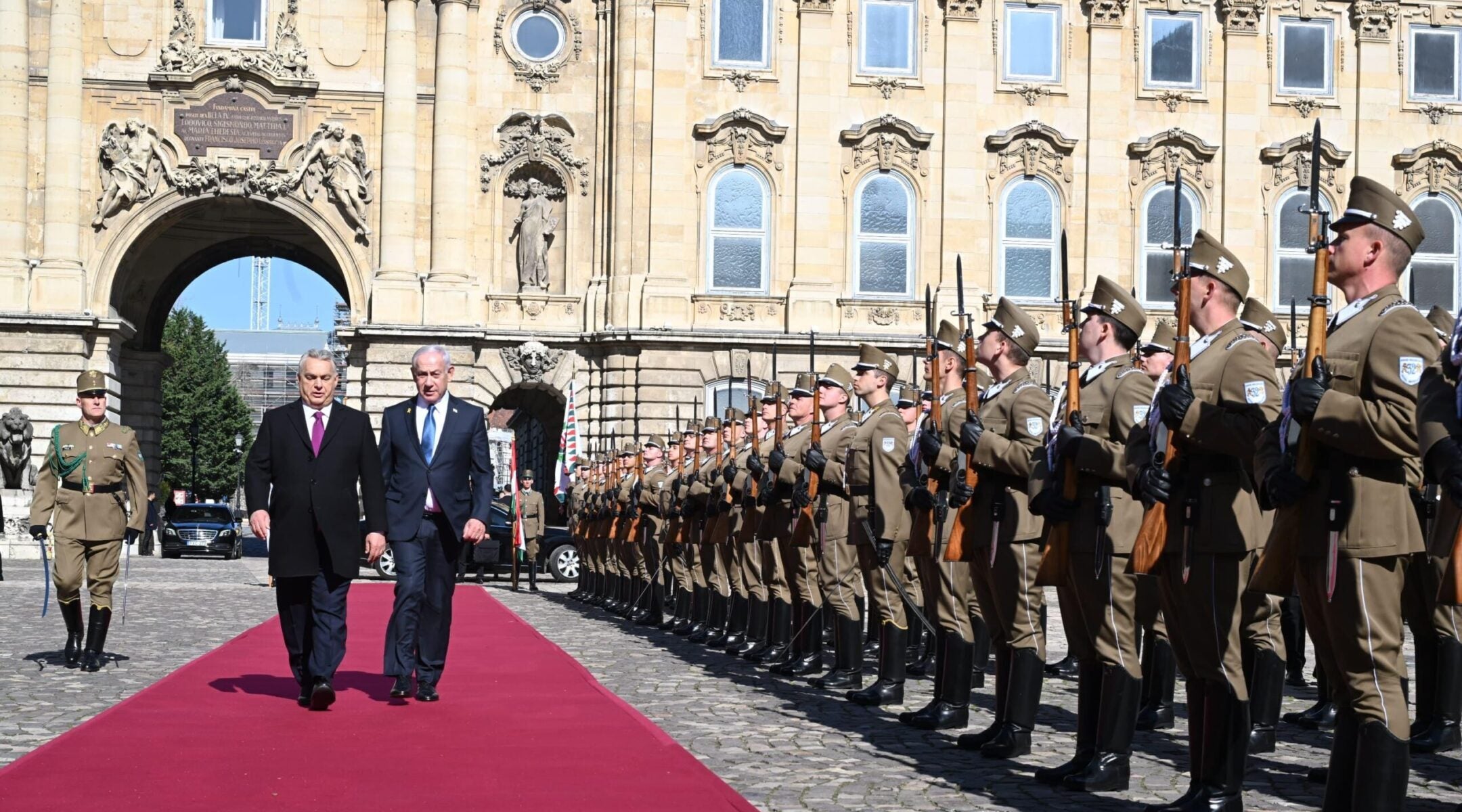
Orbán is also an ally of Israeli Prime Minister Benjamin Netanyahu, hosting him in Budapest last year after the International Criminal Court issued a warrant for Netanyahu’s arrest. The Hungarian leader refused to have his Israeli counterpart arrested, and subsequently began the legal process of withdrawing from the ICC — a move that triggered outrage from the EU.
Hungary’s Viktor Orban, left, and Israeli Prime Minister Benjamin Netanyahu walk together in Budapest, April 3, 2025. (GPO)
Hungarian Jews’ attitudes about Israel are complicated. An internal community survey found that here in Budapest — birthplace of Theodor Herzl, the father of modern Zionism — only about 20% of Jews unconditionally support Israel as a Jewish state, according to Olti. Last year, hundreds of Hungarian Jews, including artists, academics, and the country’s first female rabbi, signed an open letter condemning the Israeli government over the war in Gaza.
Yet many Hungarian Jews are appreciative that Orbán has not turned on Israel as other world leaders have in recent years, and that his policies — even as they are widely seen as illiberal and intolerant — have insulated Hungary from the anti-Israel protests that have made Jews feel insecure in many other European capitals.
“The Jews are not a homogenous crowd, and when I talk with members of my congregation about the elections, there are so many opinions,” said Rabbi Robert Frölich of Budapest’s Dohany Street Synagogue in an interview in his office. “A year ago, most Jews agreed that this government has to go. Now, I wouldn’t dare say so.”
Multiple late-breaking developments could influence the Jewish vote. A pro-Orban billboard campaign portraying Zelensky as a shadowy figure behind Magyar is igniting allegations of antisemitism. Critics of the billboards say they follow the same playbook that Orban used a decade ago when he portrayed the Hungarian-born Jewish liberal mega-donor George Soros as pulling the strings of his opponent. At the time, the Israeli government — led then as now by Netanyahu — challenged the ads and called them antisemitic.
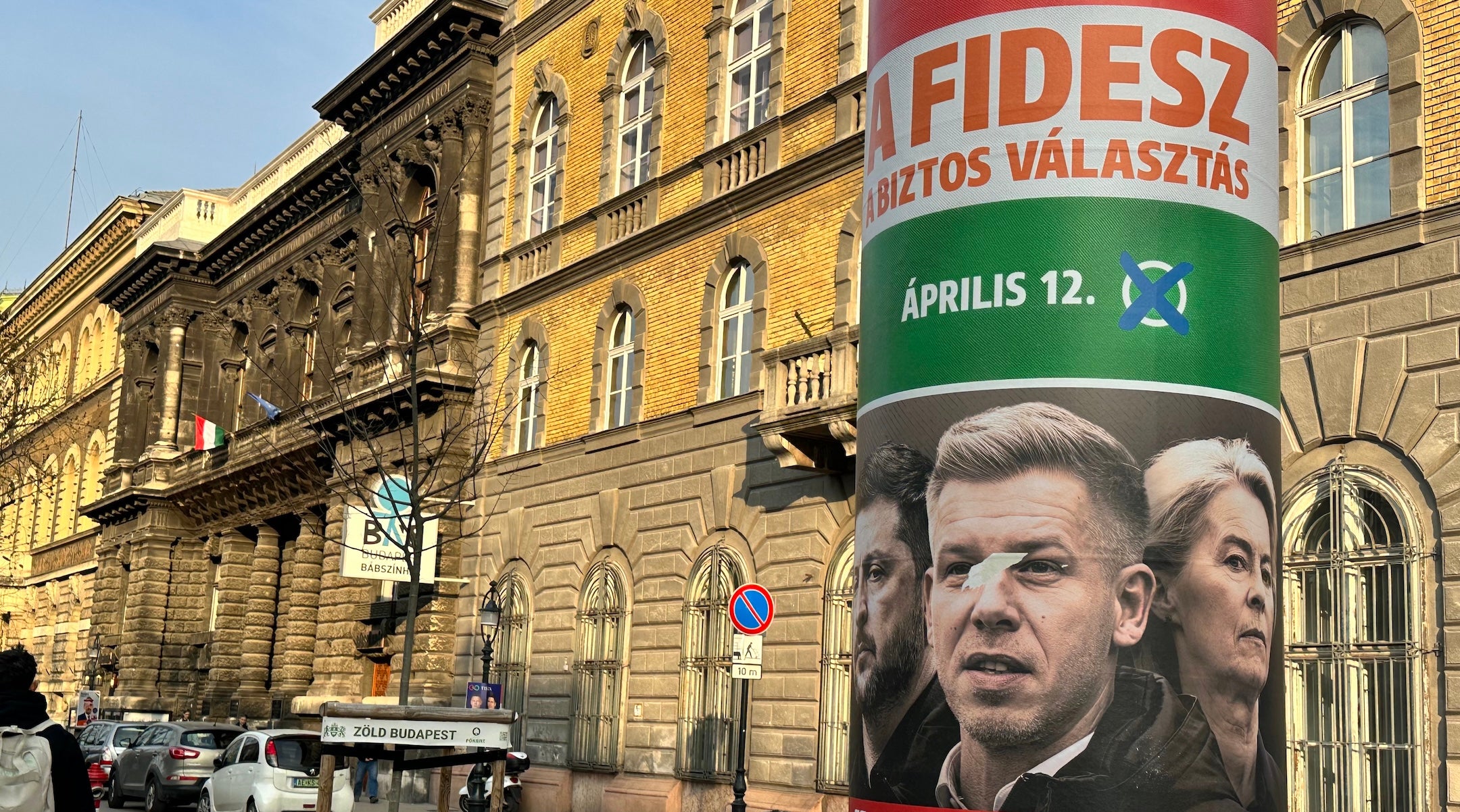
A Budapest street poster invokes Ukraine’s Volodymyr Zelensky to urge Hungarian voters to support Fidesz, the ruling party of Prime Minister Viktor Órban, ahead of the April 12, 2026, election. (Larry Luxner)
Even more shocking has been revelations that surfaced during Vance’s visit showing that Orban’s foreign minister, Peter Szijjartot, offered to help Iran — a key sponsor of Hezbollah — following Israel’s September 2024 operation in Lebanon that caused thousands of pagers to explode simultaneously.
For Orban’s Jewish critics, the revelations offer confirmation that his pro-Israel stance is cynical.
“Orbán is the worst thing that ever happened to Hungary, and I’ll be happy to see him go,” said a Jewish businessman who asked not to be named for fear of repercussions from within his own Orthodox community. “I understand why it’s good for Jews that there are no Muslims here in Hungary, but we’re just a tool, so Orbán can say he loves us but hates everyone else.”
But Magyar isn’t a clear draw, either. Frölich — whose synagogue is the largest in Europe and the second-largest in the world — plans to vote for the Democratic Coalition, a leftist party known by the acronym DK that is not expected to rack up many votes.
“In my opinion, Tisza is the dark horse,” he said. “I don’t hear anything from them about Jews, about Israel, about immigration, education or healthcare, or what they will do when they come to power.”
Then there are those who are ardent Orban supporters. Tamir Wertzberger, 38, is the grandson of Holocaust survivors, vice-chairman of the London-based European Young Conservatives and international coordinator for Netanyahu’s party, Likud. He’s optimistic about the outcome of the election.
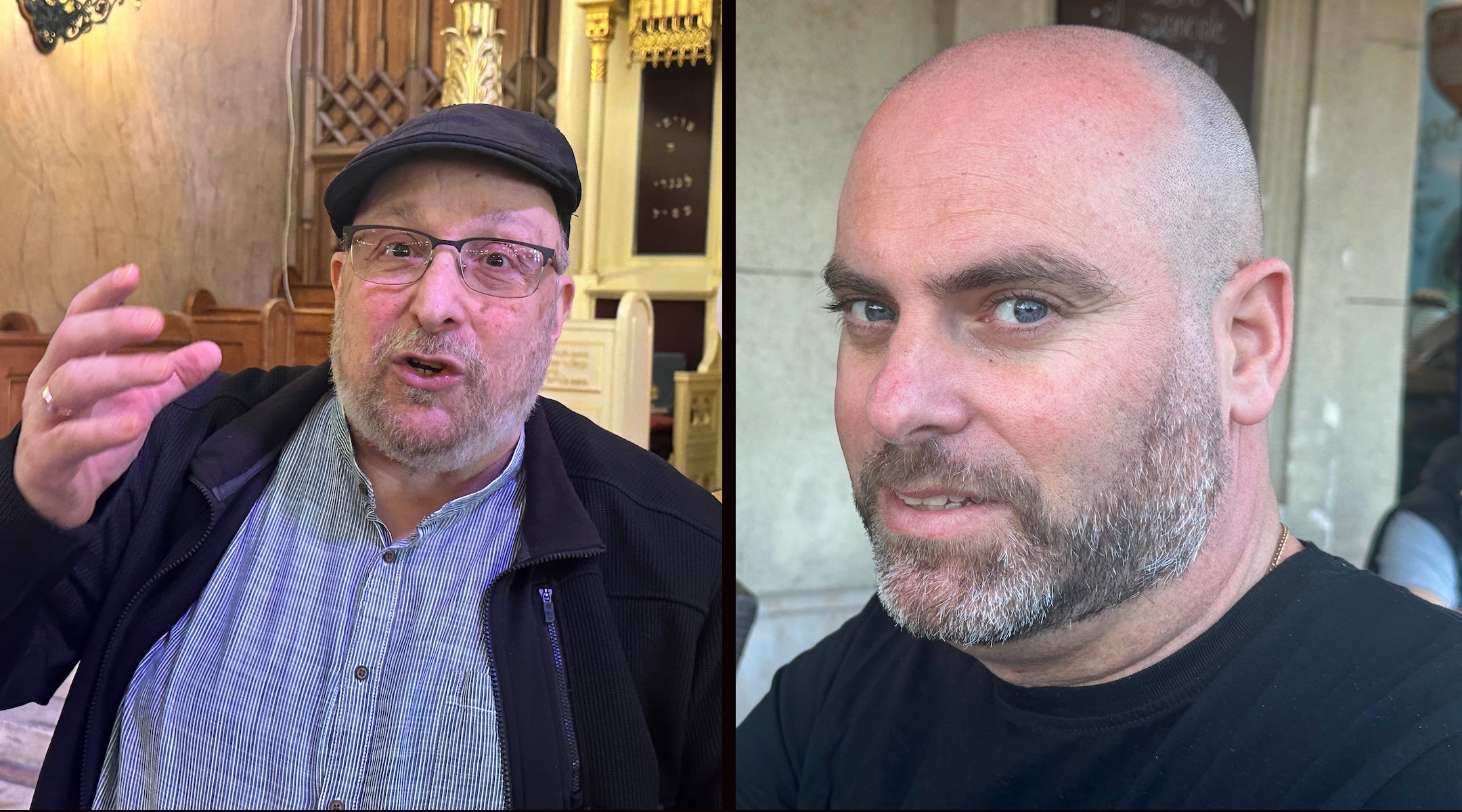
Rabbi Robert Frolich, left, and Tamir Wertzberger favor different candidates in Hungary’s 2026 election. (Larry Luxner)
“I’m not sure he will lose. In my opinion, he’ll win,” Wertzberger said about Orban over coffee at a bistro fronting the Danube River. “I know the system, and I know how polls operate. It’s similar to what’s going on in Israel. You can’t really trust polls today.”
Last month, Wertzberger published a Hebrew-language book titled “The Gatekeeper of Europe: Viktor Orban and the Hungarian Independence War.” He acknowledges that Hungary’s economic situation is dismal — partially because the country is being fined 1 million euros daily for not having accepted the EU’s immigration package, which would require accepting refugees from Muslim countries.
But he said that in his view, there’s “almost zero” antisemitism in Hungary, and the few incidents that take place mostly involve tourists or Arab university students — and he attributes that dynamic to the prime minister’s policies.
“There’s a lot of sense behind what Orbán is saying and doing,” said the Israeli.
The idea that Hungary is the safest place in Europe for Jews is one that Orban himself has espoused repeatedly — and that Israel’s right-wing Diaspora minister, Amichai Chikli, has echoed.
Many local Jews say they believe it. Kalman Szalai keeps tabs on antisemitism as the director of the Jewish community’s Action and Protection Foundation.
According to his organization’s surveys, more than 30% of Hungarians believe in anti-Jewish conspiracy theories, even though reported incidents are rare. In France, he said, the number is only 7%, and in Sweden just 2.5% — but Jews feel far more threatened in those two countries.
“In the last 15 years, there’s been a huge Jewish renaissance thanks to the security and enormous government financial support,” Szalai said. “Many synagogues have been renewed and reopened.”
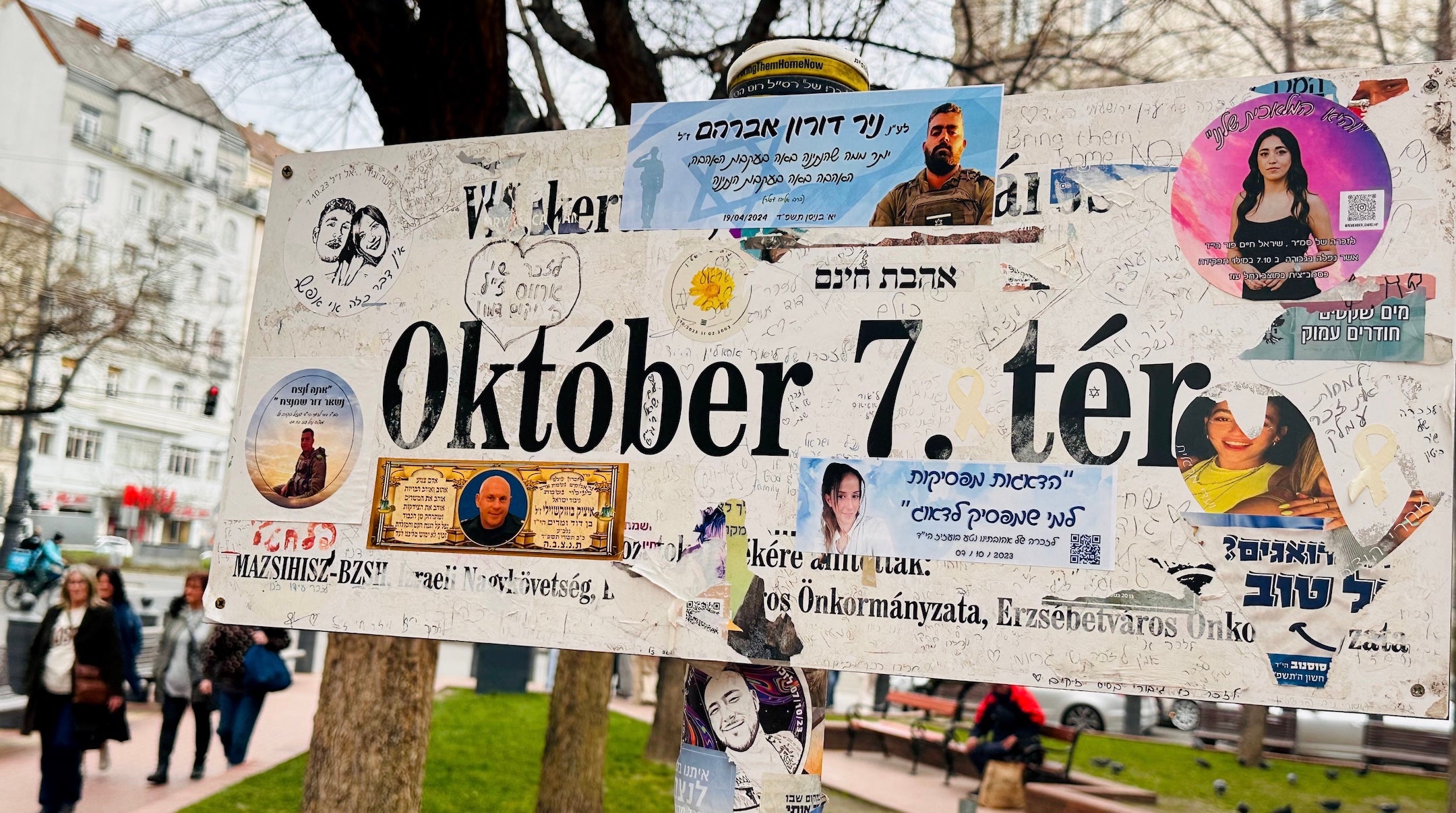
October 7 Square, dedicated to Israeli massacre victims, is located in front of the Dohany Street Synagogue in Budapest. (Larry Luxner)
The local Jewish revival is hard-fought. Up until early 1944, Hungary was still considered a safe haven for Jews, who went about their lives without having to wear the yellow star forced upon Jews in other Nazi-controlled territories. But in March of that year, the Nazis installed a puppet regime and, in the space of 52 days, sent 450,000 Jews to their deaths in Auschwitz.
Even so, the relatively large numbers of Hungarian Jews who survived the Holocaust and stayed in their country constitute one of Europe’s biggest communities; today, only France, Britain, Russia, Germany and Ukraine have more Jews.
Shlomo Köves is executive rabbi of EMIH, the umbrella organization for Hungary’s dozen or so Chabad-Lubavitch synagogues. He noted that Hungary is unique in that its Jews didn’t come from somewhere else — unlike France, where Sephardic Jews from North Africa dominate the community; Britain, which is mostly Eastern European Ashkenazi Jews; and Germany, where most Jews are from ex-Soviet republics.
Köves counts in the dynamic: While the Chabad movement routinely sends emissaries to countries that are new to them, Koves grew up in Hungary. Born to a secular family, he became observant on his own and got a PhD in Hungarian history before becoming the country’s first Orthodox rabbi to be ordained since the Holocaust.

Rabbi Slomo Koves, head of EMIH, stands inside the Star of David-shaped elevated corridor at the House of Fates Holocaust museum, housed in a former railway station that deported Jews to concentration camps, seen in Budapest, Aug. 27, 2021. (Cnaan Liphshiz)
His views on the election emerge from both that vantage point, and from his encounters with the Hungarian Jews who engage with Chabad.
“The left has always rightfully blamed the right for being antisemitic,” Köves said. “Orbán became this satanic figure, and many Jews who were more leftist than Jewish have also intentionally played this card.”
Yet he said priorities seem to have shifted since the Oct. 7, 2023, Hamas attack on Israel, when antisemitism and anti-Israel sentiment exploded across Europe, and Orbán declared he would not allow pro-Palestinian demonstrations anywhere in Hungary.
“Before Oct. 7, if you would ask me what percentage of Jews support Orbán, I’d have told you not more than 5%,” he said. “Now, 20% to 30% of Jews would support him.”
How Jews will vote on Sunday all depends on what values they hold dear, Köves said.
“For some people, liberal democracy and its values are the most important, and everything else is secondary,” he said. “But my top priority is living safely as an observant Jew. There’s no question today that this country is one of the safest places in Europe for Jews, and maybe in the world.”
Reporting the stories that define our era. When history unfolds in real-time, the Jewish world turns to JR. Your support ensures we can document the complexities of war and the resilience of Jewish communities with integrity.