
U.S.-Iranian peace talks ended without a deal on Saturday and President Donald Trump announced a naval blockade of the Strait of Hormuz, leaving the future of the current ceasefire in doubt.
In Israel, which launched the war against Iran jointly with the United States, the ceasefire has brought a return to normal operations in much of the country — but army leaders say they are maintaining readiness to return to war.
Israel’s north is still being buffeted by Hezbollah rockets, as the Israeli army continues to battle the Iranian proxy in Lebanon. The status of that conflict is a point of tension between the United States and Iran, which believes Hezbollah is subject to the ceasefire agreement, but it does not appear to be the biggest sticking point.
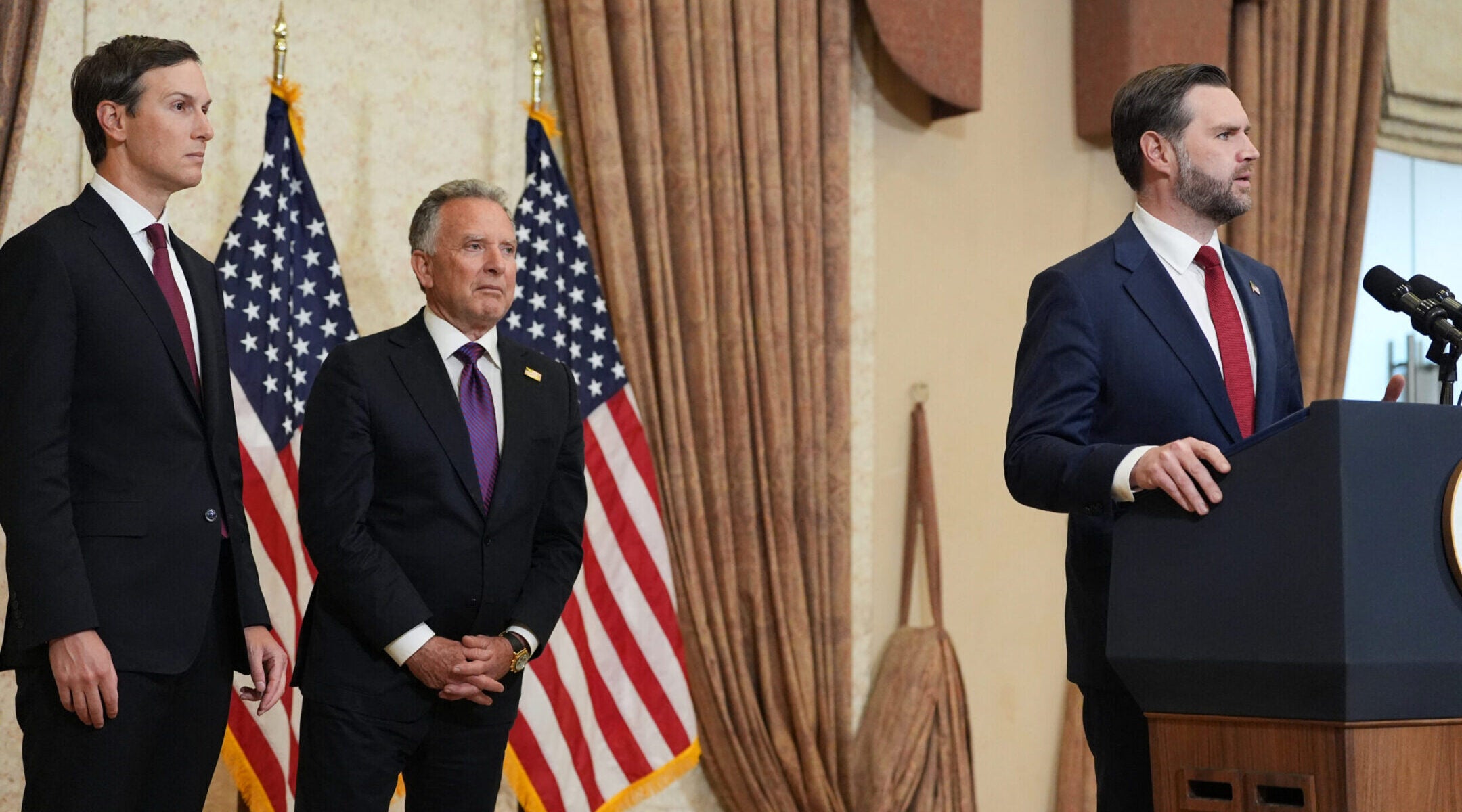
That appears to be Iran’s nuclear ambitions, which the war was meant to curb permanently. On Sunday, President Donald Trump said he had been briefed by Vice President JD Vance, Middle East envoy Steve Witkoff and Jared Kushner, who had been in Islamabad, Pakistan, for the Iran talks, which stretched for 21 hours.
“I could go into great detail, and talk about much that has been gotten but, there is only one thing that matters — IRAN IS UNWILLING TO GIVE UP ITS NUCLEAR AMBITIONS!” Trump wrote on Truth Social. “In many ways, the points that were agreed to are better than us continuing our Military Operations to conclusion, but all of those points don’t matter compared to allowing Nuclear Power to be in the hands of such volatile, difficult, unpredictable people.”
Meanwhile, in Israel, Prime Minister Benjamin Netanyahu ventured into Lebanon on Sunday to meet with soldiers stationed there. His visit followed a recorded speech that he released on Saturday night making the case to Israelis that the war with Iran, which resulted in the deaths of 24 civilians, had been a success. “If we hadn’t acted in time, Iran would already have had nuclear weapons,” he said.
Reporting the stories that define our era. When history unfolds in real-time, the Jewish world turns to (JEWISH REVIEW). Your support ensures we can document the complexities of war and the resilience of Jewish communities with integrity.