
A new U.S. law removing a deadline for laying claim to art looted during the Holocaust has gone into effect after President Donald Trump signed it on Monday.
The 2025 Holocaust Expropriated Art Recovery Act, or HEAR Act, expands on a 2016 law, signed by President Barack Obama, that permits victims and descendants of victims of the Holocaust to lay legal claim to works of art looted by the Nazis or sold to the Nazis under false pretenses.
That law included a controversial “sunset clause” that required all claims of artwork looted by the Nazis to be filed by the end of this year. That clause has been removed, and the revised act permits families to file a lawsuit within six years of the discovery of looted artwork.
The law also further protects those seeking to retrieve their family’s looted property by preventing the current holders from using certain legal tactics unrelated to the subject matter — such as requesting to switch courts — during proceedings.
“For years, the sunset clause cast a shadow over every survivor and family whose stolen art is still missing,” Joel Greenberg, president of Art Ashes, a nonprofit that helps families recover their looted art, said in a statement to the Jewish Telegraphic Agency. “Now they can seek due process without the pressure of time and deadlines.”
Hundreds of thousands of pieces of fine art were looted from their Jewish owners by the Nazis, often by forced sales in the early years of the Nazi regime. Efforts to reunite the works with their owners or their descendants have been guided by an array of laws governed by an international compact including nearly two dozen countries. Restitution claims frequently ignite extensive legal battles.
The family of the cabaret artist Fritz Grünbaum, who was murdered in the Holocaust, for example, was able to recover works by Viennese Expressionist artist Egon Schiele that were in Grünbaum’s vast personal collection in 2018 after decades of efforts. The family has since continued to file legal action to reclaim Grünbaum’s works under the HEAR Act.
Watchdogs say the sunset clause may have caused those owning looted works to obscure them from public view.
“It was extremely important that Congress eliminated the sunset clause because it incentivized museums and others holding looted art to keep those works under wraps until the sunset period ended,” Greenberg said. “Now, that change and the other provisions ensure claims will be heard and decided on the merits and means that the commitment Congress made to survivors ten years ago when they first passed the HEAR Act is finally being honored.”
Both the original law and the new revision received bipartisan support. But the Republican Jewish Coalition credited Trump with its enactment, saying in a statement, “President Trump has consistently proven to be the best friend of the Jewish people ever to occupy the Oval Office, and his signature today ratifies the truth: the passage of time can never diminish the injustice of crimes committed by the Nazis and their collaborators during the Holocaust.”
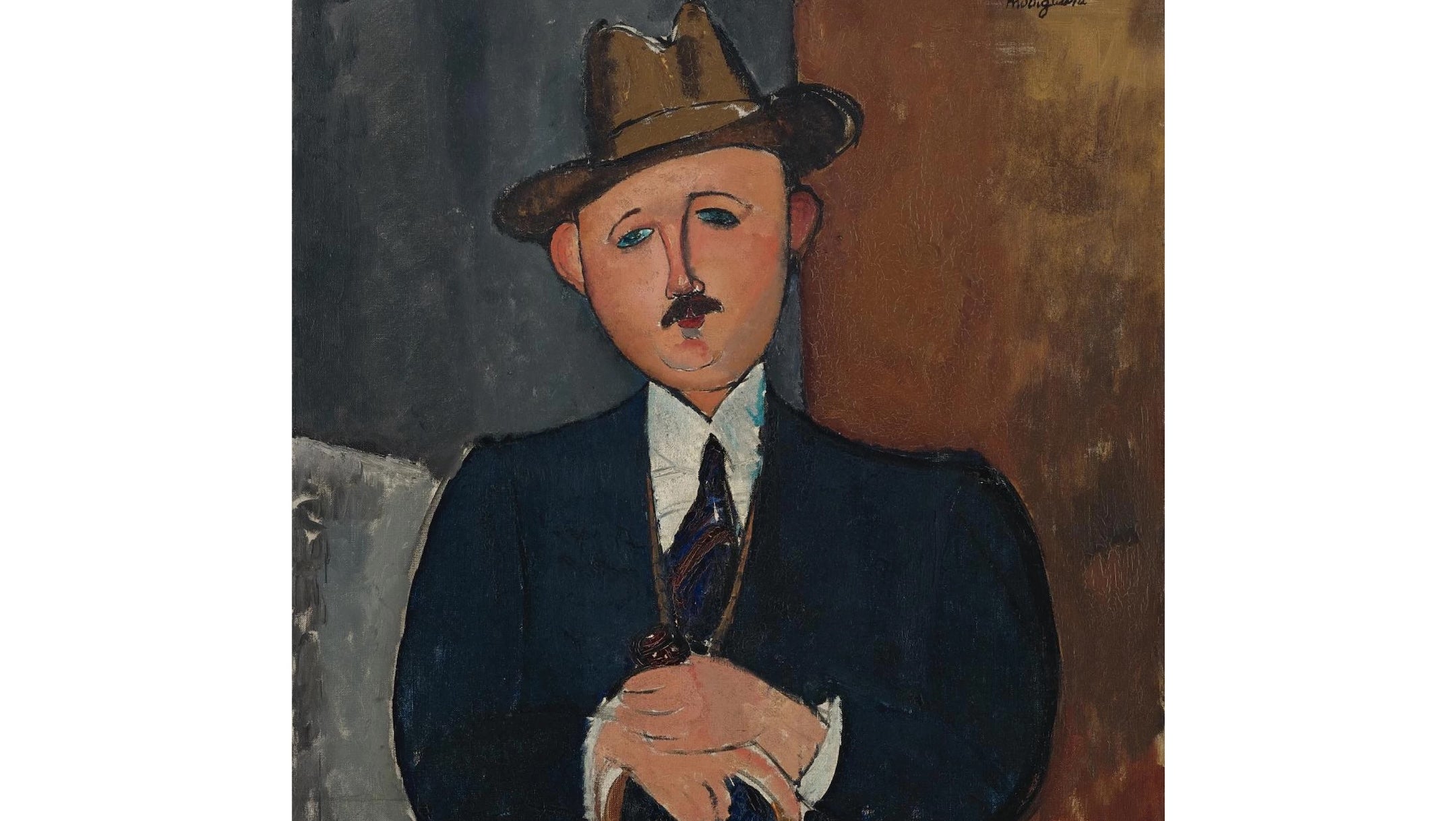
The revision goes into effect just days after one of the most significant recent rulings in the restitution space. Last week, a judge ruled after a decade-long legal battle that a painting by Italian artist Amedeo Modigliani, once valued at around $25 million, must be returned to the descendants of its original owner, who was forced to sell the painting to the Nazis. The painting had been in the possession of a prominent New York-based real estate and art dealer family since 1996.
Passover may be over, but your chance to support independent Jewish journalism isn’t. Help (JR) keep reporting the stories that define our era.