

Aviva Kempner makes films about what she calls “underknown Jewish heroes.”
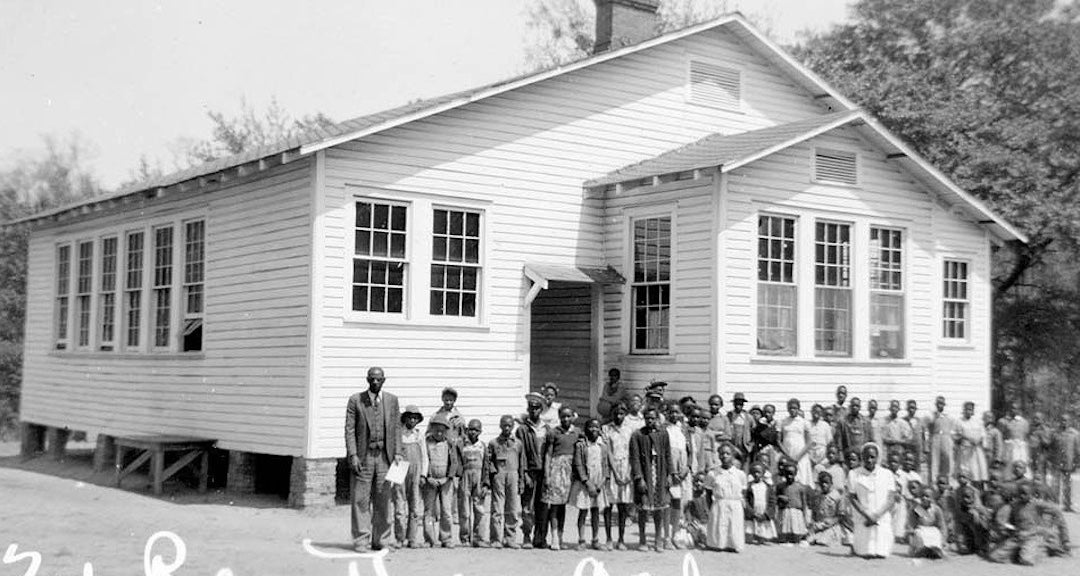
More than a decade ago, she attended a talk on Martha’s Vineyard by civil rights activist Julian Bond, who spoke about Julius Rosenwald, the Jewish businessman and head of retailing giant Sears, Roebuck. Bond described how Rosenwald worked with Booker T. Washington to help fund nearly 5,000 schools for Black children across the Jim Crow South between 1917 and 1932.
“I’ve got to go make that film,” recalled Kempner.
Kempner went on to write and produce the 2015 documentary “Rosenwald,” about the Illinois native she calls perhaps the greatest unsung philanthropist in American history.
A decade later, Rosenwald is unsung no more. A mix of federal legislation — initiated in part by Kempner’s film — museum exhibitions, digital archives, and grassroots preservation efforts is pushing Rosenwald’s legacy back into public view — and testing whether efforts to confront America’s unsavory history of racial discrimination can survive the administration efforts to erase Diversity, Equity, and Inclusion efforts at federal museums and monuments.
In February, Sen. Dick Durbin, the Illinois Democrat, introduced legislation to create a Rosenwald National Historic Park, backed by seven Democratic co-sponsors. The proposal would formally recognize Rosenwald and the sprawling network of schools that reshaped Black education in the segregated South.
The bill calls for a Chicago site that once included the Sears merchandising complex, as well as sites of schools in rural Maryland, South Carolina and Virginia.
Its staunchest advocate has been Dorothy Canter, a National Parks Conservation Association volunteer who has pushed for a park since seeing Kempner’s film. “I didn’t know what to expect in September 2015 when my husband and I went to see a documentary about a man I had never heard of — Julius Rosenwald,” Canter recalled in an essay. “When it was over, I turned to my husband and said, ‘There needs to be a national park to honor him.’”
Canter is now president of the Julius Rosenwald & Rosenwald Schools National Historical Park Campaign.
Julius Rosenwald, inset, helped build nearly 5,000 schools in the segregated South, as seen in a map from the Julius Rosenwald Fund Archives. (Library of Congress; Fisk University, John Hope and Aurelia E. Franklin Library Special Collection, Julius Rosenwald Fund Archives)
But the bill’s future remains uncertain in a sharply divided Congress, where Republican support will be necessary to move it out of committee and ultimately to the president’s desk.
In his first term, President Donald Trump signed legislation to assess the feasibility of establishing the park. But Durbin’s bill is landing as the administration has moved to take down slavery exhibits at the President’s House in Philadelphia; ordered the Smithsonian Institution to remove what it deems “divisive narratives”; removed the LGBT Pride flag (since restored) from the Stonewall National Monument in early February, and seeks to reinstall Confederate statues toppled in the wake of the George Floyd protests starting in 2020.
Efforts to honor Rosenwald are coming “at a time when even the mildest celebration of diversity can be deemed an excess of the ‘woke’ left,” Canter told the Forward.
Despite the anti-DEI climate, private initiatives to remember Rosenwald and the schools continue.
At Fisk University in Nashville, Tennessee, scholars and archivists have recently opened a major new window into Rosenwald’s legacy.
The university launched the Julius Rosenwald Fund Archive database in September 2025, creating a major digital portal for documents tied to the Rosenwald Fund’s work across the South. The collection includes letters, photographs, fellowship applications, and architectural records tied to the construction of thousands of the tidy, wooden schools.
The archive significantly expands public access to one of the largest archival collections on Black education in the early 20th century.
“Fisk University has always shared in his interest for social justice, and we are fortunate to have in our library several Rosenwald-related collections that tell the story of the rural schools, library program, and bus services for the transportation of black children to and from school,” the university said in a release announcing the project.
A celebration is scheduled for June 5, marking the completion of the digitization effort.
On the ground, preservationists are also racing to save what remains of the physical school buildings themselves. Many Rosenwald schools were closed, demolished, or repurposed following desegregation.
In South Carolina alone, where roughly 500 Rosenwald schools were built, only 44 of the structures survive. Nonprofits and state officials are renewing efforts to stabilize the surviving structures.
With $300,000 in state funding, groups including the WeGOJA Foundation and Conservation Voters of South Carolina have begun studying six extant schools, aiming to preserve and potentially reopen them as public history sites.
At the National Building Museum in Washington, D.C., an exhibition titled “A Better Life for Their Children: Julius Rosenwald, Booker T. Washington, and the 4,978 Schools that Changed America” is on view through January 2027. It presents photographs and historical documentation of the school-building program, including work by photographer Andrew Feiler. Feiler wrote a 2021 book about the schools, also called “A Better Life for Their Children.”
Rosenwald was born in 1862 to German Jewish immigrants in Springfield, Illinois, across the street from Abraham Lincoln’s childhood home. His father was active in the local synagogue, and Rosenwald himself received a Jewish education that some scholars say instilled the idea of tzedakah as obligation rather than optional charity.
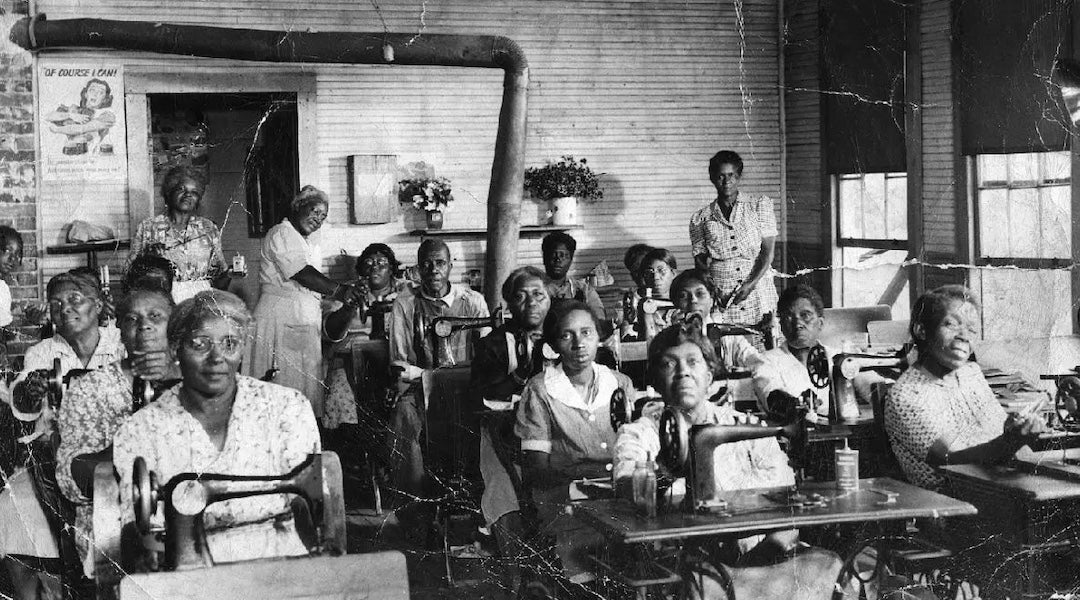
Rosenwald Schools also served as community centers for adults. Above, the Pine Grove Rosenwald School, Columbia, South Carolina, c. 1936. (Richland County Recreation Commission)
As part-owner and later president of Sears, Roebuck and Company, he was a member of Chicago’s Reform Jewish elite, where figures such as Rabbi Emil G. Hirsch influenced his thinking about civic responsibility. At the same time, his Jewishness also shaped his response to segregation. Rosenwald wrote that “the horrors that are due to race prejudice come home to the Jew more forcefully than to others of the white race.”
In his new memoir “Returning: A Search for Home Across Three Centuries,” journalist and New Orleans native Nicholas Lemann writes about prosperous German Jewish families like his own, including Rosenwald’s. While “their positions on racial matters were a long way short of what would be acceptable today,” writes Lemann, German Jewish families in early 20th-century America “were among the very few prominent and established white people who publicly supported Black causes.”
(Lemann’s grandfather, Montefiore Lemann, and Rosenwald’s son-in-law, Edgar Stern, were among the founders of Dillard University, a historically Black school in New Orleans.)
In 1912, Washington, the principal of Tuskegee Institute, approached Rosenwald with an idea to build schools for Black children in the segregated South. Rosenwald, a Tuskegee trustee, shared Washington’s faith in the power of self-help, and insisted on building schools with matching funds contributed by local Black families and their allies.
The Julius Rosenwald Fund (which, by design, spent down 16 years after Rosenwald’s death in 1932) awarded fellowships to Black artists and scholars, including Marian Anderson, James Baldwin, Ralph Ellison, Langston Hughes, Zora Neale Hurston and Julian Bond’s father, the educator and social scientist Horace Mann Bond.
The National Trust for Historic Preservation, which in 2002 joined with grassroots activists, local officials and preservationists to help raise awareness of the schools, hailed the Rosenwald schools as “the most important initiative to advance Black education in the early 20th century.”
Feiler also calls the schools program one of the earliest collaborations between Black and Jewish leaders in what would later be known as the civil rights movement.
“It helps establish the foundation of education and leadership that helps make the civil rights movement happen,” said Feiler, during the opening of a temporary exhibit about Rosenwald mounted last year at the Dallas Holocaust and Human Rights Museum. “And yet this remains hidden history, and its scope and sweep is largely unknown.”
Kempner, who has screened her film for Black and Jewish audiences, thinks the current commemorative efforts are long overdue.
“It’s a great story of solidarity between the groups and a great American story,” she said Tuesday. “He was so modest and he didn’t want his name on anything, but I’m thrilled there’s so much attention coming to him.”
Passover may be over, but your chance to support independent Jewish journalism isn’t. Help (JR) keep reporting the stories that define our era.