
Jewish social justice organizations are sharply criticizing the Trump administration’s decision to indict the Southern Poverty Law Center, framing the move as part of a broader campaign against civil society groups that monitor extremism.
The Department of Justice alleges that SPLC engaged in bank and wire fraud and conspired to commit money laundering, arguing that its use of paid informants to monitor extremist groups amounted to a funding mechanism for those same groups. SPLC has not yet issued a detailed public response to the charges.
For many observers, the clash also echoes an earlier and lesser-known chapter in American Jewish history — one in which Jewish organizations themselves used covert methods, including paid informants, to track and expose white supremacist movements, often with little support from the federal government.
Coincidentally, the indictment came down nearly simultaneously with the publication of “The Secret War Against Hate: American Resistance to Antisemitism and White Supremacy,” by historian Steven J. Ross. The book, which is being released next week, documents how groups such as the Anti-Defamation League and the American Jewish Committee infiltrated neo-Nazi and Ku Klux Klan organizations in the decades before and after World War II, passing intelligence to law enforcement agencies that were often reluctant to act.
The historical parallel is not exact, but it is striking: Tactics once employed by Jewish groups to counter violent extremism are now at the center of a federal prosecution against one of the country’s most prominent civil rights watchdogs.
The Union for Reform Judaism said it was “watching with concern” the Department of Justice’s action, noting SPLC’s long record of combating hate, including antisemitism.
“SPLC is a long-time ally in the civil rights space and has a record of more than five decades of combating hate, including antisemitism,” the group said in a statement. “While no one is above the law, this DOJ has pursued multiple cases over the last 14 months whose political motivations have been questioned and even rejected by juries and judges. For this reason, we are concerned that this, too, is a case motivated by politics, rather than fact.”
Leaders at the Jewish Council for Public Affairs were more forceful, casting the indictment as a direct threat to organizations that track hate groups and protect vulnerable communities.
“Civil society is under attack as the administration weaponizes the federal government against those with whom they disagree, while normalizing extremism and gutting the very programs we have to counter it — and it puts Jewish and so many other communities at risk of violence,” said CEO Amy Spitalnick.
“As today’s attack on the Southern Poverty Law Center shows, groups that protect civil rights and counter violent extremism are being criminalized by this Administration,” she added. “None of us can afford to be silent.”
The liberal Jewish advocacy group Bend the Arc similarly argued that the indictment reflects an effort to undermine democratic institutions.
“Groups like the Southern Poverty Law Center (SPLC) make this nation safer for American Jews and all Americans — which is why the Trump regime’s DOJ is targeting them,” the organization said. “Americans and American Jews will keep showing up to defend our democracy, from our elections to all of our liberties.”
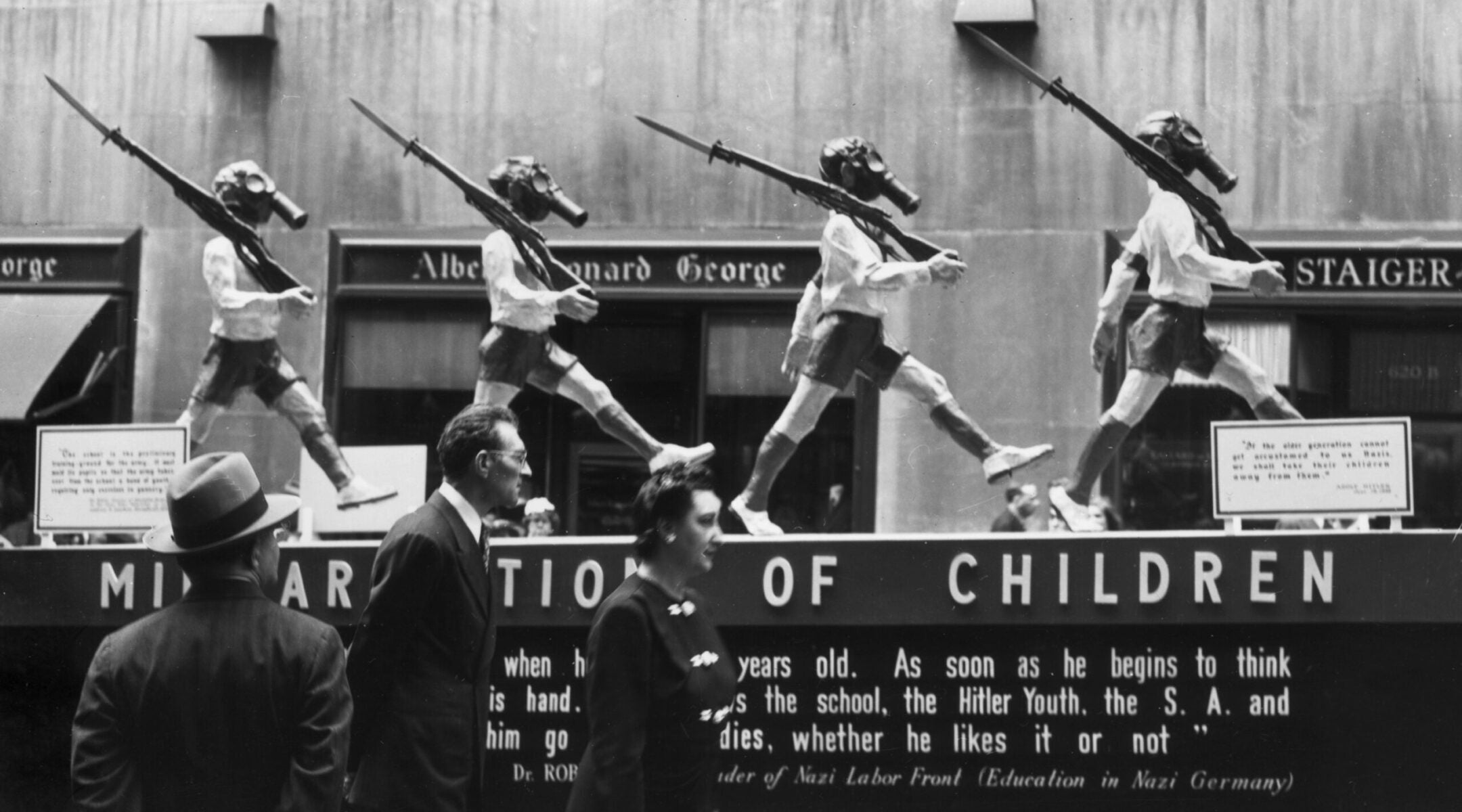
Ross, whose parents were Holocaust survivors, describes a period in which antisemitism and white supremacist ideology were both widespread and frequently violent, with extremists targeting synagogues and Black churches and staging rallies adorned with Nazi imagery. Figures such as George Lincoln Rockwell, who founded the American Nazi Party in 1959, and Jesse Benjamin Stoner, the racist and antisemitic politician convicted in the 1958 bombing of the Bethel Baptist Church in Birmingham, Alabama, sought to build mass movements rooted in racial and religious exclusion.
At the same time, Jewish defense organizations quietly developed sophisticated intelligence operations, including the use of informants, to monitor those threats. Their efforts, Ross writes, were often met with indifference from officials such as J. Edgar Hoover, whose FBI frequently declined to take more than token action against extremist groups.
In his book, Ross argues that while movements and leaders evolve, the underlying ideas — including white supremacy and antisemitism — persist. Today, he notes, those ideologies are often expressed less through explicit antisemitism than through broader attacks on immigrants and demographic change.
in a new book, Steven J. Ross writes about the Jewish groups that infiltrated, monitored and undermined hate groups in the years shortly after World War II. (Michael Glier; Bloomsbury)
Speaking to NPR’s Terry Gross on Thursday, Ross said he was skeptical about the indictment of the SPLC.
“I’m not sure if the indictment is true or not, but the idea that there are informants is not illegal,” he said. “These people are simply monitoring what was going on and whether accused of stealing records, their records were sent, I’m sure, to the government forces like the FBI, the Justice Department, because they weren’t doing their job.”
Ross also said that the groups he writes about in the book made it clear to informants and infiltrators that they couldn’t break any laws. “I’m sure the SPLC is doing the same thing because they know their informants would get in trouble otherwise, that they could be prosecuted by the government,” he said.
Another ADL operation came to light just a few years ago when political historian Matthew Dallek of George Washington University wrote a book detailing how the ADL’s covert operation targeting the John Birch Society helped bring down an influential far-right extremist movement in the United States in the 1960s and ’70s.
“The ADL also had undercover agents with code names, who were able to infiltrate the society’s headquarters in Belmont, Massachusetts, and various chapter officers,” Dallek told the Jewish Telegraphic Agency in 2023. “They dug up financial and employment information about individual Birchers. And they not only used the material for their own newsletters and press releases, but they also fed information to the media.”
In the early 1990s, however, the West Coast branch of the ADL was accused in federal court of illegally spying on left-wing and pro-Arab groups, including the African National Congress, the American Indian Movement and the Association of Vietnam Veterans.
The ADL eventually settled a federal lawsuit, which charged, among other things, that the organization had sold information on anti-apartheid groups to the government of South Africa. The ADL consistently denied any improper or illegal actions, a position reiterated in the settlement.
Critics at the same accused the ADL of drifting from its founding mission — fighting antisemitism and promoting tolerance — to target legitimate criticism of Israel and advocacy of the Palestinian cause.
The Anti-Defamation League did not respond to a request for comment about the Department of Justice’s prosecution of the Southern Poverty Law Center.
But for Jewish groups now rallying to SPLC’s defense, the concern is not only about a single indictment but about the potential chilling effect on organizations that track and expose extremism — work they see as essential at a time of rising antisemitism.
“At a moment of rising antisemitism and broader extremism,” Spitalnick said, “the Administration should focus on how to protect our communities from these threats, not attack the very organizations and infrastructure whose work helps keep us safe in the first place.”
Passover may be over, but your chance to support independent Jewish journalism isn’t. Help (JEWISH REVIEW) keep reporting the stories that define our era.